
New Cleaning Contractor? Reconfirm the Vending Work Boundaries
A change of cleaning contractor can leave a vending area with different assumptions about who does what. The new team may see the machine as another workplace surface, while the operator has its own equipment procedures. Reconfirm the boundaries during the handover so an existing arrangement is not lost when personnel or contracts change.
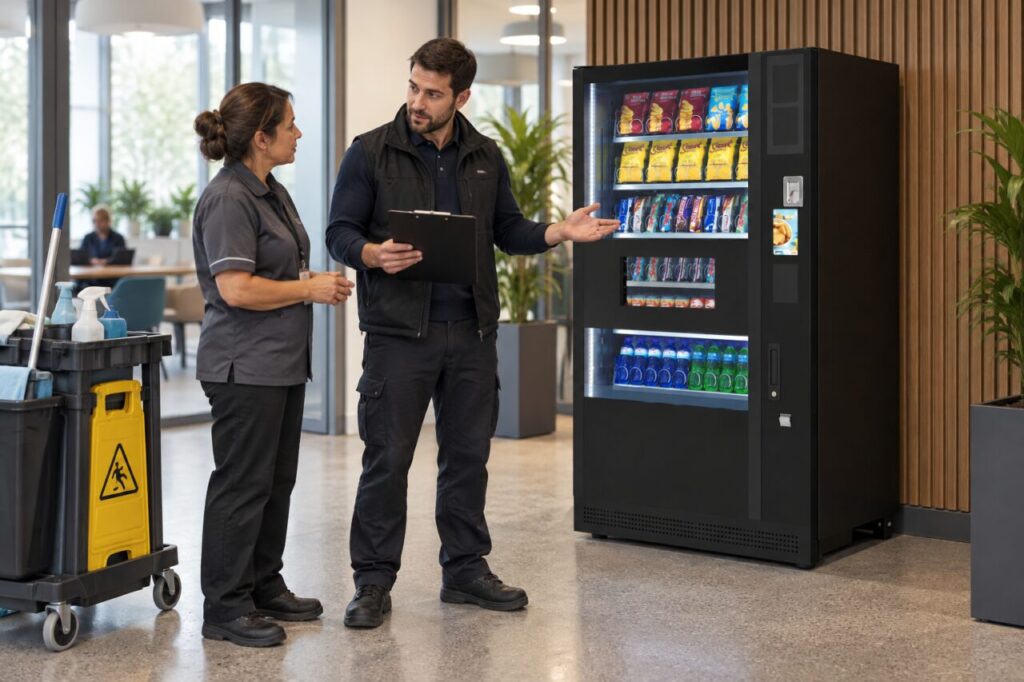
This guide does not prescribe cleaning chemicals, methods or technical maintenance. Follow the equipment manufacturer’s instructions, the operator’s process and the site’s relevant procedures. The handover should clarify responsibilities and contacts, not authorise people to work on equipment outside the scope of their role.
Start with the current arrangement
Find the agreed responsibilities for the vending area and check that they still describe the service in place. Distinguish the floor and surrounding furniture from the machine itself. If the record is unclear, ask the operator and facilities contact to resolve the gap before issuing instructions to the new contractor.
Do not rely solely on what the previous cleaner happened to do. An informal habit may not reflect the authorised process. Record the confirmed arrangement in practical language, identifying which activities belong to the cleaning team, which belong to the operator and which require a separate response when a problem is reported.
Explain the limits clearly
Make sure the new team knows that general access to the room does not mean access to the machine’s internal areas or settings. Do not provide keys or account details unless the role is specifically authorised under the relevant arrangement. Equipment work should remain with the people trained and permitted to carry it out.
Ask the operator what instructions the cleaning contractor needs for the agreed external work, if any. Keep those instructions tied to the supplied equipment. A method used on another appliance should not be assumed suitable for a vending display, payment device or other component simply because the surface looks similar.
Agree how issues are reported
The cleaning team may notice a spill, packaging accumulation or an equipment concern before the normal site contact does. Give them a clear reporting route and explain the information that helps identify the location. They should not need to diagnose a fault or decide independently whether the machine can continue operating.
Keep urgent site issues within the workplace’s established procedures. The vending contact sheet should complement those procedures rather than replacing them. Ask the responsible operator how equipment-specific concerns should be escalated, and record any restrictions on use through the appropriate authorised process.
Check the handover in practice
Walk through the area with the relevant contacts if appropriate. Point out the agreed boundaries and confirm where instructions are stored. Keep the exercise focused on the work arrangement, without creating an unnecessary record of individual workers or presenting an informal briefing as technical certification.
The related guide to training responsibilities explains why instruction should follow actual tasks. Apply the same principle here: a person needs the information relevant to their role and a clear route for questions beyond it, rather than a broad instruction to look after the machine.
For office vending, review the handover after the new arrangement has been used. Repeated uncertainty may reveal a boundary that needs clearer wording. Update the agreed record with the operator and facilities team so the next change of contractor begins from a confirmed process instead of another round of assumptions.
Contact our team to clarify the responsibilities associated with your workplace vending arrangement.