
A Vending Snack Has a New Recipe: Check Customer Information Before Reordering
A familiar vending snack can change recipe without changing the role it plays in your range. That makes a repeat order worth checking when the supplier announces a reformulation or the packaging says the product is new. Treat the change as a product-information review, not merely a purchasing substitution. The pack being supplied should match the information customers and site staff use when deciding what to buy.
Establish which version is arriving
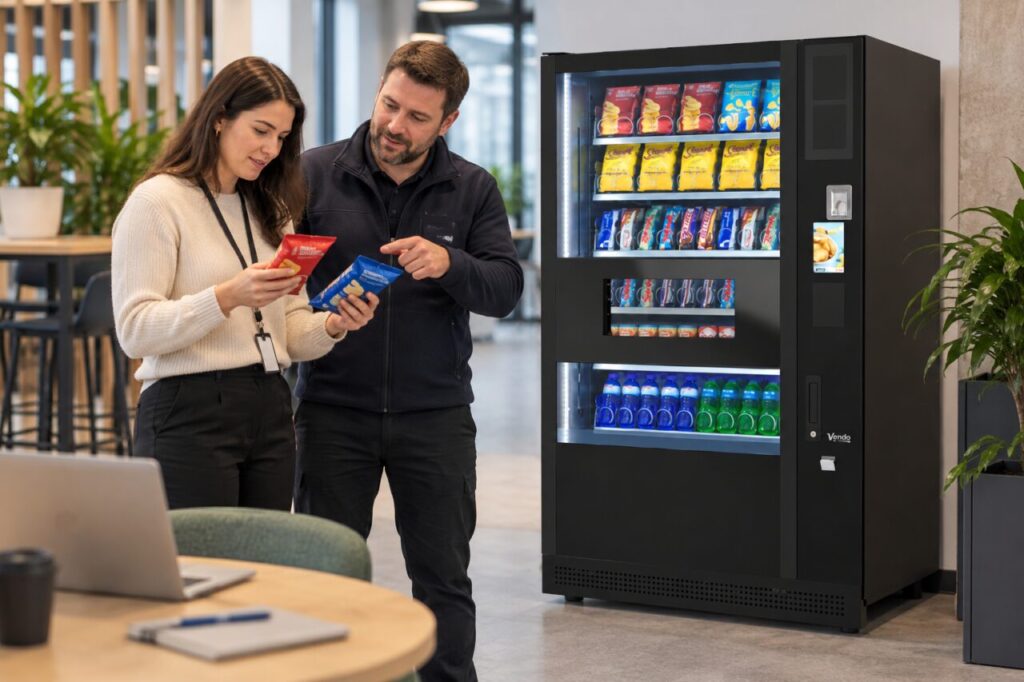
Ask the supplier to identify the current product, pack size and relevant product documentation. Keep the actual label available for comparison rather than relying on an old photograph or a shortened invoice description. A similar colour scheme does not establish that ingredients or declarations are unchanged. If the supplier cannot explain which version is being delivered, resolve that uncertainty before presenting it as the familiar product.
Separate a new design from a confirmed recipe change. Both justify checking the details, but they are not the same event. Record what the supplier has actually confirmed and avoid telling customers that an ingredient has changed merely because the wrapper looks different. Conversely, do not describe a confirmed reformulation as cosmetic because the brand name is unchanged.
Review the customer information
The Food Safety Authority of Ireland’s allergen advice explains that allergens in prepacked foods are highlighted in the ingredients list. Use the current pack information and supplier documentation when checking any product descriptions you control. Do not turn a quick visual comparison into an unsupported assurance that a product is suitable for someone with a particular allergy.
Review shelf notices, digital descriptions and any site range sheet that names the product. An old description can remain in circulation after new stock arrives. Where information is uncertain, ask the responsible food business to clarify it. Customers with dietary requirements should be able to obtain accurate current information rather than being asked to rely on what the product contained last month.
Keep old and new stock identifiable
During a transition, older and newer versions may both be present in storage. Keep their identity clear in the stock records and avoid merging documentation simply because the buying code has remained familiar. Follow your established stock rotation and food-safety procedures; a recipe review does not replace those controls. Record which version was supplied to each location when that distinction matters to the information being displayed.
For the refill team, a concise instruction is better than a general warning to be careful. Identify the affected product, the information being updated and the person handling questions. Do not expect staff to reconstruct the change from scattered emails. If the new pack has a different physical format, also ask the equipment supplier to confirm any setup check required before vending it.
Review demand without making promises
A recipe change may affect customer preference, but it does not automatically mean sales will improve or decline. Observe feedback and availability over a defined period, noting when the new stock actually reached the machine. Keep taste comments separate from factual ingredient questions so each receives the appropriate response. Avoid advertising nutritional or dietary benefits that have not been verified for the current product.
When planning a vending range, agree who owns product-information updates as well as ordering. A useful change record links the supplier confirmation, current label, affected sites and updated customer information. That creates a repeatable response to reformulations while keeping the claims about the individual snack accurate.
Related guidance: Vending Snack Trials: Record Why a Product Was Removed.
Planning vending at your site? Contact the team with your location and requirements.