
Vending Snack Trials: Record Why a Product Was Removed
A product can disappear from a vending range for several reasons. It may have attracted little interest, become unavailable from the supplier or created a practical issue that needed review. Record the reason when a snack trial ends so the next range discussion does not treat every removal as proof that customers disliked the product.
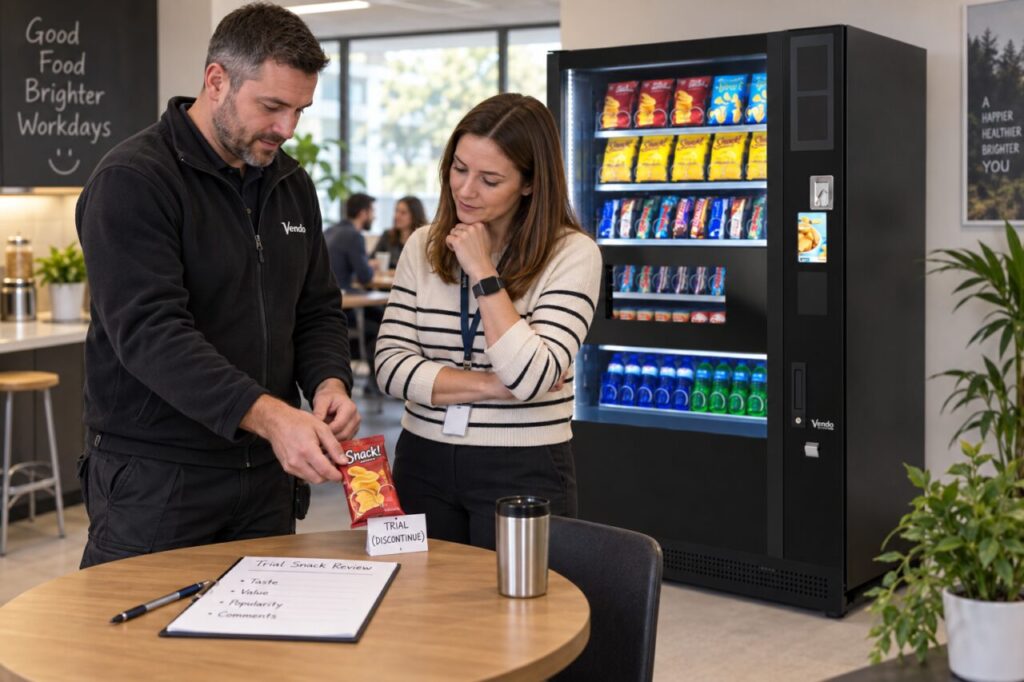
The record should be proportionate to the decision. A short note identifying the item, trial period and evidence can be enough when it is clear and accessible. The aim is to preserve useful learning, not to produce a lengthy report for every snack or invent certainty where the trial produced only limited information.
Describe what was actually tested
Record the specific product and pack size, the machine or location and the period it was offered. A brand name alone can be misleading if several variants were considered. Note any material difference from the intended trial, such as a shorter period or a period when the product was not available for customers to buy.
Include the trial’s original question. You may have been testing a different flavour, a new price point or a product requested by staff. Keeping that question visible helps the review focus on the intended need rather than judging the item against a different objective introduced only after the results are known.
Separate demand from practical constraints
State whether the decision reflects observed purchases, customer feedback, supply availability or another confirmed factor. If several factors contributed, list them separately. Do not describe the product as unpopular when it was removed because the supplier could not provide it consistently or because the trial did not run as originally planned.
Where a technical or packaging concern arose, record the operator’s confirmed finding rather than a site contact’s guess. Ask what was checked and whether the concern related to the particular pack or configuration. Avoid generalising from one trial to every version of a brand or every machine without evidence supporting that wider conclusion.
Preserve uncertainty and alternatives
A short trial may leave the outcome unclear. Record that honestly instead of forcing a success-or-failure label. If the item was available only briefly or during an unusual attendance period, explain the limitation. That allows a future reviewer to decide whether another carefully defined trial would answer a useful question.
Note any alternative that addressed the same customer need, but distinguish a suggestion from an agreed replacement. A request for a smaller snack does not disappear simply because one particular product was unsuitable. Recording the underlying need keeps the next range discussion focused on customers rather than repeatedly restarting with isolated brand requests.
Use the record in the next range review
When someone suggests the product again, consult the earlier note before dismissing or repeating the idea. Conditions may have changed, or the original reason may still apply. The record should support a fresh judgement based on the current service rather than become a permanent blacklist that nobody is willing to reconsider.
If a replacement is introduced, connect it to the original question and agree how it will be reviewed. Keep customer communication neutral and factual. There is usually no need to publish a negative verdict about a product; explain the confirmed range change and invite useful feedback about whether the replacement meets the intended need.
For snack vending planning, keep product trials connected to the overall range. The units-versus-display-space review offers another way to examine allocation, while a removal record preserves the specific reasons behind a decision that numbers alone may not explain fully.
Discuss the product needs at your site when planning or reviewing a vending service.