
Buying Vending Equipment: Ask How Customer Refund Requests Are Handled
When assessing vending equipment, ask what happens when a customer needs help with a purchase. A clear route for refund requests is part of the service arrangement, even though it may involve people and systems outside the cabinet. Resolve that practical question before launch rather than asking reception to invent a response after the first enquiry.
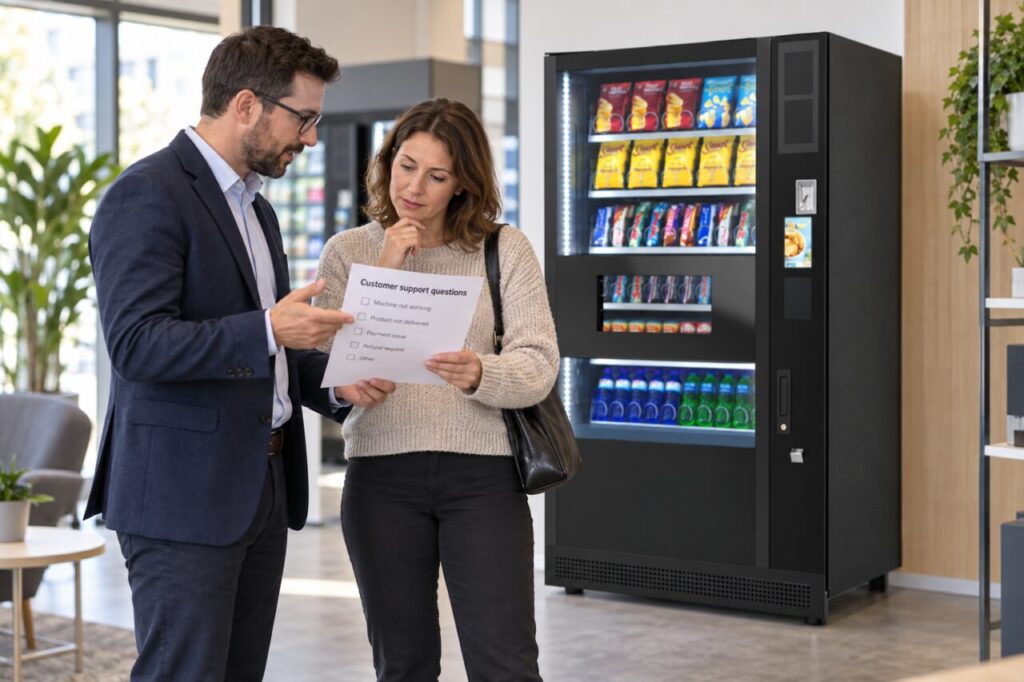
This guide concerns the support process to discuss with a provider. It does not set refund entitlements, deadlines or payment rules. Those depend on the circumstances and applicable arrangements. Keep customer-facing wording aligned with the provider’s confirmed procedure and seek appropriate advice where a legal question arises.
Identify the first contact
Ask who receives a customer’s request: the equipment operator, the site team or a dedicated support service. Confirm the appropriate contact route and where it will appear. A number hidden in a purchase file is not useful to someone standing at the machine, particularly when the building’s usual reception contact is unavailable.
Keep the initial route simple. Customers should not have to understand the division between equipment supplier and payment provider before asking for help. The responsible service team can explain any further step required. Do not publish a private staff number as the support contact without the organisation’s agreement.
Confirm the information required
Ask the provider what details help identify the transaction and machine. These may include the location, approximate purchase time and product selected, but use the actual support process rather than creating an unnecessarily detailed form. Explain how the customer can identify the relevant machine if several units operate on the premises.
Do not request full card numbers, security codes or other payment credentials in an informal email or public message. The payment provider should specify any appropriate transaction-identification procedure through its authorised channels. A site contact can help route a query without collecting sensitive information they do not need to handle.
Separate the responsibilities
Clarify who reviews the request, who can authorise the relevant action and who communicates the outcome. The person refilling the machine may not control payment processing. Equally, the company hosting the equipment may not be the operator. Document these distinctions so internal staff do not make promises on behalf of another party.
Ask what acknowledgement or reference the customer receives and how an unresolved enquiry is followed up. Avoid inventing a response-time commitment because it sounds reassuring. If the provider offers a defined service commitment, record its scope accurately and distinguish it from an internal target used by the workplace team.
Test the communication before launch
Review the proposed help notice with someone unfamiliar with the arrangement. Can they identify whom to contact and what information to have ready? Check that the notice matches the supplied machine and remains readable without obscuring instructions. Do not create a real refund transaction merely to test the wording.
The related guide to a written demonstration record helps separate observed equipment behaviour from service arrangements discussed with the supplier. Record the refund-support questions in the latter category unless the agreed process has actually been demonstrated through an appropriate supported test.
When comparing vending equipment and services, include support responsibilities in the buying brief. A practical purchase decision considers how customers get help as well as how they choose and collect a product. Keep the agreed contact and escalation details current when staff, operators or payment arrangements change.
Contact our team to discuss the support arrangements for your proposed vending service.