
A Vending Demonstration: Leave with a Written Test Record
A vending demonstration is easier to evaluate when you leave with a short written record. Without one, a smooth purchase shown in a showroom can become a vague memory that different colleagues interpret differently. Record what you actually observed, which equipment was involved and what remains to be checked for your own site.
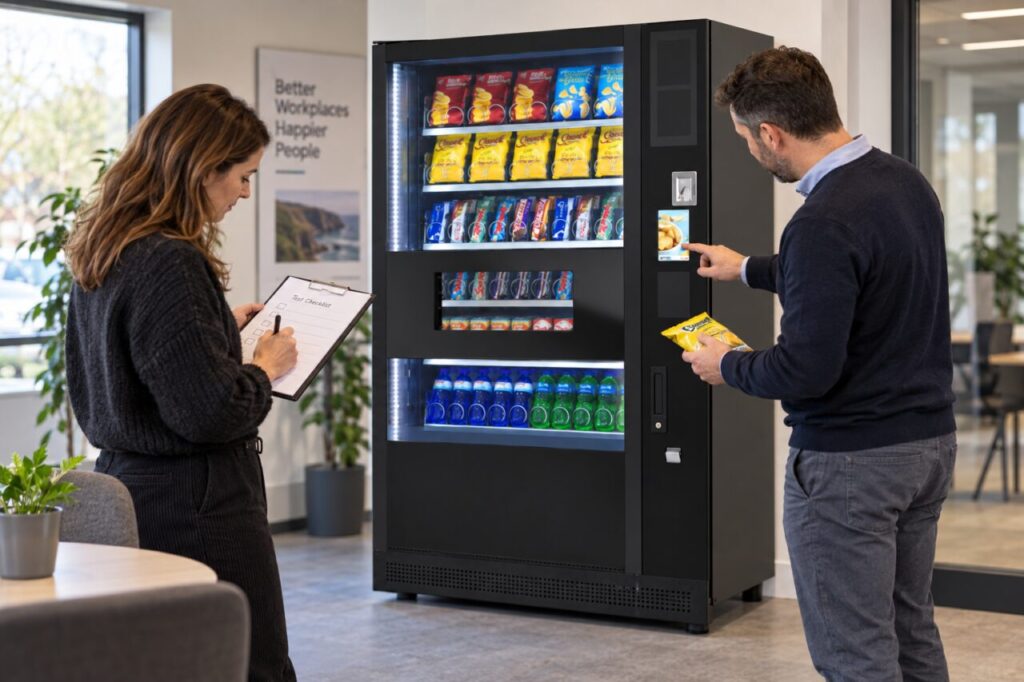
The purpose is not to issue a technical certificate or prove that every future vend will work. It is to preserve the evidence behind a buying decision. A demonstration is one part of the assessment, alongside the proposed configuration, location, service arrangement and written quotation.
Identify the demonstration setup
Ask the supplier to identify the machine and configuration being demonstrated. Note whether it is the actual unit being considered, a showroom example or a different arrangement used to explain a feature. Avoid assuming that everything visible on the demonstration machine is included in your proposed purchase.
Record the payment method and the products used during the demonstration. If your intended products differ, list that as a separate question. A successful test with one pack does not answer every question about another size, shape or type of packaging. Ask what further assessment the supplier recommends.
Separate observation from explanation
Use two simple headings in your notes: observed and discussed. Under observed, describe the selection and collection sequence you watched. Under discussed, record features or services the supplier explained but did not demonstrate. This distinction prevents a verbal description from being remembered later as a completed test.
Write down any limits to the session. For example, the demonstration may not include your final payment account, network connection or intended installation position. These are useful boundaries, not necessarily faults. They help you decide what should be confirmed during commissioning or through further documentation before the order is accepted.
Capture exceptions without guessing
If something does not happen as expected, describe the event in plain language and ask the supplier to explain the next step. Avoid diagnosing an internal fault from a brief observation. Note whether the issue was resolved, whether the demonstration was repeated and whether a follow-up answer is required.
Keep any photos focused on the equipment and the relevant sequence, with permission from the people involved. Do not photograph payment credentials or private account screens. The record should help colleagues understand the equipment, not create an unnecessary collection of personal or account information from the showroom visit.
Turn questions into follow-up actions
At the end, read back the open questions with the supplier. Give each one a responsible contact and an expected next step. A question about included accessories belongs with the quotation; a question about your products may require samples. Keep these separate so one answer does not accidentally close both.
When comparing vending machines for your business, use the same broad record format for each demonstration. Compare the relevance of the observed setup rather than the length of the presentation. You can also review our guide to included vending accessories before finalising the purchase brief.
Share the finished notes with colleagues who could not attend, and ask the supplier to clarify any disputed point. A concise factual record supports a better decision than enthusiastic impressions alone. It also provides a useful starting point for the separate checks that will take place when your own equipment is installed.
Ask our team which demonstrations would best answer your site’s buying questions.