
Buying a used vending machine that has spent a year in storage
The phrase ‘working when stored’ describes the past. If you are buying a vending machine that has spent a year in a warehouse, make its present condition part of the purchase decision. Ask the seller to separate what they know from what still needs checking. The date it last sold a drink is useful evidence, but it tells you little about how it was handled in the intervening months.
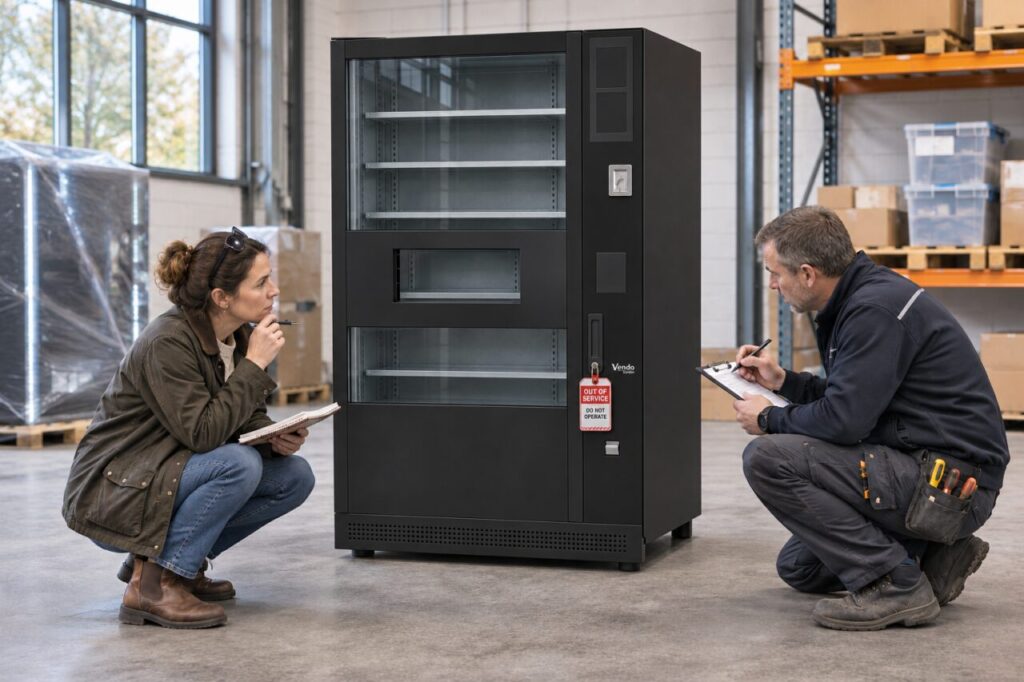
Rebuild the timeline
Request the date the machine left service, its model and serial number, and the reason it was taken out of use. An office closure is a different starting point from an unresolved dispensing fault. If it was taken out by a service company, ask whether there is a collection note or final visit report. Read the last open issue as well as the last completed repair.
Ask where it was kept, whether it was moved again and who held it during storage. You are looking for gaps that can be assessed, rather than an unbroken stack of paperwork. For example, a seller may have photographs of the machine entering a dry warehouse but no record of a later move to another building. Record that move as unknown. Give the assessor the photographs and the uncertainty together.
Arrange an assessment before a demonstration
Agree who will assess the machine, where they will do it and who pays for that work. Give the technician its identification details in advance so they can refer to the correct instructions. Leave technical access and decisions about bringing stored equipment back into use to qualified personnel. A buyer need not switch on an unfamiliar cabinet in a warehouse to establish whether the sale is worth pursuing.
Ask for findings tied to the actual cabinet. Which functions were checked? Which were unavailable at the storage location? Which parts or further tests would be needed before use at the intended site? The equipment service guide illustrates how preventive checks differ by machine line. Use the relevant model and configuration when agreeing scope with the assessor.
Test what matters at your site
Once the technician considers a demonstration appropriate, bring the pack sizes you intend to sell. Witness selection, delivery and collection. If you intend to sell chilled stock, ask for the evidence needed to confirm that the machine is suitable for that product and can maintain its required conditions. A lit display or a single successful room-temperature vend answers a much narrower question.
Write down anything left untested. A payment terminal might be present but unavailable for a live transaction under the seller’s account. Record separately what the seller demonstrated and what your own payment provider would have to set up. That prevents an equipment sale from accidentally becoming a promise about a service neither party has arranged.
Make the uncertainty visible in the price
Compare the asking price plus assessment, transport and identified work with an alternative machine you could put into service. Give an outstanding repair its quoted cost if available. If nobody can price it yet, leave it as an unresolved decision rather than treating it as free. Set out which findings would lead you to proceed, seek a revised offer or walk away.
For related guidance, read about checking the production version of used equipment. When comparing vending equipment for an Irish site, retain the assessment with the dated purchase record. It will also help the person arranging installation understand exactly what still needs attention.