
Two Used Vending Machines Share a Model Name: Compare Their Production Versions
Two used vending machines can share a familiar model name without being identical purchasing propositions. Ask for the production identification and current configuration of each unit before comparing prices. A photograph of the cabinet front is useful, but it cannot establish that the controls, cooling equipment, software and service history are the same.
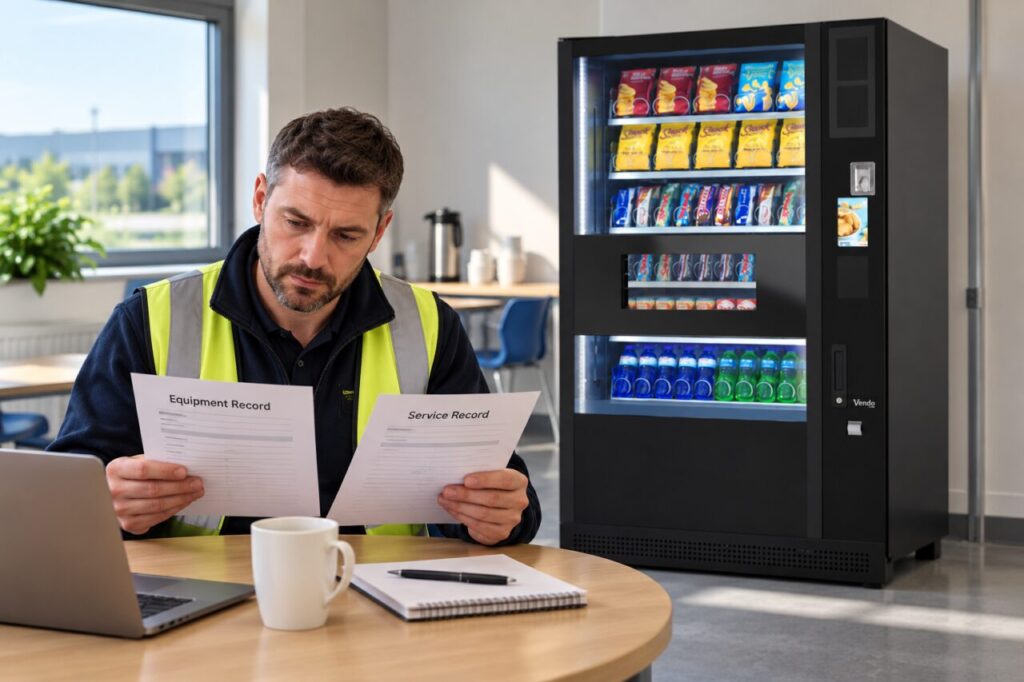
The aim is not to reject an older machine automatically. It is to understand what each offer includes and which differences affect your intended use. Keep the seller’s claims linked to a specific unit so an answer about one machine is not accidentally treated as evidence about the other.
Identify both units precisely
Request the equipment identification details and a readable photograph of the relevant label, obtained safely by the seller. Record the full model designation, serial reference and any documented production information. If the year is only an estimate, mark it as such. Do not infer a manufacturing date from a listing upload date or a seller’s purchase receipt.
Ask whether either machine has had major assemblies replaced or upgrades installed. A newer replacement component can matter more to a service question than the age of the outer cabinet. Obtain the work record where available, and distinguish documented changes from an owner remembering that something was replaced several years ago.
Compare the delivered configuration
Create one row for each requirement: product range, payment arrangement, customer controls, reporting, installation and training. Ask the seller to demonstrate the relevant functions on the actual unit. Do not assume a feature shown in a current brochure is fitted to every earlier machine carrying the same family name.
Keep optional upgrades separate from included equipment. If one proposal needs an additional payment component or software arrangement to meet your brief, obtain a confirmed scope and price before ranking the offers. A low cabinet price is not a complete comparison when the practical requirements remain unresolved.
Ask the service provider about support
Give the proposed service provider the identification records for both units. Ask whether they support those particular versions, what documentation they need and how replacement parts would be identified. Avoid accepting a general statement that the brand is familiar as proof that every version can be supported on the same terms.
Where compatibility is uncertain, request a written answer from the appropriate supplier or manufacturer. Do not order parts merely because the cabinet photographs look alike. Record any inspection needed before a service commitment can be made, including who arranges it and whether it changes the proposed purchase timetable.
Decide on evidence and condition
Compare observed operation, documented repairs, included items and the answers to your buying brief. Age is one piece of context, not a complete condition assessment. A demonstration should use relevant products and the intended payment process where possible, with limitations recorded rather than hidden behind a successful test of one selection.
Keep the final comparison with the order documents. Explain which differences mattered and which remained unverified. If the chosen unit changes before collection, repeat the identification check instead of assuming an equivalent-looking substitute has the same history. A clear unit-specific record gives the buyer and service provider a shared starting point after the seller’s listing has disappeared.
For help matching the service to your site, explore Vending-Machines.ie or send an enquiry describing your requirements.
Related guidance: A Vending Quote Names a Model: What Configuration Is Actually Included?.