
How much does it cost to add a card reader to a vending machine?
An Irish vending machine card reader cost starts with the hardware price, but the installed cost also depends on the cabinet, the work needed to fit it and the payment agreement. On 9 November 2026 our VPOS Touch listing showed €800 excluding VAT. It also listed a monthly charge of €12 plus VAT and a card transaction charge of 3%. Ask for a written quote for your machine before committing to an upgrade.
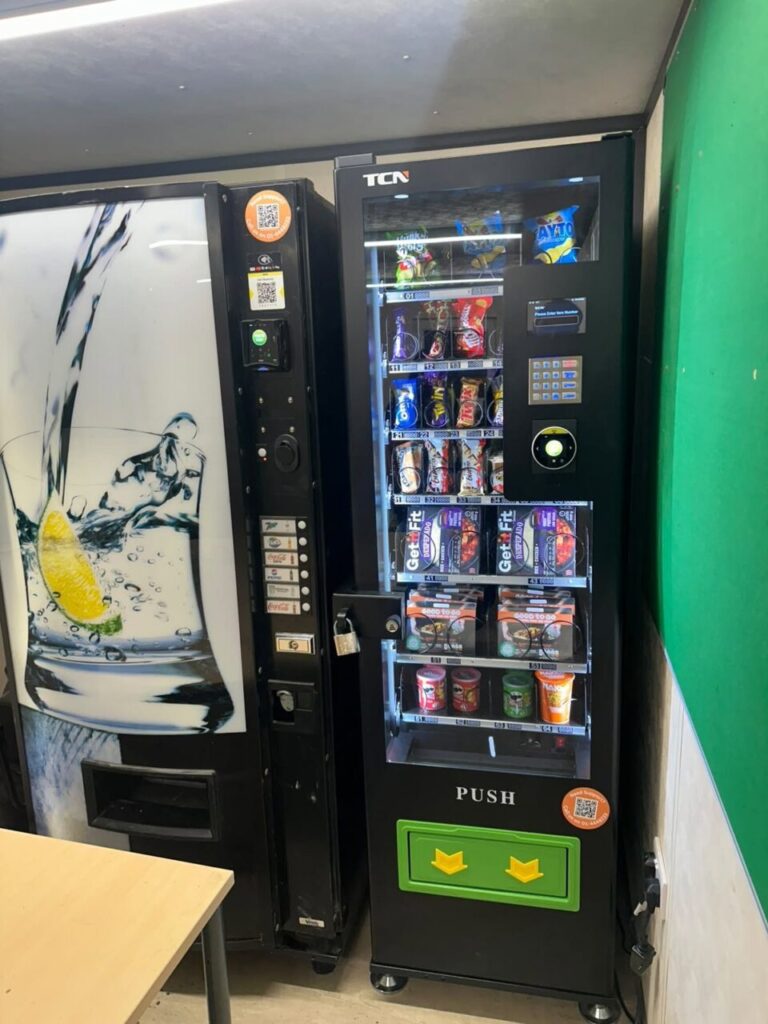
Establish what is already fitted
Start with the cabinet model and serial number. Ask whether the machine has the correct controller, mounting position, wiring and communication interface for the proposed reader. The price of a standalone reader cannot tell you whether an adapter, cable, bracket or technician visit is necessary. If the cabinet already has a reader, confirm who owns it and whether it can be kept in service under the intended account.
Give the installer the site address and explain the conditions at the cabinet. A reader installed in a basement staff room may face a different connection problem from the same reader in a reception area. Ask who will test connectivity at the chosen position and who will approve any network arrangements. Specify which devices and payment methods you want the installer to demonstrate.
Calculate a first-year example
Using the published figures as an illustration, twelve months at €12 gives €144 before VAT. Adding the €800 hardware price gives €944 before VAT, installation and transaction charges. Now suppose the machine processes €500 of eligible card sales each month. At an assumed 3% of that turnover, the charge would be €15 per month or €180 for the year. The resulting illustration is €1,124 before installation and applicable VAT.
Replace the assumed monthly sales with your own estimate. Check the fee basis, tax treatment, contract term and any minimum charges with the provider. A quiet site can still incur its fixed monthly charge. A busier site pays a higher total percentage charge because it processes more sales. Model both a quiet month and a normal working month to see how sensitive your budget is to footfall.
Compare the same scope on competing quotes
Request separate lines for the terminal, installation, connectivity, commissioning and recurring service. Ask who handles settlement and which report shows the amount paid into the merchant’s bank account. If a supplier bundles several items into a monthly payment, establish what the site owns at the end and what happens if it changes provider or removes the machine early.
Consider a seller offering a used cabinet “with card reader”. A device in a sales photograph may belong to a separate payment operator. Confirm whether the quoted price includes ownership, transfer, reconfiguration and a working merchant account. Our guide to MDB compatibility explains why a reader and controller need to communicate correctly before a cabinet can complete a vend.
Agree the acceptance test
Choose two differently priced selections. Check the price shown to the customer, the amount charged, the goods delivered and the entry in the transaction report. Agree how the site contact reports a failed vend and who handles a refund request. Keep those details beside the cabinet identifier. They will be more useful during a busy shift than a hardware receipt alone.
For a tailored quotation, send the cabinet model, site conditions and expected card sales. Ask for a total installed figure and a separate schedule of continuing charges.


