
Choosing a Vending Supplier: Ask for a Product-Range Demonstration
A promise of a wide vending product range is a useful starting point, but it does not show what your workplace will actually receive. Before choosing a supplier, ask for a practical demonstration of the proposed selection and the process for changing it.
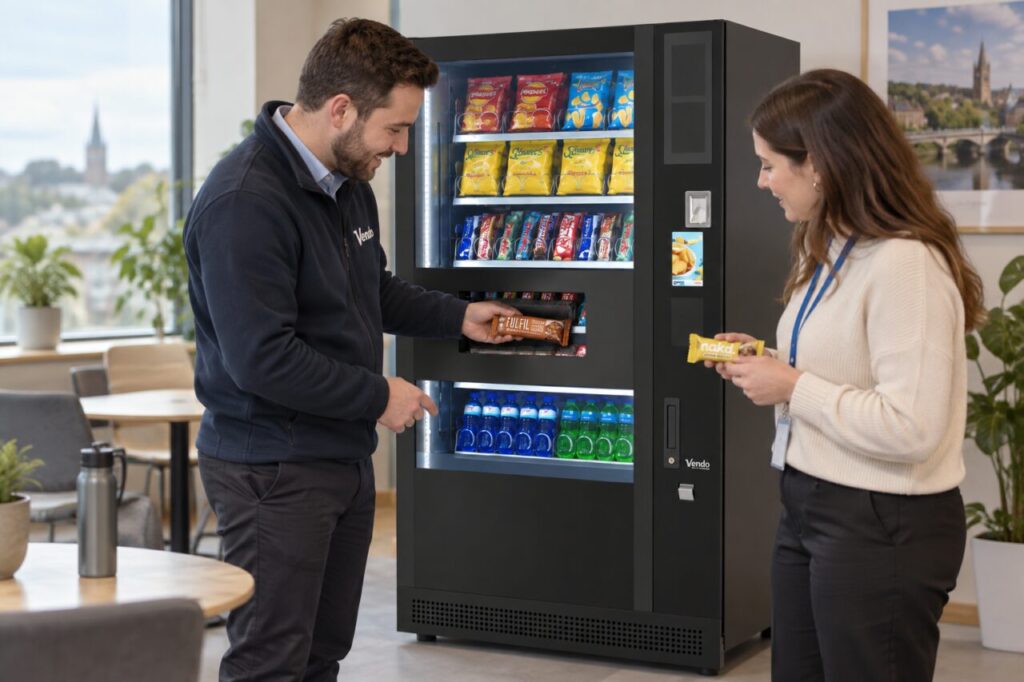
The aim is to turn “we can offer plenty of choice” into a clear discussion about products, machine compatibility, availability and customer preferences. This is especially valuable when broader choice is one of your main reasons for reviewing the existing service.
Bring a short, representative product list
Choose a few examples that represent the range you want: a familiar drink, a popular snack and a product that meets a specific staff preference. Include exact pack sizes where you know them.
Separate essential requirements from items you are happy to trial. A request for a particular protein bar is different from a request for a choice of suitable protein snacks.
Ask the supplier which requests can be met now and which need further checking. This gives you a more useful answer than a long list of brands with no indication of availability or suitability for the proposed machine.
See the intended products vend
Where practical, request a demonstration using the shortlisted machine configuration and the actual packs. Observe selection, delivery and collection, rather than judging suitability from the product’s appearance behind the glass.
A sample that works once is a starting point for discussion, not a guarantee of reliable performance in every arrangement. Ask what testing the supplier uses before introducing a new item or pack format.
Our guide to testing vending product packs explains why mechanical fit should be checked separately from whether customers want the product. Both questions matter when agreeing the opening range.
Compare meaningful choice
A cabinet with many selections can still feel repetitive if several slots offer very similar products. Think about the occasions people are buying for: a drink during a short break, a snack after exercise or a familiar treat on a late shift.
Discuss alternatives without labelling every new product as healthier. Look at the actual product information and the workplace’s agreed preferences. A marketing description should not replace a clear explanation of what is being offered.
Our managed-service product discussion can include lower-sugar drinks, protein snacks and other preferences, subject to availability, compatibility and demand. Confirm the agreed range for your own site.
Ask what happens when an item becomes unavailable
Product flexibility also means handling change sensibly. Establish who proposes a substitute, what information the site receives and whether approval is needed before a replacement is stocked.
Ask how a different pack size or selling price is communicated. People who choose a familiar selection should not be surprised by an unexplained change.
Do not assume flexibility is unique to one supplier. For example, CoreVend’s operated-service information also describes customer product choice. The useful comparison is how each provider will deliver your actual requirements, supported by a specific proposal.
Agree how the range will be reviewed
Set a review point after launch and decide what evidence will be considered. Combine customer requests with sales, availability and information about products that remained unsold. Avoid changing everything in response to a single comment.
Keep the initial range and agreed substitutions in a simple record. This makes later discussions about choice more concrete and helps distinguish an experimental product from a permanent commitment.
When you request a vending proposal, bring your representative product list and ask to discuss it beside the proposed equipment. A practical demonstration and a clear review process tell you more about the service than an unsupported claim that one supplier has the widest range.