
Cleaning Beneath a Vending Machine: Agree the Work Before Installation
The floor around a vending machine belongs in the cleaning plan, but the space underneath the cabinet can be easy to overlook. Discuss it before installation, while the position and responsibilities are being agreed. Cleaning staff should not have to guess whether they can move equipment, reach behind it or apply a product near its base. A clear boundary protects both the work and the people carrying it out.
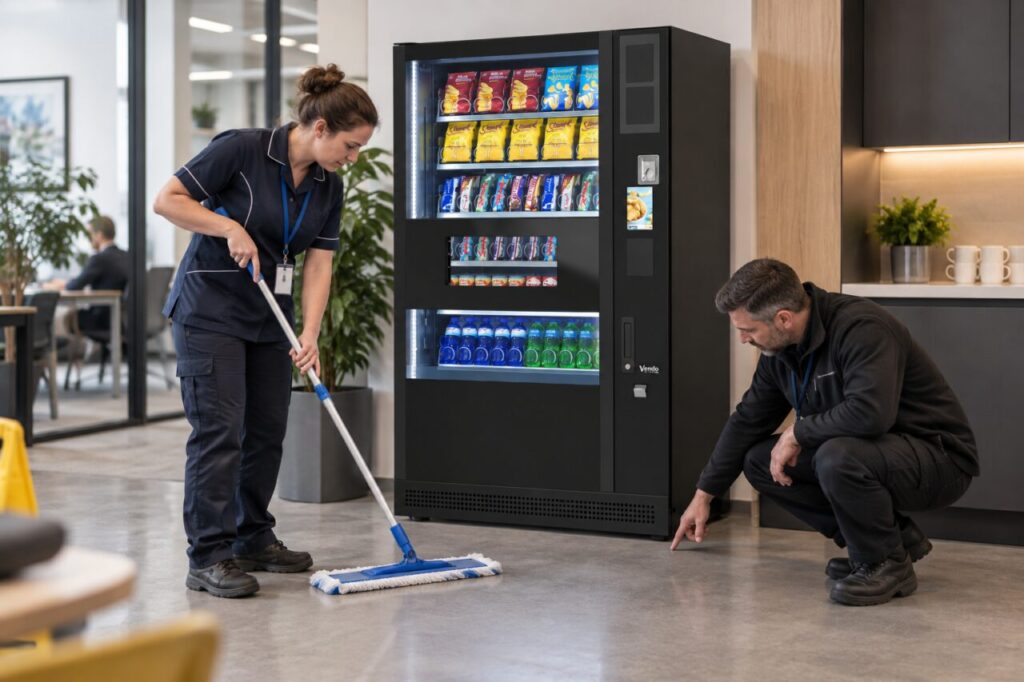
Identify the accessible floor area
Walk the proposed position with the facilities contact and cleaning representative. Distinguish the open floor in front of the machine from narrow side gaps and areas that cannot be reached safely during routine work. Note nearby walls, furniture and access routes. The purpose is to understand the real cleaning task, not to create an instruction for moving or dismantling the cabinet.
Ask the equipment provider what routine access is appropriate for the specific installation. Follow the relevant instructions and site arrangements. If an area requires equipment movement or other technical work, identify the responsible competent person and the process for requesting it. Never assume that wheels, adjustable feet or a gap beneath a machine mean that cleaning staff can reposition it themselves.
Separate routine cleaning from an access job
The everyday plan should say what staff can clean with their approved tools and methods, and what they should report. For example, an inaccessible spill or accumulated debris may need a separate assessment. Describe the observed problem and its position without asking someone to reach blindly into a restricted space. Keep customers clear of an affected area under the site’s normal procedures.
Agree how a request reaches the operator and facilities team. A note saying the floor was not cleaned is less useful than a clear description that a particular area was inaccessible. Record who will decide the next step. Do not label the task complete simply because the visible front edge looks tidy while a reported inaccessible problem remains unresolved.
Check tools and products against the instructions
Cleaning methods should suit the floor, surrounding materials and equipment restrictions. Obtain the provider’s guidance where needed rather than transferring a method from another appliance. Do not spray liquids into ventilation openings, controls or electrical areas. This article does not prescribe a chemical, dilution or electrical isolation procedure; those details belong in the applicable instructions and the site’s trained working method.
Store cleaning equipment where it will not obstruct customers or service access. A bucket left beside the cabinet after the task can create a different problem from the one the cleaner was addressing. Include the return of tools and removal of temporary signs in the completion check. If the provider needs to attend, agree how the area will be managed until then.
Keep the arrangement useful after furniture changes
Review the cleaning boundary when a bin, table or partition is moved near the machine. A layout change can remove previously available access without changing the cabinet itself. Give a new cleaning contractor the current arrangement, including the contact for areas outside routine access. Do not expect them to infer the agreement from an old checklist or an adjacent appliance.
When planning vending equipment for your site, include the surrounding floor in the installation discussion. The desired outcome is simple: staff know the work they can complete, the limits they must respect and how to report something that needs another response. That is more useful than a general instruction to clean everywhere without an achievable, approved method.
Discuss the proposed location with the team before installation.
Related guidance: Vending Delivery Routes: Agree Protection for Finished Floors.