
Vending Delivery Routes: Agree Protection for Finished Floors
A vending delivery route may cross finished flooring, entrance mats or recently refurbished rooms. Before the machine arrives, ask the building manager and delivery team to agree how the route will be protected. Floor protection belongs in the handling plan; it should not be improvised by whoever happens to meet the vehicle.
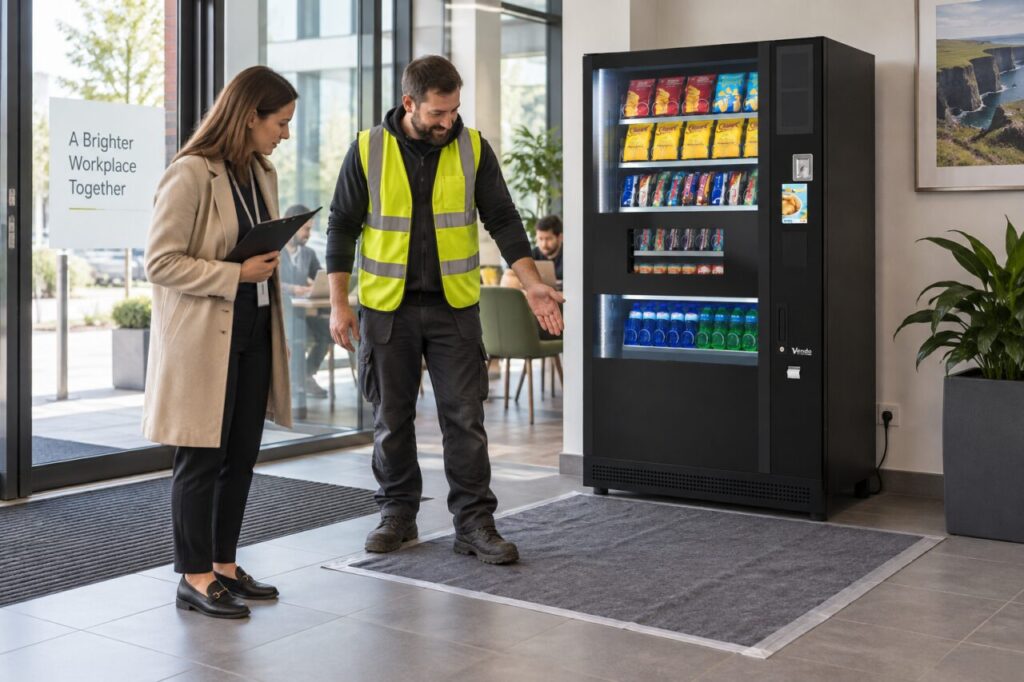
The appropriate arrangement depends on the floor, equipment and handling method. This article is a coordination checklist, not a method for moving a heavy machine. Let the competent delivery team assess the route and confirm what they require, with the building’s responsible person providing the relevant information about the surface.
Describe the actual route
Identify the route from the delivery point to the final position, including thresholds, lifts and changes in floor finish. Share current photographs where useful and explain any recent refurbishment. Do not rely on an old site plan if furniture, doors or access restrictions have changed since the original delivery discussion.
Tell the delivery team about restrictions imposed by the building manager. These might concern when the route can be used or which areas need particular consideration. Ask for clarification where responsibilities overlap, so neither the supplier nor the site assumes that the other has arranged suitable protection for the whole journey.
Agree suitable protection in advance
Ask the handling team what protection is compatible with their planned method and the floor surface. The building manager may need to confirm any requirements from the flooring supplier. Avoid prescribing materials yourself unless you are responsible and competent to do so; unsuitable coverings can create a different access problem.
Include who supplies, places and removes the agreed protection. Confirm whether this is part of the delivery arrangement or a separate site task. If a quotation leaves that unclear, resolve it before the visit. A low apparent delivery charge is difficult to compare when necessary preparation has not been assigned to anyone.
Check readiness before the vehicle arrives
Arrange for the responsible person to check that the route is ready at the agreed time. Temporary storage, cleaning activities or another contractor’s work may affect the plan. Tell the delivery team about a material change before they begin moving the machine, rather than hoping the route can be adjusted during the delivery.
Keep people who are not involved in the work clear of the handling activity according to the site’s arrangements. Do not ask untrained staff to help lift or steady the equipment to overcome a route problem. If the agreed method cannot be followed, stop and let the responsible delivery team decide the next step.
Close out the route arrangements
After the delivery team finishes, follow the agreed process for removing temporary protection and returning the route to normal use. Confirm who checks the area and records any concern. Photographs taken through an agreed process can provide a useful factual record, without making assumptions about responsibility for a mark or defect.
Keep any unresolved issue linked to the delivery reference and location. Describe what was observed and when, then ask the appropriate party to respond. This is more useful than circulating a general complaint that does not identify the affected surface, the route used or the people responsible for coordinating the visit.
For an Irish site considering vending installation, include floor protection in the early survey conversation. The remote site-assessment photo guide can help prepare route information, while the delivery team’s confirmed handling plan remains the basis for the work itself.
Discuss your proposed location and mention any finished-floor or refurbishment constraints.