
Cleaning Supplies Beside Vending Stock: Separate the Storage Before Refilling
A convenient shelf beside vending stock can become a home for cleaning sprays, cloths and spare supplies. That arrangement deserves attention before the next refill. The Food Safety Authority of Ireland advises storing cleaning chemicals separately from food to prevent contamination. Review the storage system as a whole, rather than moving one bottle temporarily and allowing the same arrangement to return next week.
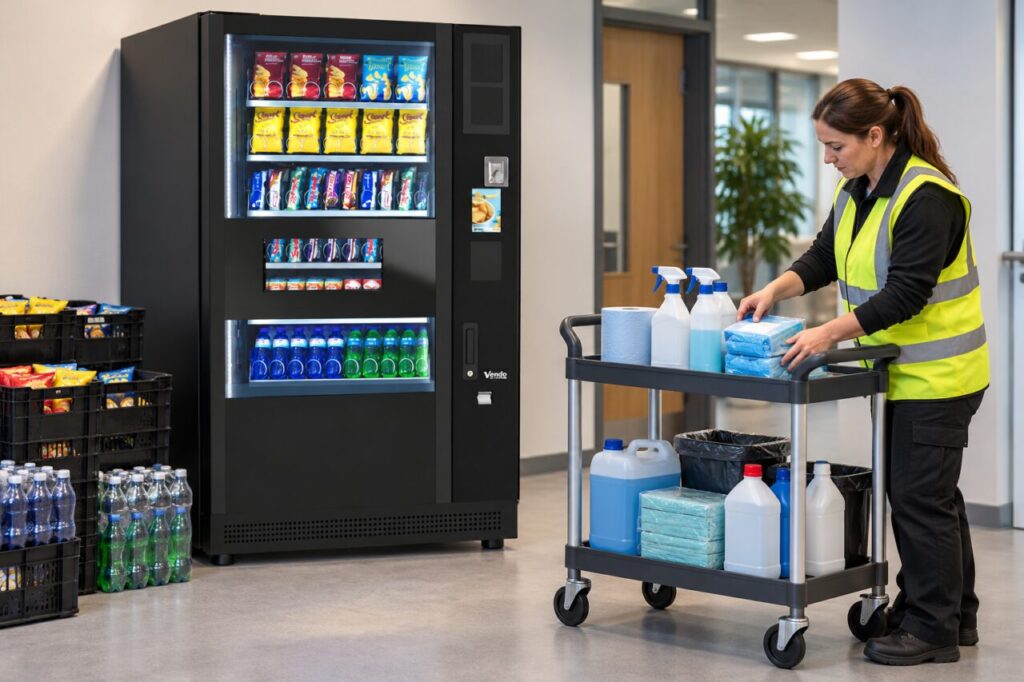
Separate storage responsibilities
Identify who controls the food stock and who provides cleaning supplies. In a shared workplace these may be different teams. Agree suitable, clearly identified storage for each through the site’s food-safety and cleaning arrangements. The FSAI Safe Catering guidance explains the need to prevent chemical contamination; the site’s responsible person should apply that principle to the actual premises.
Do not assume that a sealed snack wrapper makes any storage arrangement acceptable. Check the condition of the surrounding area and whether containers could leak, spill or be confused with food supplies. Keep products in their proper labelled containers and follow the relevant instructions. If there is uncertainty about contamination, refer it to the responsible food-safety person before stock is offered for sale.
Check the whole route to the machine
Look beyond the main cupboard. Supplies may meet on a delivery trolley, a temporary table or the floor beside the machine during a busy visit. Identify where this happens and arrange the work so food stock and cleaning materials remain appropriately separated. A correct cupboard does not resolve a temporary staging practice that repeatedly brings them together again.
Ask the cleaning and refill teams to walk through a normal visit. Establish where each team places materials, what happens when they arrive together and who clears the area afterwards. Avoid leaving responsibility at the vague instruction to be careful. Give each team a practical arrangement that can be followed even when the usual supervisor is away.
Respond to a questionable stock situation
If food packs may have been affected by a leak or other contamination, do not load them while waiting for an answer. Keep them distinguishable from stock cleared for use and follow the site’s established assessment and disposal process. Record the product, quantity and circumstances so the responsible person can make an informed decision. Do not taste a product to decide whether it is safe.
For the machine itself, follow manufacturer instructions and the agreed cleaning procedure. General food-storage advice does not identify a suitable cleaning chemical for every cabinet, screen or payment device. Ask the supplier when compatibility is unclear. Avoid making changes to internal equipment or using an improvised cleaning method simply because the exterior appears similar to another appliance.
Make the improved arrangement last
Update the storage labels and brief both teams after the new arrangement is agreed. Check that replacement cleaners and temporary refill staff receive the same instructions. Include the storage area in the normal site review rather than waiting for another misplaced bottle. Record any stock removed separately from normal sales or refill quantities so the inventory remains understandable.
When planning vending at a workplace, discuss space for stock and service materials as well as space for the cabinet. The practical objective is an orderly routine that keeps food protected and gives each team somewhere appropriate to work. A short review with the responsible people is more useful than relying on a general warning sign alone.
Related guidance: A Vending Cleaning Log That Records the Work Actually Done.
Planning vending at your site? Contact the team with your location and requirements.