
Buying a vending machine from a closing business: who can release it?
A vending machine can be standing in a business that is closing without belonging to that business. It might belong to a vending operator, be hired under an agreement, or contain payment equipment supplied separately. Before you pay for a used machine or send a carrier, establish who can sell the cabinet and who can release it from the premises. The two people may have different roles.
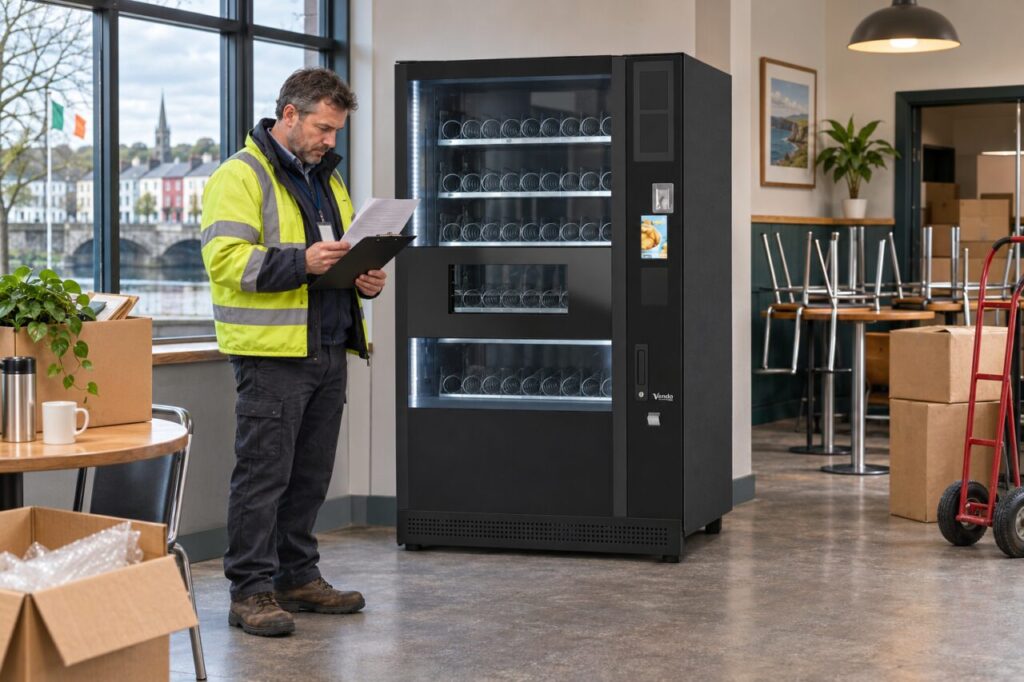
Identify the actual asset
Ask for its make, model, serial number and photographs showing its present condition. Match those details to the offer and any evidence of ownership the seller can supply. If the seller offers several similar cabinets, agree the exact unit before arranging the collection. A photograph taken at a different branch could show an identical model while the carrier is being sent to the wrong place.
Make a separate list of the payment reader, coin equipment, accessories, stock and keys. Ask which items are included, who owns them and which will be removed beforehand. A card reader fixed to a door is especially easy to overlook. The guide to production versions explains why a familiar model name is only the beginning of identification.
Separate authority to sell from access to the room
A facilities manager may be able to open the loading door without being able to approve a sale. Equally, an owner at another address may agree the sale but have no means of admitting a driver. Obtain a clear written release from the appropriate party and a separate collection appointment with the site contact. Where the ownership or authority is disputed, resolve that point before committing to transport or payment.
If an appointed representative is handling the closure, ask them to identify the capacity in which they are acting and the process for confirming that this cabinet is included. Get appropriate professional advice where the answer affects ownership or contractual rights. A set of keys, a removal deadline or a price written on a clearance label cannot by itself settle those questions.
Make the release usable at the door
Give the site and carrier the same equipment reference, collection date, entrance and contact details. Describe the cabinet’s agreed condition, what the driver should receive and who is responsible for preparing it. Ask whether the building will still have power, lifts, access control and staff on the agreed day. A collection arranged while the business is open may take place after those arrangements have ended.
Set a simple exception rule. If the serial number differs or an agreed reader is missing, the driver should record the discrepancy and contact the authorised person before accepting a substitute. The driver needs a workable instruction, rather than the responsibility for deciding whether two different machines have the same value.
Close the record after collection
Ask both parties to retain the signed collection note, dated condition photographs and the list of included items. Record anything left behind and who will deal with it. Keep a copy available to the person receiving the machine at its destination. They can then distinguish a missing accessory from something that was always excluded.
When comparing vending machines for sale, include the cost and feasibility of a properly authorised collection in your decision. A bargain that cannot be released on the agreed day can tie up a carrier, a receiving team and a site opening date at the same time.