
Comparing Two Vending Snacks: Avoid Changing Every Trial Condition
A workplace may want to compare two possible vending snacks before deciding which belongs in the regular range. The exercise is easier to interpret if the conditions are recorded. When product, price, placement, availability and site activity all change together, it becomes difficult to know what the observed difference actually tells you.
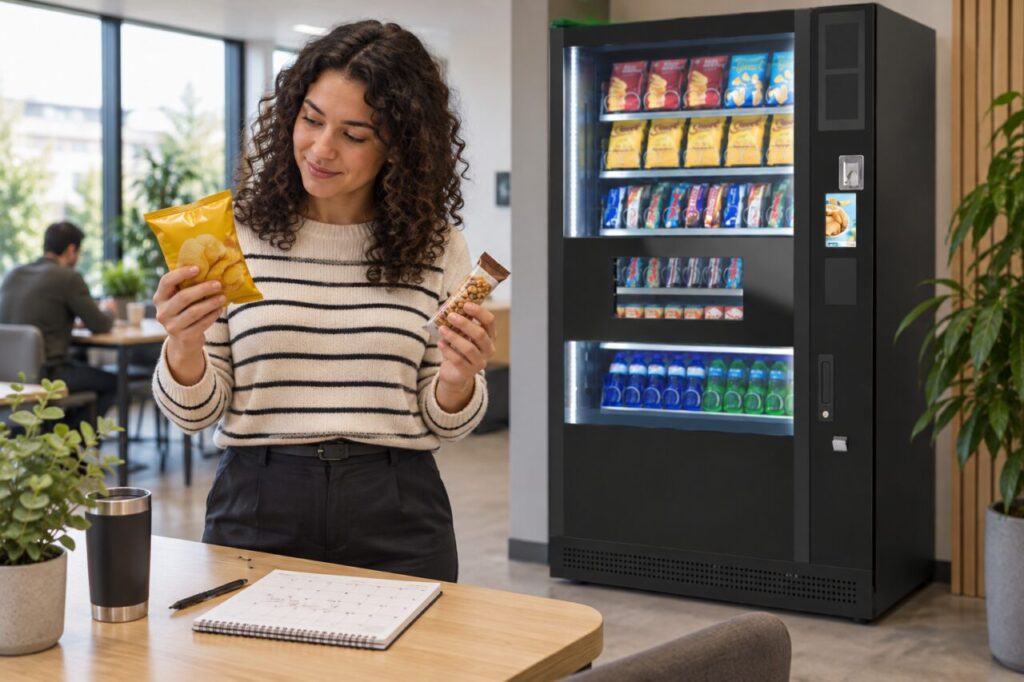
This is a practical range review, not a promise of a controlled scientific experiment or a guaranteed sales result. Use the information available and state the limitations. Product suitability and the operator’s approved process remain prerequisites, regardless of how interesting a proposed comparison seems to the workplace.
State the decision question
Identify what you are trying to choose. The question may be whether one option better fills a particular gap in the range, rather than which product is universally more popular. Keep the comparison connected to the site’s customers and service need instead of treating a short trial as proof about every vending location.
Ask the operator whether both products are suitable for the actual equipment and supply arrangement. Confirm the pack variants before ordering. A comparison should not require staff to alter loading arrangements without guidance or stock a product that has not been assessed for the supplied configuration.
Record the important conditions
Note the trial dates, product availability and the relevant arrangement for each option. Where price or placement differs, record that fact rather than assuming it has no effect. The objective is transparency about the conditions, not forcing an artificial equality that the equipment or commercial arrangement cannot support.
Include changes in site activity that are likely to matter, such as a closure or unusual event. Use aggregate observations rather than individual purchase tracking. A small workplace can learn from a simple factual record without collecting personal data or claiming that every factor affecting demand has been measured.
Watch for missing opportunities
If one product is unavailable for part of the trial, the sales totals do not describe identical opportunities for purchase. Record the gap and ask the operator how it should affect the review. Do not automatically replace missing days with an invented estimate of what customers would have bought.
Keep feedback separate from transactions. People may like the idea of a product without selecting it regularly, while a product with modest comments may still serve a useful need. Neither observation should be dismissed, but they answer different questions and should not be merged into a single unsupported popularity score.
Make a proportionate decision
Review the findings against the original question. If the evidence is limited, the next step may be another observation period or a smaller range adjustment rather than a permanent decision. Explain the reason for the choice without claiming that the trial proves a nutritional benefit or a predictable increase in revenue.
Our guide to staff snack requests explains how suggestions can inform the range without becoming automatic promises. Use the trial record to close that discussion: what was assessed, what was observed and what the operator has agreed to do next.
When discussing vending snack options, bring the trial conditions as well as the totals. A modest conclusion supported by clear observations is more useful than a confident winner declared from mismatched circumstances. Keep the record available for later reviews so the same comparison does not have to be reconstructed from memory when the range changes again.
Ask our team about assessing a proposed range change for your workplace.