
Staff Snack Requests: Explain How Range Decisions Are Made
Inviting staff to suggest vending snacks is useful only if they understand what happens to the suggestions. A request is an input to the range discussion, not an automatic promise that the product will appear. Explain the decision process so people can contribute without assuming that every popular idea can be stocked immediately.
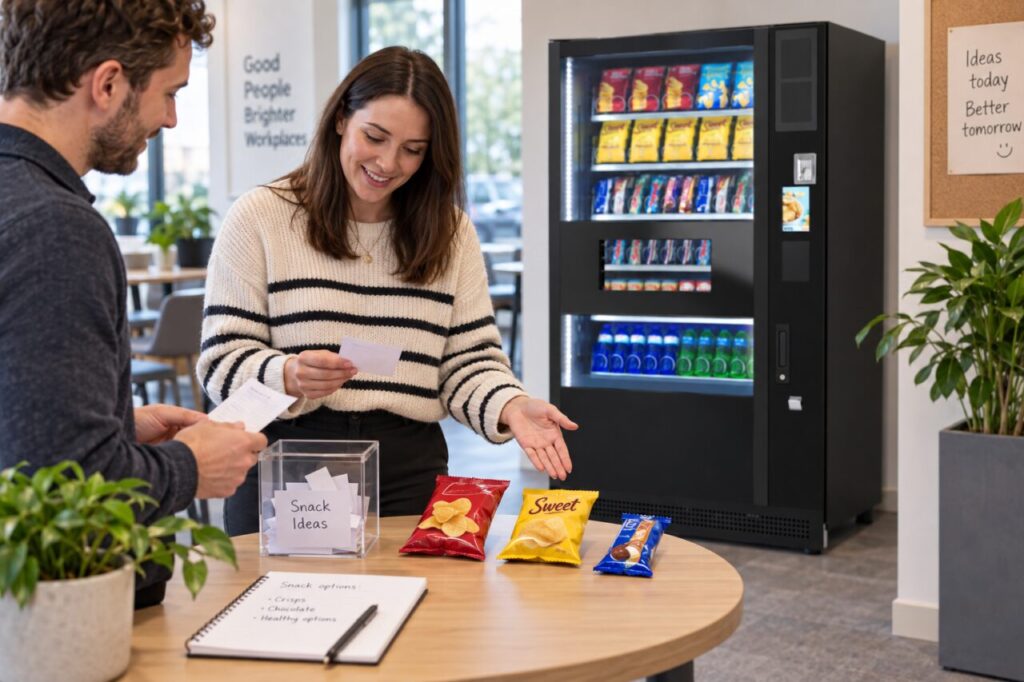
Keep the process proportionate to the workplace and the service arrangement. The supplier or operator may be responsible for the final range, and equipment suitability still matters. This article offers a practical way to communicate those decisions without inventing a fixed policy that every vending provider follows.
Ask for a usable suggestion
Request enough detail to identify the proposed product or the need it would meet. Someone may want a savoury option, a different price point or a particular pack size rather than one exact brand. Distinguishing the underlying preference can reveal alternatives if the first suggestion is unsuitable or unavailable.
Avoid asking people to disclose private health information in a shared suggestion form. General range preferences can be collected without publishing personal dietary histories. Where someone has a specific product-information question, direct them to the relevant label or responsible provider rather than treating a workplace vote as confirmation of suitability.
Explain the assessment factors
Tell staff that the operator needs to consider the actual machine, packaging, supply arrangement and the overall range. A popular retail product is not automatically appropriate for the installed configuration. The supplier should confirm suitability, and any trial should follow its instructions rather than relying on the appearance of the pack.
Demand is another consideration, but a list of requests is not the same as measured ongoing purchases. People may express interest without using the machine regularly. Use suggestions as evidence of interest and combine them with the operational information available, while being clear about what has and has not been tested.
Give suggestions a clear status
A simple status such as received, under review, planned for trial or not currently suitable can prevent repeated uncertainty. Explain the reason in neutral practical language where possible. Do not blame a named staff member or imply that an unselected product is poor quality simply because it does not fit the current arrangement.
If a request cannot be met, consider whether another option addresses the same need. Avoid promising a substitute until it has been assessed. It is better to explain that the operator is reviewing suitable alternatives than to announce a new product and later discover that the proposed pack cannot be supplied or used.
Review trials against their purpose
Where a trial is agreed, state what question it is intended to answer and when it will be reviewed. Keep the conclusion tied to the evidence. A short trial may inform the next range decision without establishing a permanent preference for every group using the workplace or every season of the year.
Our guide to useful choice rather than brand count explains how range variety can be assessed by customer need. Use that perspective alongside staff suggestions. Adding more brand names does not necessarily fill a missing product type or solve the problem that prompted the request.
When discussing vending range options, share the themes in staff feedback rather than a long unfiltered wish list. Close the loop afterwards by explaining what was selected, what remains under review and why. A transparent process respects the suggestions while keeping the final decision grounded in the equipment and service the workplace actually has.
Contact our team to discuss the range needs at your workplace.