
More Vending Brands or More Useful Choice? Review the Range by Customer Need
A vending machine can display many brands while still offering very similar choices. When reviewing a range, ask what each selection adds for the people using the site. Brand variety can be valuable, but it should support useful differences in product type, price or the occasion being served.
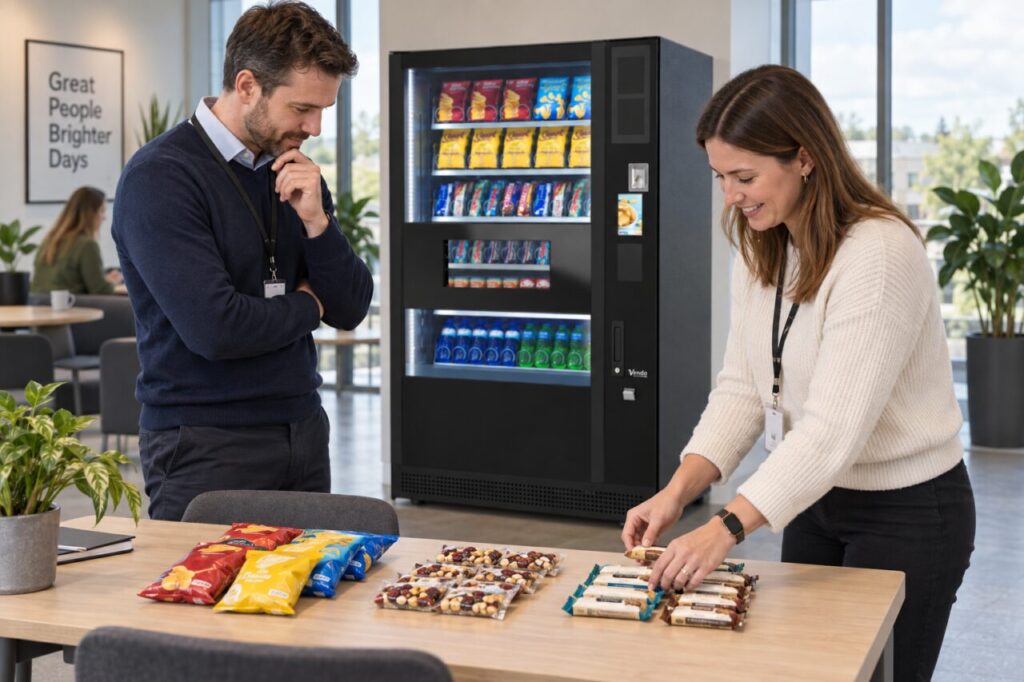
This is a practical range review, not a claim about what any competitor supplies. Start with your current products and customer feedback. The question is whether the available choices meet the site’s needs and remain manageable within the machine and service arrangement.
Describe what is actually available
List the current products using their exact pack identities, not just broad brand names. Note the type of item and the selling price shown to customers. If the range changes regularly, record the date so the review does not mix several different versions of the machine’s offer.
Group similar options to see where the range is concentrated. Several flavours of one type may be popular and justified, but they should not automatically be counted as solving several different customer needs. Keep this grouping descriptive rather than deciding in advance which products must be removed.
Ask what choice is missing
Use specific feedback questions. Customers might want a savoury alternative, a different pack size or a lower-priced option. A request for healthier choices needs a careful discussion of actual products and pack information, not a blanket promise attached to a new section label.
Distinguish a missing option from one that is regularly sold out. Adding another brand may not solve an availability problem with an existing popular item. Ask when the customer looked and what was present before interpreting the request as proof that the whole range needs expansion.
Check proposed products properly
Review the actual pack information and confirm suitability with the operator before adding an item. Products from different brands can have different packaging, ingredients and handling requirements. A similar name or appearance is not enough to treat them as interchangeable.
Our guide to product-range demonstrations can help structure the supplier conversation. Ask to see the proposed items and understand how the range would work in the supplied configuration. Keep any dietary claim tied to the current product information rather than the brand’s general reputation.
Balance breadth with availability
Discuss how adding a selection affects the space available for existing products. More variety is not automatically better if it leaves frequently requested items unavailable at the busiest time. The appropriate balance depends on demand, machine configuration and the agreed replenishment service.
Choose a focused change and explain what it is intended to improve. For example, the trial might test whether a different savoury option adds useful choice alongside the existing range. Avoid changing many unrelated selections at once if that makes the result impossible to interpret.
Review the difference customers experience
After the agreed trial period, consider sales, availability and relevant feedback together. Ask whether the new item added a useful option or mainly displaced a similar one. Keep uncertainty visible where the product was unavailable or the site operated unusually during the test.
When discussing vending options for an Irish workplace, describe the choices you want customers to have rather than asking only for more brands. A well-planned range can include familiar favourites and alternatives without pretending that brand count alone measures quality, suitability or customer satisfaction.
To review a proposed range, contact the team with your current selections and the specific customer needs you want to address.