
Can your engineer fit a vending spare part you have already bought?
You have found a spare part online and would like an engineer to fit it to your vending machine. Contact the service provider before buying or booking a visit. The useful question is not simply whether somebody can install a part: it is whether the proposed component is correct, traceable and acceptable within the engineer’s service arrangement.
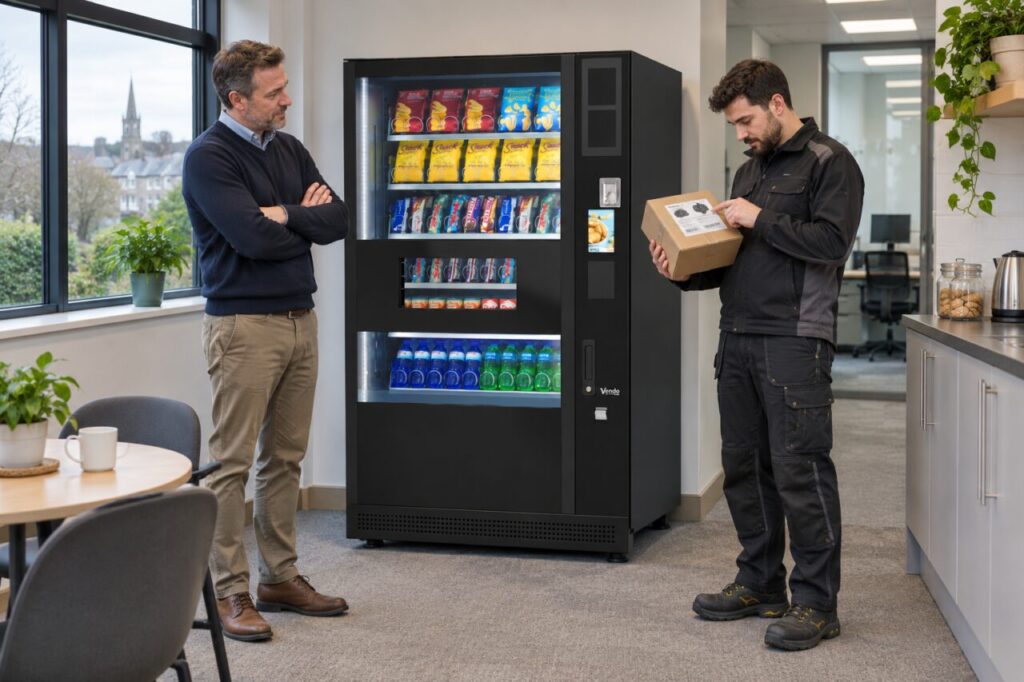
Let diagnosis lead the purchase
A symptom does not necessarily identify the failed component. Give the engineer the machine model, serial details, error message and what happened before the problem began. Explain any previous diagnosis and who made it. Buying the component that another operator mentioned in a forum can leave you with a usable spare that does not solve your actual fault.
If the part is already purchased, keep it in its original packaging and retain the invoice, reference number and supplier details. Send photographs of the label through the agreed support channel, avoiding unrelated personal information. Ask the engineer what further evidence is needed before accepting the job. Do not open technical compartments or attempt a trial connection to prove compatibility yourself.
Agree what the engineer is accepting
Ask whether the service company accepts customer-supplied parts and on what basis. It may need to inspect the item, verify a manufacturer replacement reference or decline a component of uncertain origin. Do not interpret willingness to inspect as a promise to install. Give the company room to stop if the component or machine condition differs from the information supplied.
Technical work belongs with appropriately competent personnel using the relevant instructions. The HSA guidance on work equipment is a useful starting point for that boundary. The commercial question about who supplies the part does not turn an electrical or refrigeration intervention into a routine task for site staff.
Separate labour, the component and the outcome
Request a written estimate for diagnosis, fitting, testing and any return attendance. Ask what happens if the supplied part proves incompatible or faulty. Would the first visit still be charged? Who would communicate with the parts seller? Would the engineer source an alternative only after a further approval? Those answers are more useful than assuming the installation charge includes everything that might follow.
Clarify the stated cover for the engineer’s work and the separate terms for the component. Do not assume a service company takes responsibility for a product it did not supply, or that the original seller covers repeat fitting costs. Our service information separates parts from service charges; ask specifically how a customer-supplied item would be handled in your case.
Leave a useful equipment history
After any accepted repair, retain the service report and the fitted part reference. Record whether the problem was resolved, whether testing identified another issue and what follow-up was recommended. Keep an unused or rejected item separate from approved spares so another person does not accidentally fit it later. Follow the seller’s agreed return process where a return is appropriate.
When discussing vending equipment support, explain whether cost, availability or a long lead time prompted the independent purchase. That gives the provider a chance to suggest an appropriate route. A used machine bought for spares also needs a clear compatibility assessment; physical resemblance is not sufficient evidence that a component belongs in your cabinet.