
Dented Drink Cans in Vending Stock: Separate and Report the Affected Packs
Finding dented cans while preparing a vending refill should interrupt the normal loading routine for the affected stock. Set those packs aside through the site’s agreed process and report what you found. Do not load them because the contents are still sealed or the date has not passed. The Food Safety Authority of Ireland’s storage advice advises against using food products with damaged packaging, even within their shelf life.
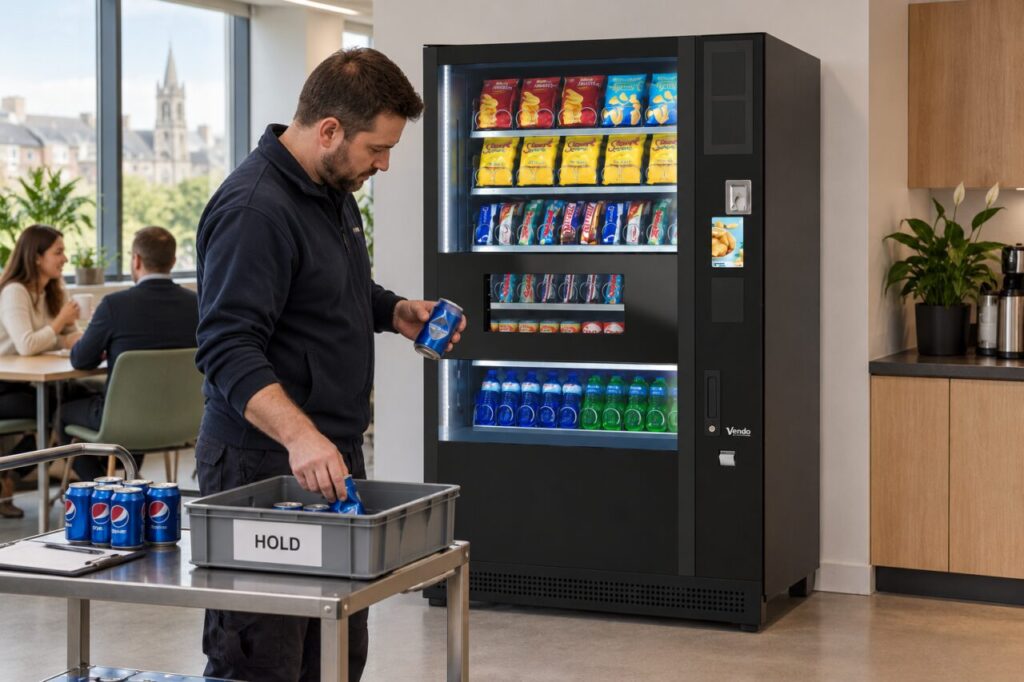
Keep affected packs out of the refill stock
Place the affected cans in the designated hold area or use the site’s other approved method for preventing accidental use. Make their status clear to the next operator. A dented can left among ordinary refill packs may be loaded by someone who did not see the original inspection. Avoid creating a temporary pile beside the machine where it could be mistaken for customer stock or a free sample.
Do not try to reshape a dent or open the can to decide whether the contents seem acceptable. A quick look or smell is not a substitute for the responsible food-business procedure. Report leaking, swollen or otherwise abnormal packaging through that procedure as well. Where there is a spill, follow the site’s cleaning and equipment instructions and involve the appropriate person rather than continuing to load around the problem.
Record the product and delivery details
Identify the exact drink, pack size, quantity affected and where the damage was found. Keep the supplier, delivery reference and relevant batch or date information available. Photographs of the packaging and outer carton can help explain the observation if requested. Capture the condition before discarding or separating identifying materials, following the site’s normal rules for handling stock that is on hold.
Distinguish what is known from what is suspected. Damage noticed during loading does not prove that it happened in the machine, during transport or at the supplier. State where and when it was observed and whether the outer carton also appeared damaged. This gives the responsible person useful evidence without turning an initial report into an unsupported claim about which party caused the problem.
Follow the authorised stock decision
Contact the supplier or responsible stock manager through the agreed process and ask what documentation is needed for the affected packs. Keep the stock unavailable while that decision is pending. Do not assume that a credit, collection or replacement is automatic; record the response that applies to the actual delivery. Follow the site’s food-safety procedure for the final disposition rather than returning the cans to use informally.
Update the available stock balance to reflect units that cannot be used for the planned refill. Otherwise the next order may be based on a quantity that exists physically but is not available to customers. Keep any replacement order distinct from a supplier credit so the records show both the operational quantity and the commercial outcome. A promised replacement is not stock on the shelf until it has arrived and been checked.
Investigate recurrence with evidence
If damage is repeated, compare the product, packaging, delivery and handling records. Ask the relevant parties to review the pattern rather than repeatedly writing off isolated cans without discussion. An authorised operator or provider should assess any suspected equipment-related handling issue. Site staff should not alter the machine’s dispensing setup to accommodate damaged packs or experiment with items that have already been set aside.
When planning vending equipment and stock arrangements, agree who handles delivery discrepancies and damaged-stock reports. A clear process protects the refill record and gives the supplier useful information for investigation. It also helps the next operator understand why a carton contains fewer available units than expected, avoiding an apparently simple stock shortage that actually began with an unresolved packaging problem.
Contact our team to discuss your vending requirements.
Related guidance: Damaged Vending Stock Deliveries: Track the Supplier Credit Separately.