
Can surplus vending snacks be donated before they go out of date?
When an office closes for refurbishment or a vending range changes, there may be sealed food left that a community organisation can use. Start by contacting the receiving organisation before taking products out for donation. Find out what it can accept, when it can collect and whether it can safely store and distribute the quantity available. A well-intended box left without an agreed recipient is a poor handover.
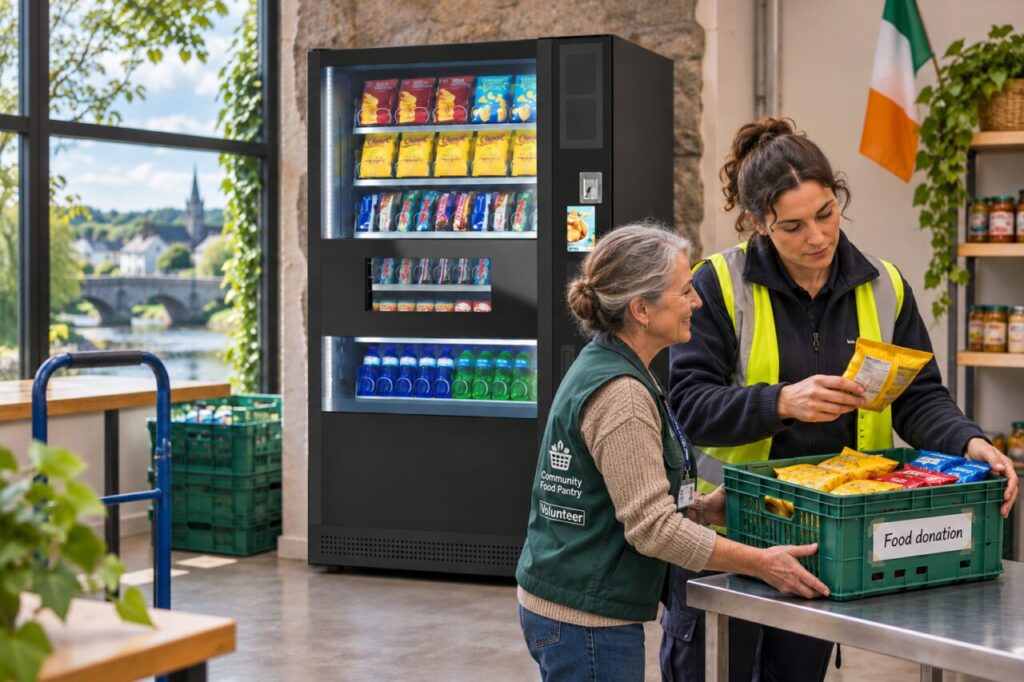
Check who can release the food
Identify the food business responsible for the stock and obtain its agreement. A site host may provide floor space while the vending operator owns the goods. Ask the operator to identify the affected machine, products and quantities and to follow its food-safety procedures. Food set aside because of a recall, a suspected safety issue or an uncertain storage history needs a different decision from ordinary surplus.
The Food Safety Authority of Ireland explains that food businesses can donate suitable unsold food when it is handled safely and meets the applicable conditions. Its questions and answers for businesses donating food cover date marking, traceability and responsibilities. Use that guidance for the products involved and seek advice where their suitability is uncertain.
Read the date mark and inspect the packs
Distinguish a use-by date from a best-before date. The FSAI says food must be within its use-by date for donation. Food past a best-before date may be suitable if it remains in acceptable condition and has been handled safely. A decision still needs to be made about the particular product. The receiving organisation may also have its own acceptance policy or require enough remaining time to distribute it.
Check that individual packs are intact, identifiable and carry the necessary information. A torn packet, a missing label or food separated from the information needed to identify allergens can change the decision. Keep doubtful products apart while the responsible food business assesses them. If refrigeration is required, agree how the required conditions will be maintained through removal, transport, receipt and storage.
Match the handover to the recipient’s capacity
Give the recipient a product list, quantity, date information, storage requirements and proposed collection time. Ask for confirmation before promising the stock elsewhere. Twenty ambient snack packets and twenty chilled meals need different arrangements. A recipient able to distribute the first immediately may lack the storage or time needed for the second.
Keep a dated record identifying the donor, recipient, products, quantities and relevant batch or lot information. Make sure there is a contact for a later food alert. Record a collection that did not take place as an outstanding handover rather than signing off the goods as delivered.
Record the movement separately from sales
Update the vending stock records when the goods actually leave. A donation reduces physical stock without producing a customer payment. Our guide to stock withdrawn for a site event explains a similar stock-record distinction. Keep the recipient’s acknowledgement with the movement entry so the next stocktake can trace the difference.
When reviewing vending stock and equipment for a venue, look at why the surplus arose. A planned closure might justify an earlier final refill or a smaller order. Matching the range to the next trading period makes it easier to handle the remaining food while it can still be useful to someone.