
Vending Stock Is Given Away for a Site Event: Record the Withdrawal Separately
Taking vending stock for a staff event may be perfectly intentional, but it still needs a record. If the packs leave storage without a separate entry, a later stock check can make them look like missing goods or unrecorded sales. Agree the withdrawal before the event and keep it distinct from ordinary machine refills. This is a practical inventory process, not a substitute for your organisation’s accounting policy.
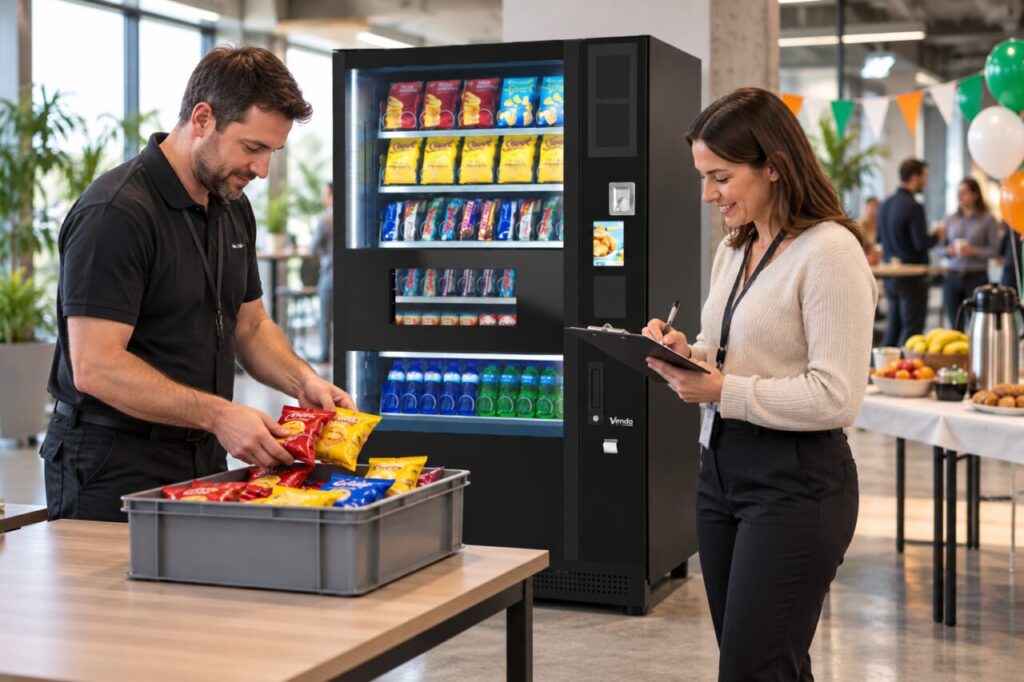
Agree who is supplying the event
Confirm who owns the stock and who can approve its use. A workplace host should not assume that products held on site belong to the host if an outside operator supplies the service. Ask the responsible party to agree the quantity, purpose and any charge or contribution. Keep the arrangement clear before products are removed from storage or a machine.
Identify the event and the person collecting the goods. A short reference helps distinguish this withdrawal from a routine transfer between sites. Specify the actual products and sellable units rather than a vague number of boxes. If a case contains mixed varieties, record the quantities taken so the remaining stock can still be understood accurately.
Record the physical movement
Use the normal stock process to show where the goods came from and where they went. If the event receives packs directly from storage, do not record them as loaded into a machine. If authorised removal from a machine is required, it should be performed by the responsible operator using the appropriate procedure and reflected in that machine’s stock record.
A simple illustrative example shows the distinction. If storage holds sixty packs and twelve are approved for an event, the event withdrawal is twelve and forty-eight remain before other movements. Those twelve are not automatically twelve vending sales. Keep the quantity record separate from the financial treatment so each can be reviewed by the appropriate person.
Preserve availability for normal customers
Check whether the withdrawal affects stock intended for the next refill. An event allocation may be small in total but remove most of one popular product. Ask the operator whether the remaining stock is sufficient for the agreed service plan. If replacement stock is needed, confirm the order and timing rather than assuming the next visit will solve the gap.
Keep product suitability, storage and handling within the site’s normal food procedures. An event does not remove the need to protect the goods and follow their instructions. Avoid returning opened or uncertain items to saleable stock simply because they were not consumed. The responsible person should decide what can be returned and how any unsuitable stock is recorded.
Close the event record
After the event, compare the quantity issued with any accepted returns and explain the final use. Record returns as a separate movement rather than silently reducing the original issue. This preserves a useful trail if a later count differs. Link any agreed invoice, internal allocation or contribution to the same event reference through the organisation’s normal finance process.
Review whether the event affected ordinary vending availability and use that finding when planning another occasion. For people developing a vending business, clear non-sale stock movements help explain what happened to the products purchased. Good records distinguish an approved giveaway from a shortage without treating either as evidence of sales that never occurred.
Related guidance: Moving Stock Between Vending Machines: Record Both Ends.
Planning vending at your site? Contact the team with your location and requirements.