
Your First Vending Stock Count: Separate Opening Stock from Sales
A new vending operator can lose track of stock surprisingly quickly if opening quantities are not recorded. A purchase invoice tells you what arrived from a supplier, but it does not necessarily show what went into the machine or what remains in storage. Begin with a simple stock record before the first ordinary sale.
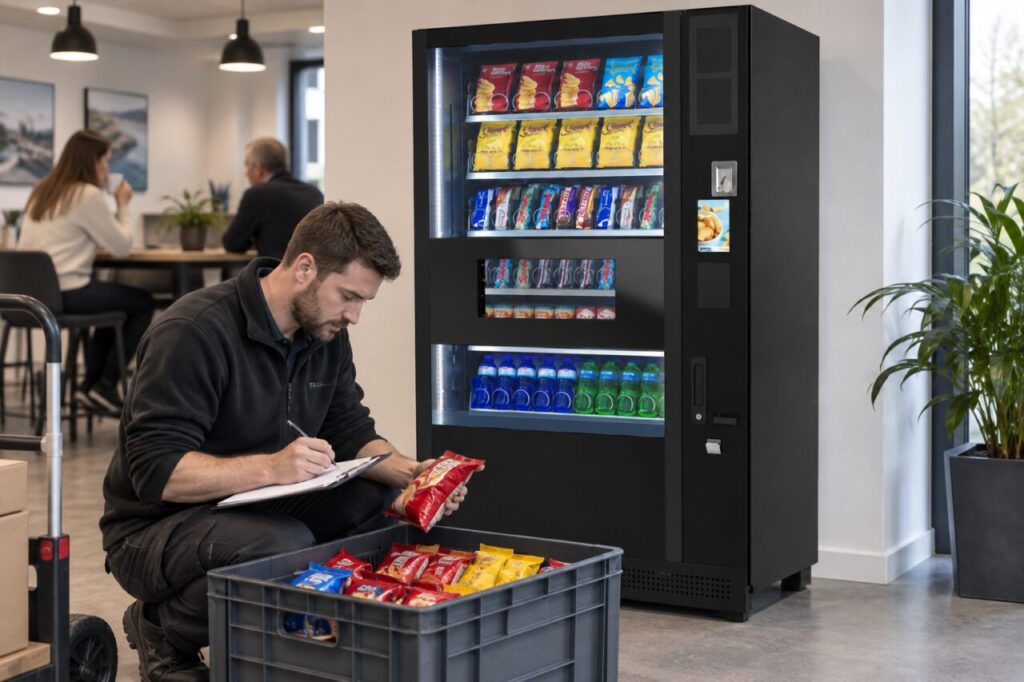
The aim is to understand movements, not to make a complex system for its own sake. Use a method appropriate to the equipment and business, and distinguish an estimate from a physical count.
Establish the opening position
Record the product, pack size and quantity placed into each relevant selection or location. Keep spare stock separate from stock loaded into the cabinet. Two packs with similar names should not be combined if they are different products for ordering or record purposes.
Note the date and who completed the count. If the opening layout changes during commissioning, update the record before using it as a baseline. Test purchases should also be identifiable so they do not disappear into an unexplained difference on the first review.
Record additions when they happen
For each refill, record what was added and when. A supplier delivery to your store is not the same event as loading products into a machine. Keep those movements distinct, even if both happen on the same day.
Use consistent product names and units. Recording one case in one place and individual packs in another creates an avoidable reconciliation problem. State the unit clearly and use the actual contents of the received case rather than assuming that every supplier pack is identical.
Account for removals separately
Stock can leave a machine for reasons other than an ordinary sale. Examples might include an authorised test, a damaged pack removed from service or a documented transfer. Record the actual reason through the business’s agreed process rather than forcing every difference into the sales column.
Do not invent a reason to make the numbers balance. If an item is unaccounted for, mark the difference for investigation. A record that admits an unresolved discrepancy is more useful than a neat total built on an unsupported assumption.
Compare expected and observed quantities
At review, compare the opening quantity plus documented additions, less sales and recorded removals, with the stock actually present. The exact information available from machine or payment reports depends on the setup, so confirm how the supplied reports should be interpreted.
Check the time period before drawing conclusions. A refill entered after the reporting cut-off can make two otherwise accurate records appear inconsistent. Also check whether the report counts products, transactions or another measure; those terms should not be treated as interchangeable without confirmation.
Use the first differences to improve the process
Look for an explanation in the records before changing the product order. A missing refill entry, inconsistent unit or unrecorded test may be a process issue rather than unusual customer demand. Ask the responsible person to correct confirmed errors while retaining an understandable history.
Keep the record simple enough to maintain at every visit. A detailed sheet that nobody completes consistently is less useful than a modest set of reliable fields. Our vending business guide provides wider context for planning an operation.
Once the opening period is reconciled, use actual movement to inform the next order while considering stock still held outside the machine. The first-month launch budget helps separate stock purchases from other opening commitments.
Contact our team to discuss equipment and operating responsibilities before starting a new vending service.