
Flexible Office Lunch Breaks: Observe Demand Beyond the Noon Rush
In an office where people choose their own lunch break, vending demand may be spread across several hours rather than concentrated at noon. A single observation during the traditional lunch period can miss the people who arrive earlier or later. Review the actual pattern before deciding that a machine is underused, overstocked or able to cope comfortably with every break.
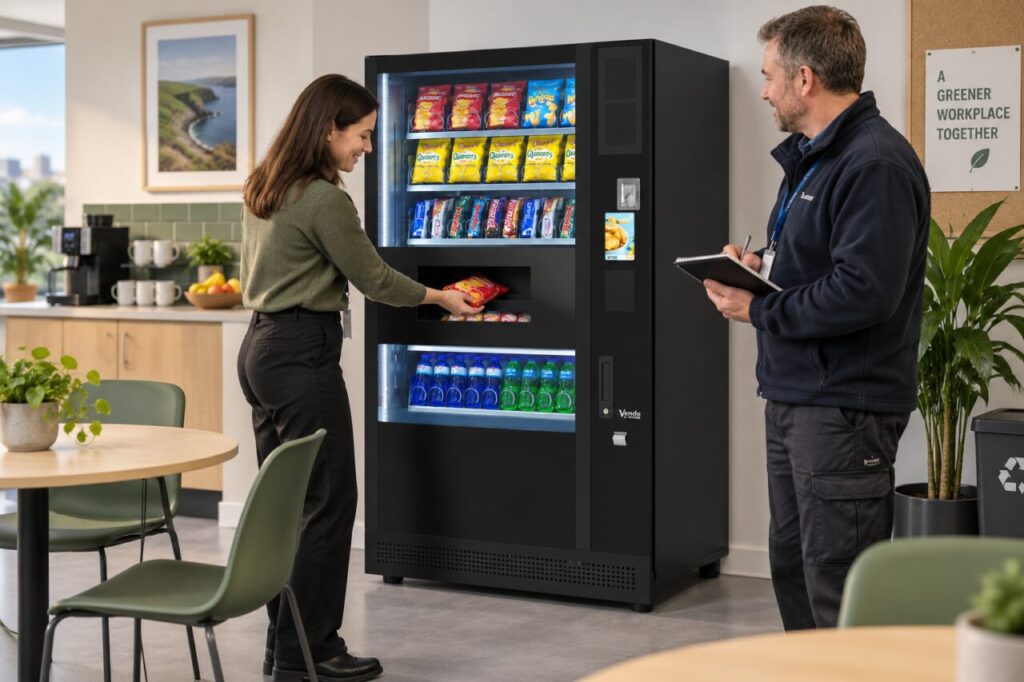
Identify the window people really use
Ask the workplace contact when staff can normally take breaks and whether teams work around calls or meetings. Use broad time windows rather than personal schedules. Include the period after the main lunch rush if employees regularly take a late break. The service brief should describe the usable break period, not simply the time at which the observer happens to visit.
Check whether other food options have different opening hours. A canteen closing may change what people want from vending later in the afternoon. Do not assume that a snack machine replaces a full meal service; ask what practical gap customers are trying to fill. This keeps the discussion focused on the actual occasion, such as a drink or a small snack between meetings.
Observe availability as well as activity
Take short observations at agreed points across the relevant window. Note queues, visible stock gaps and whether people can complete a normal purchase. A quiet moment can mean low demand, but it can also follow a popular selection selling out earlier. Avoid estimating lost sales from a glance at an empty row. Record the observation and ask the operator to compare it with available service information.
Keep observations unobtrusive and aggregate. There is no need to record names, photograph individual customers or link a colleague’s break time to their purchases. A simple note that a requested product was unavailable at a later break is enough to begin a useful conversation. Where a customer reports a payment problem, direct that individual issue through the proper support route separately.
Consider the refill encounter
Ask the operator how a flexible break window affects the practical timing of visits. If customers use the area throughout the afternoon, agree where they should wait while authorised refill work is taking place. Do not promise that a visit can avoid every customer. The aim is to coordinate the work around the site as far as the service arrangement allows.
Consider whether access restrictions or cleaning activity create another interruption during the same window. Share relevant site timings with the provider and identify a contact for unexpected changes. A stock plan cannot solve a route that is temporarily closed to customers. Keep those access issues visible in the review so the team does not respond to every complaint by adding more products.
Review a specific adjustment
Choose a clear question for any trial: can later-break customers find the agreed drink, or does a particular queue occur when meetings finish? Agree an adjustment that addresses that question and review it across comparable working days. Avoid interpreting an unusually busy event day as a normal result. Record any exceptional attendance or building change that could explain what happened.
Ask later-break users whether the change helped them, as well as checking overall figures. Their experience can reveal a persistent gap hidden by a satisfactory daily total. Keep requests proportionate to the machine and service under discussion. If the need is broader than vending can reasonably meet, explain that clearly rather than presenting every workplace refreshment problem as a stock-selection issue.
When exploring office vending, describe the full break window and the role you want the service to play. That gives the provider a more useful starting point than headcount and one lunchtime photograph alone.
Contact us to discuss the refreshment needs of your office.
Related guidance: Office Canteen Closed? Plan Vending Around the Actual Food-Service Gap.