
Office Canteen Closed? Plan Vending Around the Actual Food-Service Gap
An office can have a good canteen and still have an unmet need outside its service hours. Early arrivals, late meetings and short breaks may fall outside the main food-service window. Start by identifying those specific periods rather than assuming vending should duplicate the lunchtime menu. The useful question is what staff can reasonably obtain when the canteen is unavailable and how the vending area fits that journey.
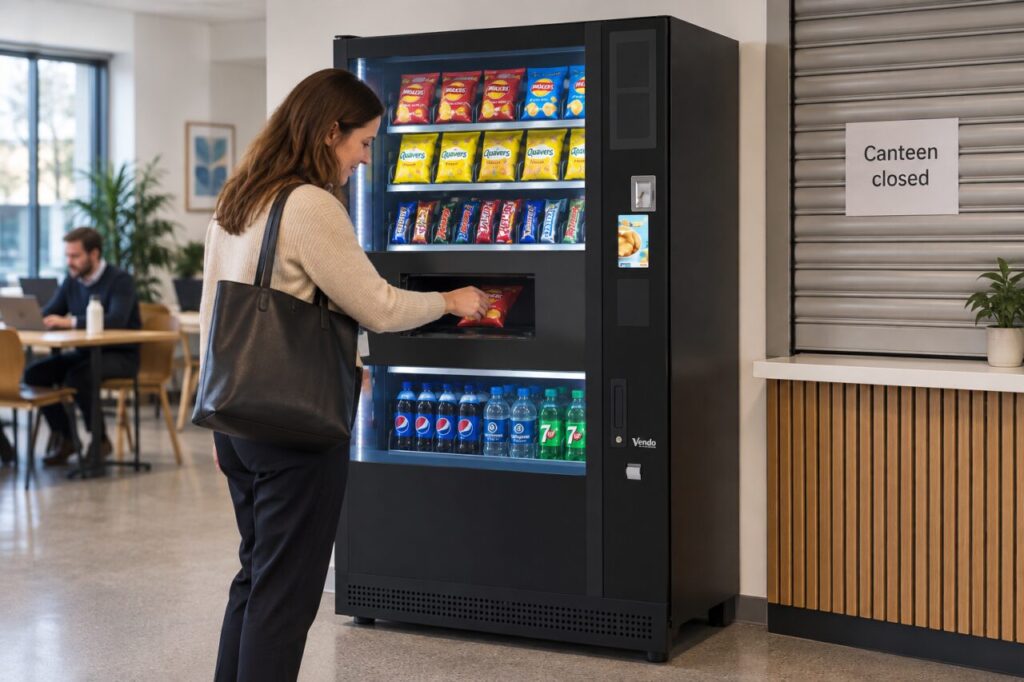
Map the hours customers can actually use
Write down canteen opening times, building access and the vending area’s availability separately. A machine may be in a room that closes with the canteen even though the wider office stays open. Walk the route at the relevant time with the site contact. Check whether staff can reach the machine without entering a restricted area or relying on someone who has already left.
Record the intended users for each period without collecting unnecessary personal information. Aggregate team attendance and break patterns may be enough to start the discussion. Distinguish a regular early shift from an occasional event. One busy evening should not automatically determine the permanent range, but it may justify a specific short-term conversation with the provider about availability.
Define the food-service gap honestly
Ask whether people want a packaged snack, a drink or something more substantial. A snack machine should not be presented as a complete replacement for a meal service merely because it is available later. Confirm the actual product and equipment options with the supplier. If the need falls outside the proposed setup, record that limitation instead of describing it away in the launch message.
Consider practical use as well as preference. Will customers eat at a desk, sit in an available break room or carry the item away? Is the necessary surrounding facility open at that time? These questions can change which packaged options are convenient. Do not make nutritional or dietary suitability claims from a product category name; customers need the actual information for the chosen item.
Coordinate the refill and communication plan
Tell the provider which periods matter most when discussing stock availability. A visit schedule that suits ordinary daytime demand may need review if the main unmet need occurs later. Ask what can realistically be monitored or adjusted under the service arrangement. Do not promise that every choice will always be available, particularly before the site has gathered useful observations.
Explain the relationship between the canteen and vending clearly. Staff should know the available purchase points, their relevant hours and the contact for each service. If different organisations operate them, do not imply that the canteen team handles vending queries. Keep temporary closures and timetable changes visible in the appropriate place without covering important product or payment information.
Review the gap after launch
Ask for feedback specifically about the periods the project was intended to serve. A general lunchtime survey may miss the early or late users entirely. Record whether the issue is access, stock availability, product choice or a purchase problem. These need different responses, so avoid treating every comment as a request for a larger machine or a wider range.
Use those observations to refine the office vending arrangement. Compare similar operating periods and note changes in attendance or canteen hours. Keep the original purpose in view: providing a useful option during an identified service gap. A focused review is more informative than judging success solely by a total that combines ordinary lunchtime purchases with the periods you actually wanted to improve.
Discuss your office timetable and the gap you want vending to address.
Related guidance: Office Vending Feedback: Turn Vague Comments into Useful Questions.