
Office Vending Feedback: Turn Vague Comments into Useful Questions
Comments such as the vending is poor or there is nothing suitable can point to very different problems. Before changing the range or raising a general complaint, ask a small number of neutral questions. The aim is to understand the purchase experience, not to challenge the person giving feedback or persuade them that their preference is wrong.
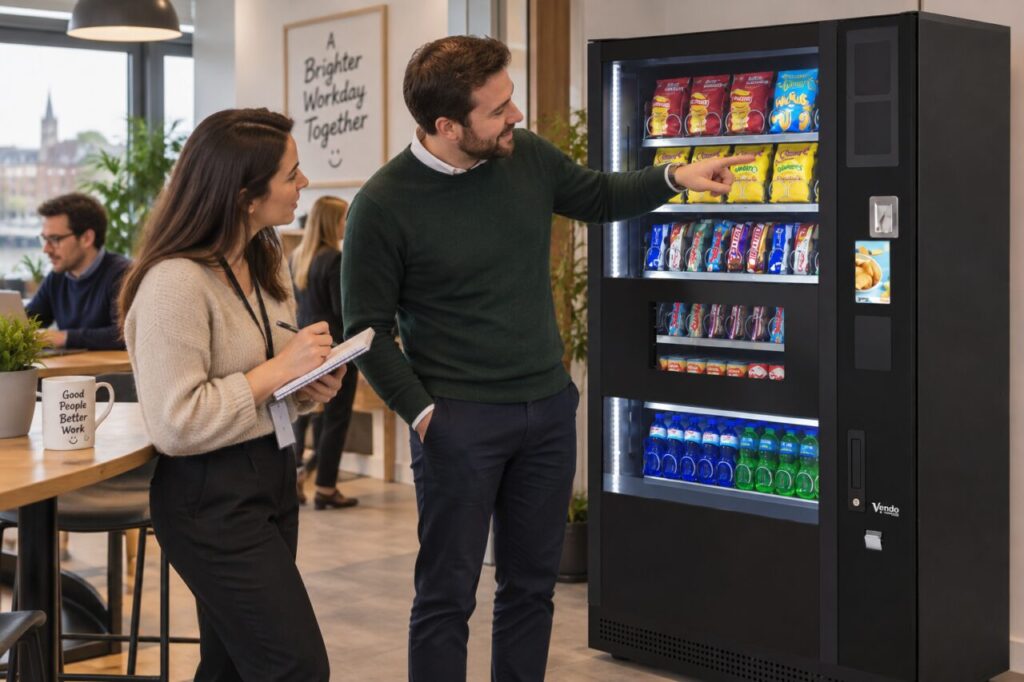
Keep participation voluntary and make it easy to describe an issue without sharing unnecessary personal information. A useful record identifies the relevant aspect of the service and what happened. It does not need to track an employee’s habits or turn a casual comment into an extensive workplace survey that nobody wants to complete.
Find out which part of the experience matters
Ask whether the concern relates to the product range, availability, price, payment or access to the machine. Let the person describe it in their own words before offering categories. A complaint about choice might mean the preferred item was sold out, rather than that the machine never carries anything the person would consider buying.
Where relevant, ask which machine and approximate occasion they mean. A large office may have several service points or different opening arrangements. Specific location information helps the host pass the issue to the right operator, while a general statement about all vending can obscure a problem confined to one machine or one visit.
Ask for a useful example
Invite one concrete example of what would have improved the experience. Someone may want a smaller drink, a clearly priced alternative or instructions they can understand. Record the need behind a named product request as well as the example, because the exact brand may not be the only way to address that need.
Do not convert the answer into a promise. Explain that feedback will be reviewed with the operator and that the available arrangement needs to be checked. Avoid leading questions such as whether everyone wants a particular snack, which can produce apparent agreement without revealing whether it solves a real or recurring customer problem.
Separate observations from interpretations
Record what was reported and identify any uncertainty. A person may have seen an empty facing but not know how long it had been empty. Keep that distinction rather than writing that the product is always unavailable. The operator can then compare the observation with the information available through the actual service process.
Group similar comments without claiming that a handful of responses represents the whole office. Note the period and the way feedback was gathered. A conversation after one busy meeting provides useful examples, but it is not a measured survey of every employee and should not be presented as a reliable percentage of workplace opinion.
Return with an honest update
Tell colleagues what action was taken, what remains under review or why a suggestion could not be adopted. A brief update shows that the feedback reached the relevant person. If a product change is being tried, describe it as a trial and explain when the host expects to review the experience with the operator.
Keep the follow-up focused on the issue rather than identifying who complained. Where an individual support case needs a private response, use the appropriate channel. For broader range feedback, a short workplace update is often enough, provided it accurately distinguishes a confirmed change from something that is still only being discussed.
A well-defined feedback route supports office vending services without making every comment a new procurement exercise. The non-user feedback guide addresses who to invite into the conversation; specific follow-up questions help make the responses useful once that conversation begins.
Discuss your office vending brief and the customer needs you want the service to address.