
Office Vending Feedback: Include People Who Do Not Use the Machine
Feedback from regular vending customers explains part of an office service. Colleagues who do not use the machine may have different needs or may simply prefer another option. Include them in a voluntary review so the workplace does not confuse the opinions of existing customers with the preferences of everyone on site.
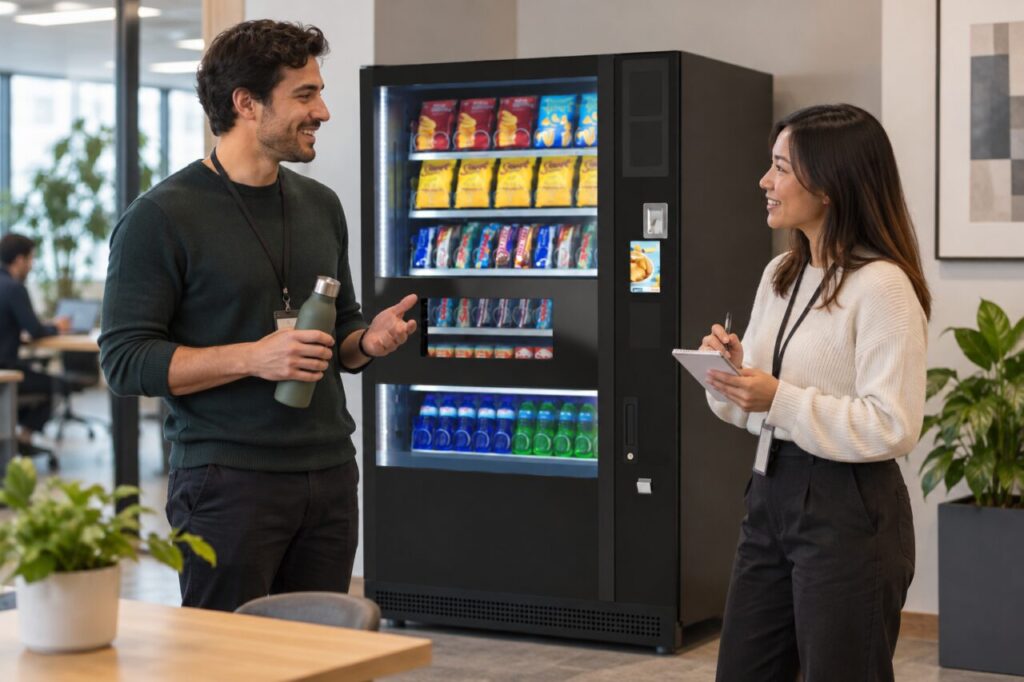
Non-use is not automatically a problem to solve. Some people bring their own food or do not want vending products. The purpose of asking is to understand the reasons where people choose to share them, not to pressure every employee into becoming a customer or to collect unnecessary personal information.
Ask an open question first
Start with a neutral question about whether the service is useful to the person and why. Avoid assuming that price, product choice or awareness is the cause. A short open response can reveal whether the issue concerns the range, the location, the purchase process or a preference unrelated to the machine.
Keep participation optional and explain how the feedback will be used. Do not require people to disclose health conditions, financial circumstances or detailed eating habits. Useful operational feedback can often be gathered as a simple preference or practical observation without linking it to an identifiable employee record.
Separate barriers from preferences
Someone who cannot conveniently reach the machine raises a different question from someone who prefers to bring a drink from home. Record those answers separately. Combining them into one dissatisfaction score makes it harder to decide whether a service change would address the problem or merely add complexity without a clear need.
Ask a follow-up only where it helps clarify a practical issue. For example, which part of the route is inconvenient, or which instruction is unclear? Avoid turning the conversation into a promise that every requested product or feature will be introduced. The provider still needs to assess feasibility and the agreed service scope.
Compare feedback with actual use
Use available service records alongside voluntary comments, while keeping the different evidence types distinct. A request is not a confirmed future purchase, and a sales total does not explain why another person never used the machine. Both can inform a discussion without being treated as interchangeable measures of demand.
Look for repeated, specific observations rather than relying on the most strongly worded response. Our guide to staff snack requests explains how to keep range decisions transparent. Tell colleagues how suggestions are considered so the review does not create expectations that the operator has not agreed to meet.
Test a proportionate change
If the review identifies a practical improvement, discuss a small, clearly defined change with the provider and responsible site contact. Record what question it is intended to answer. Avoid changing location, range, pricing and instructions simultaneously if that would make it impossible to understand which adjustment affected the experience.
After the agreed review period, invite feedback on the specific change and compare relevant observations. Some non-users may remain non-users, which is a valid outcome. The useful question is whether the service became clearer or more suitable for the intended audience, not whether every employee can be counted as a new customer.
When reviewing office vending, make space for different perspectives without treating them as guaranteed sales. A balanced review helps the workplace distinguish service barriers from ordinary preferences. Share the resulting decision and its reason so people understand what was learned and which changes, if any, were actually agreed.
Discuss your office service with our team using the practical feedback you have gathered.