
Buying glass-bottled drinks for a vending machine: what should you test?
Before ordering glass-bottled drinks for vending, ask the equipment supplier to confirm that the particular cabinet supports the actual bottle. A wholesale case price tells you little about whether the bottle will travel safely from its row to the customer. Arrange a sample test before making the first bulk order. Take the filled retail bottle, including its normal closure, label and packaging.
Identify which cabinet will dispense the bottle
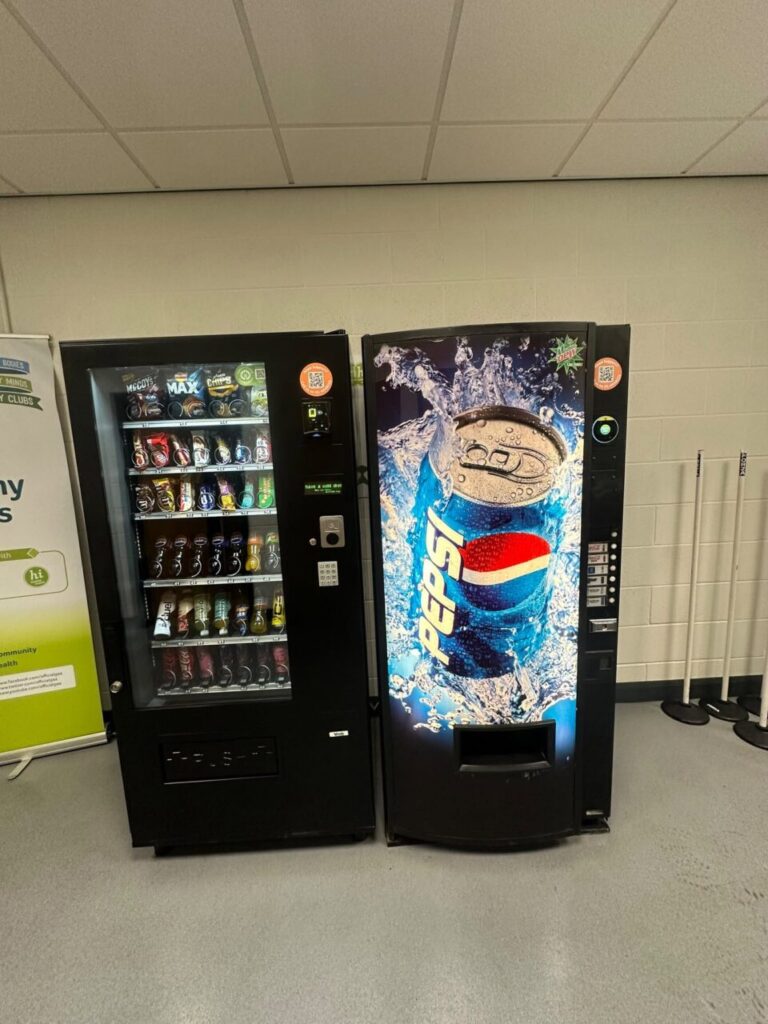
Some machines are designed to handle glass bottles. For example, SandenVendo describes its G-Drink Design as a drinks machine with a vertical lift that supports glass bottles. That claim relates to the manufacturer’s equipment. It does not mean that every bottle will fit every shelf, or that a snack machine with a clear front can deliver glass safely.
Give the supplier the container height, widest diameter and filled weight. Note any pronounced shoulder, long neck or projecting cap. Ask which rows are suitable and which configuration the installer expects to use. Two bottles with the same volume may have different profiles. A tall, narrow juice bottle and a shorter, wider one could require different arrangements even when both labels say 250 ml.
Watch the entire journey
During the demonstration, look beyond the moment the mechanism starts. Does the bottle sit upright or in another intended orientation? How does it leave the row, transfer to the delivery system and reach the collection opening? Can the customer remove it comfortably without knocking another surface? Ask the operator to demonstrate with the machine set up as it would be on your site.
Examine the sample after the test. Check the cap, label, base and sides, and ask how the operator handles a damaged pack. Repeat with a bottle loaded further back in the same row. Keep the sample specification and agreed row with your purchase notes. If a supplier later substitutes a different bottle shape, the original demonstration cannot establish that the replacement will behave the same way.
Convert a wholesale case into a refill plan
Check how many bottles come in a case and how many fit behind one selection. For illustration, if the configured row holds six bottles and a case contains twenty-four, one case represents four complete fills of that row. If sales are slow, the remainder needs suitable storage between visits. If sales are brisk, the row may run out well before the operator returns even though bottles remain in storage.
Ask the drinks supplier about minimum order quantities, shelf life at delivery, storage instructions and its procedure for damaged deliveries. Record whether the price quoted is per bottle or per case and whether delivery is included. Compare the cost of the quantity you can actually sell before its marked date. A lower price per bottle can leave the site with a more expensive order if too much stock remains unsold.
Agree a procedure for breakage
Discuss who takes an affected selection or cabinet out of use and who assesses stock if glass breaks. Keep customers away from the affected collection area and involve the trained operator. The FSAI’s vending guidance covers protection against food contamination. Make sure the host has a working contact during all trading hours, including evenings when the person who receives deliveries may have gone home.
For help comparing a proposed drinks layout, read how to calculate drinks capacity. Send the bottle specification and proposed location before ordering cases for a new site.