
How many drinks fit in a vending machine?
How many drinks fit in a vending machine? The answer depends on the cabinet, container and shelf layout. For example, SandenVendo lists a maximum of 336 standard 330 ml cans or 240 half-litre PET bottles for its G-Drink Design DC6. Those are alternative maximum loads. If your workplace wants several drinks in different packs, ask for the capacity of each selection in the layout you actually plan to buy.
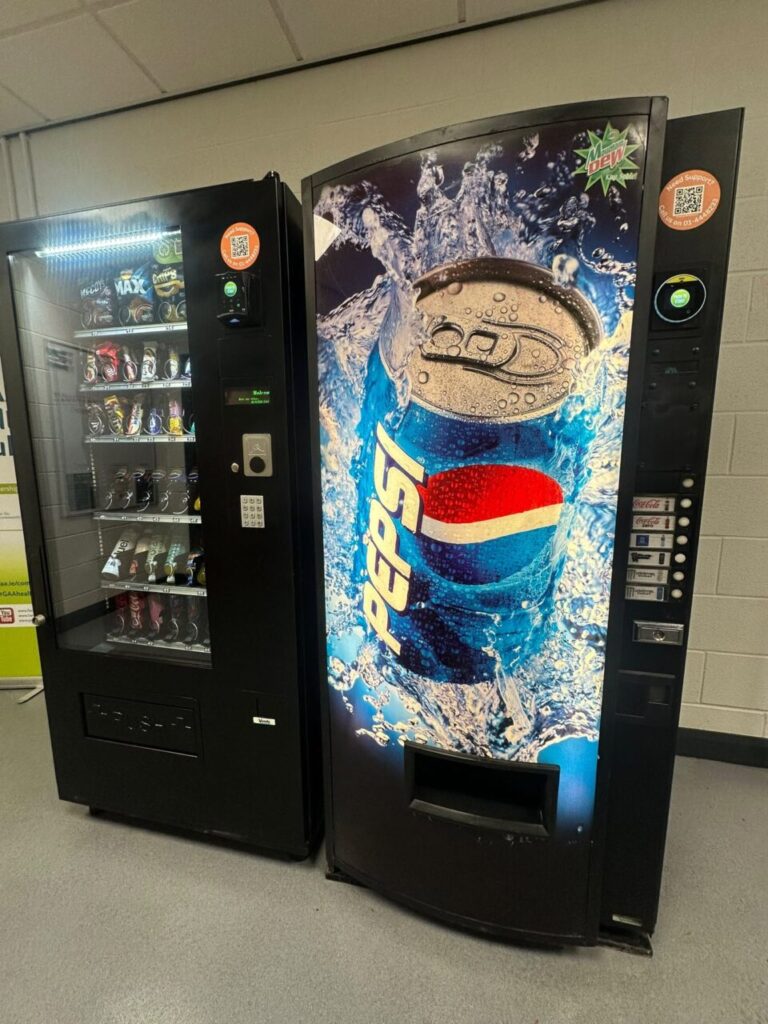
Read the capacity figure correctly
The manufacturer’s DC6 specification gives separate figures for selections and units. A selection is a choice available to the customer. The number of units is the quantity behind those choices. A row of still water containing eight bottles might offer one selection while holding eight saleable drinks. More visible choices do not necessarily mean more stock behind each choice.
Do not add the can maximum to the bottle maximum. Both figures describe ways to fill the same space. Nor should you assume that every half-litre bottle has the same shape. Bring the actual packs to a demonstration. A change in diameter, shoulder shape or overall height can alter the usable layout. Ask the supplier to record how many of each sample can be loaded and dispensed reliably.
Translate the layout into a refill plan
Start with the longest interval between visits. A machine refilled on Friday morning and Monday morning has to cover the whole intervening period, including any weekend shifts. Estimate demand by drink, then add any extra allowance you choose for uncertain attendance. Use your own site records where they exist. A brand-new site will need an initial estimate and an early review.
Consider an illustrative office where people buy twelve bottles of still water on each working day. If there are three working days between fills, the expected sales are thirty-six bottles. A layout holding twenty-four bottles of water would leave a gap of twelve against that estimate, even if the rest of the cabinet were full. The operator could dedicate another row to water, arrange an earlier visit or reconsider the pack format.
Avoid confusing a full machine with a good range
Write down the capacity and expected sales of every selection. Give the high-demand rows enough space to reach the next refill, then use the remaining rows to offer variety. If a slower drink takes a whole row, compare its sales over the same period with the number of times a faster seller was unavailable. Ask customers who use the machine on different shifts before removing a choice.
Review waste alongside availability. A large order that lasts several refill cycles takes up storage space and may leave stock at risk of going out of date. Agree how the operator rotates dated stock and records removals. An empty row is useful evidence only if you also know when it became empty. Check the sales record or ask site staff when they first noticed the message.
Ask for a layout you can check
Request a simple shelf plan with the product name, container size, row capacity and total units. Check it against the cabinet when it arrives. If the site changes a drink or the supplier changes its bottle shape, revisit the capacity before committing to a large delivery. Keep the original trial results so you can compare a proposed change with actual performance at the machine.
The same reasoning helps when reviewing a snack range. For an Irish drinks installation, send the pack sizes, operating hours and expected refill interval when asking for a proposal.