
A Vending Machine Is Lit but Unavailable: Give Customers a Clear Status
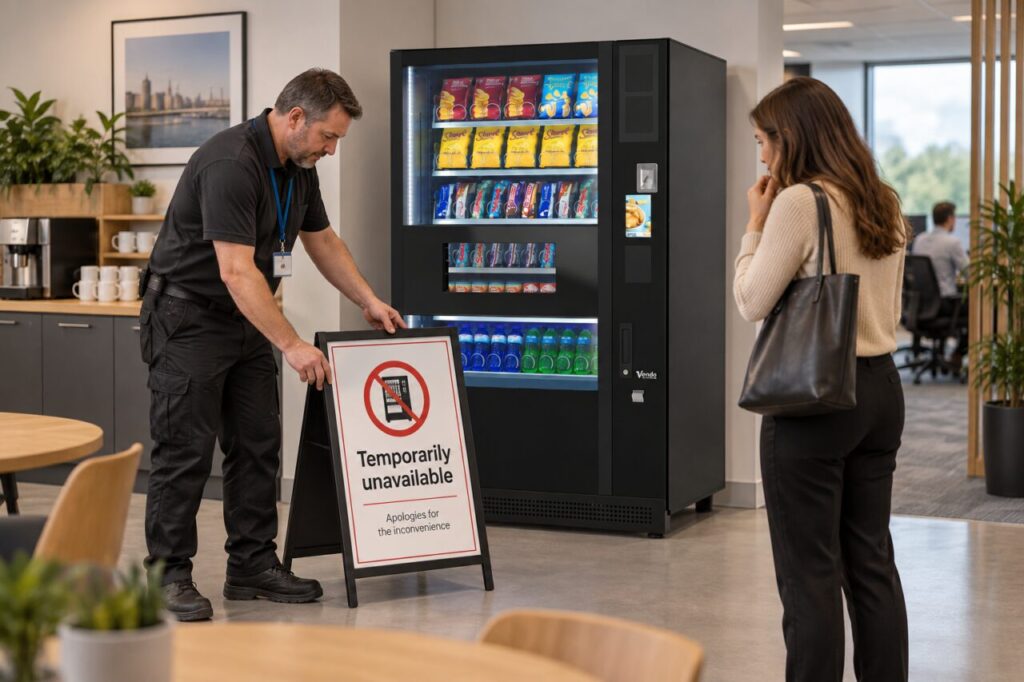
An illuminated vending machine can look ready for use even when the operator has confirmed that customers should not make purchases. Product lighting and an active display do not, by themselves, tell a visitor whether the complete service is available. If the machine needs to remain out of use, make the confirmed status clear before someone begins choosing and paying. Follow the provider’s instructions rather than improvising a technical fix.
Confirm what the site has actually been told
Record the operator’s instruction and the machine it applies to. Distinguish a confirmed temporary withdrawal from a single uninvestigated report. If the issue affects only one selection or payment method, the provider should define the appropriate customer guidance. Do not extend or narrow the message on your own simply because the cabinet still appears active.
Keep the reason at a useful level of detail. Customers usually need the present status and the next step, not an unconfirmed diagnosis. Avoid stating that refrigeration, software or payment hardware has failed unless the responsible provider has confirmed the relevant fact and it is appropriate to communicate. If there is a safety concern, use the site’s established response procedure immediately.
Position a notice before the purchase begins
Place the agreed message where an approaching customer will see it. Check the view from the usual walking direction as well as directly in front of the machine. A note low down beside the collection area may be noticed only after somebody has attempted payment. Ask an unfamiliar colleague whether the current status is obvious without a verbal explanation.
Do not cover ventilation, controls or required information with improvised material. Obtain the operator’s agreement for the notice arrangement and use an appropriate freestanding sign if that suits the site. Avoid unplugging, switching off or opening equipment unless the provider’s instruction and your authorised role allow it. Customer communication and technical isolation are different tasks with different responsibilities.
Give a realistic alternative and contact route
If another purchase point is available, identify it accurately and confirm that customers can reach it during the affected period. Do not point people towards a staff-only room or a canteen that has already closed. Where there is no alternative, a clear statement and useful contact are preferable to a vague direction that sends visitors around the building without resolving the problem.
Explain where updates will appear and avoid an unconfirmed return-to-service time. If a customer has already experienced a failed purchase, direct them to the operator’s established support route. Do not collect payment details on a public notice or suggestion sheet. Keep the support case reference with the site record so the next contact can follow the same incident.
Remove the message only after the agreed check
Ask who will confirm that the machine can be used again and what verification the provider requires. A screen changing appearance or the lights coming back on is not a substitute for that confirmation. Record the completed check and update staff communication as well as the physical notice. Leaving an obsolete message in place can continue the interruption after the equipment is ready.
When discussing vending service arrangements, include how temporary unavailability is communicated at the site. A short status procedure helps the host, operator and reception team give the same answer. It also keeps customers from interpreting the cabinet’s appearance as a promise of service while the responsible team is still working through an issue or completing the necessary checks.
Ask the team about the proposed reporting and site-contact arrangements.
Related guidance: Vending Customer Support: Keep a Case Reference When More Than One Person Reports.