
An Intermittent Vending Fault: Build a Useful Incident Timeline
The machine works when the technician arrives, but customers reported failures earlier. An intermittent vending fault needs more than another general complaint. A short, consistent timeline can show which attempts failed, which succeeded and what changed between them, without asking site staff to diagnose the equipment.
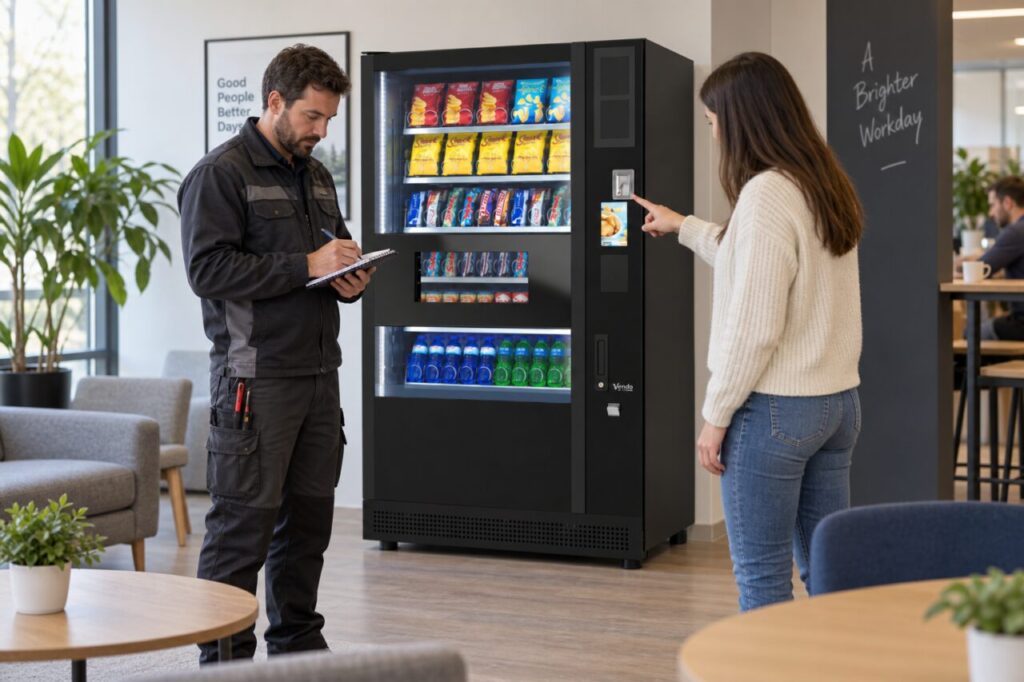
Use one line per observed event
Create a simple record with these fields: date and local time, machine reference, selection, payment method, visible message, product received, and source of the observation. Distinguish a staff member’s direct observation from information reported later by a customer.
Leave unknown fields blank or mark them unknown. Do not invent a precise timestamp from an approximate recollection. For identifying the right cabinet and reader, use the existing machine identification guide.
Include successes as well as failures
An illustrative sequence might be: 10:05, selection A1, card payment, no item; 10:12, selection B2, card payment, item received; 10:20, selection A1, no item again. This is a made-up recording example, not a diagnosis or an account of a customer installation.
The pattern gives a technician questions to investigate. It does not prove which component failed. Record successful attempts only when they are known; do not recruit colleagues to keep buying products to fill gaps in the sheet.
Match the timeline with authorised records
Nayax explains how operators can locate transactions by machine and time interval. The available records depend on the installed platform and the operator’s access. State that your notes use Irish local time if the reporting system uses another time zone.
Add the support case reference to the timeline. Keep payment details in the approved support process, rather than placing full card numbers or unredacted bank screenshots in a shared sheet. A transaction enquiry and an equipment fault may need linked but separate follow-up.
Mark interventions and the review period
Add a dated entry when a technician inspects the machine or makes a change. Record what the service team actually reports, including when no fault was reproduced. Keep earlier entries intact so later reviewers can compare the periods before and after that visit.
Agree a follow-up date and who will report any recurrence. A useful review asks whether the same symptom returned under similar conditions, not merely whether one test succeeded. If the timeline identifies a new pattern, send the updated record under the existing case reference.
Ask our team about organising recurring-fault support within your vending service arrangements.