
What can a live video demonstration tell you about a used vending machine?
A live video demonstration can save a journey when you are shortlisting a used vending machine. Give the seller three things to show in the same call: the identity of the cabinet, a complete purchase and the condition of the areas you care about. Then decide which checks still require an inspection. A polished recording may show how a model operates while leaving the condition of the unit for sale unresolved.
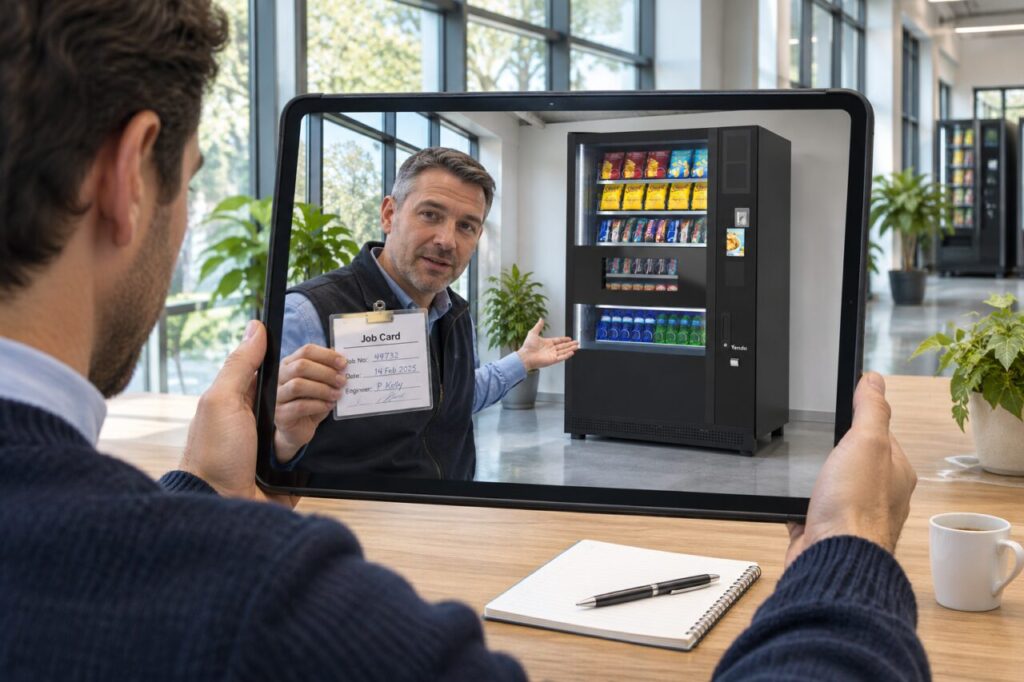
Agree what the camera should show
Send a short agenda before the call. Include the model and stock reference from the offer, the products you plan to sell and the intended payment method. Ask the seller to identify the cabinet that will actually be supplied. If it is a demonstration unit standing in for another machine, record that fact. Demonstrating a feature on one unit does not establish the condition or configuration of the other.
Begin with a wide view of the closed machine and its surroundings. Ask the seller to show the machine identification and then move back to the whole cabinet without cutting away. A simple card bearing the agreed viewing date and stock reference helps you associate your notes with that call. Avoid filming payment cards, passwords, customers or information about an unrelated site.
Follow one purchase from selection to collection
Choose an ordinary saleable pack in advance. Ask to see it in its selection, then watch the purchase, the item arriving in the collection area and the person retrieving it. The camera should stay wide enough to connect the actions to the same machine. Ask the seller to name anything that was simulated, including a payment that used a test setting instead of a live transaction.
If the connection drops just as the product is delivered, ask to see another complete cycle. An interrupted view is an incomplete test. Note which selection and pack were used. Success with a bottle in one position says little about a soft packet in another. The guide to confirming the exact quoted configuration can help you match the demonstration to the proposed order.
Use the seller’s camera where your own eyes would go
Ask for a slow view of the door edges, collection flap, controls and cabinet base. Pause the camera where a mark or gap needs a closer look. Request still photographs if movement or glare makes the image hard to interpret. Describe what you observed in neutral terms. A dark patch on a compressed video is a reason for another photograph, not a diagnosis.
Leave any internal inspection to someone authorised and qualified to perform it. Sound, smell, stability, cooling performance over time and the feel of a moving part can all be difficult to judge remotely. Put those points in a separate list for a visit or independent assessment. Do not let a good camera angle become your only evidence for an expensive repair decision.
Translate the call into a buying decision
Send the seller a short note separating demonstrated features, visible condition and open checks. Ask which facts they can confirm in the written offer. If you have not identified the actual machine or a crucial function could not be tested, make the purchase conditional on resolving that particular point or keep looking.
Use the same questions when examining other vending machines for sale. Keeping a consistent record lets you compare evidence from a remote call with an in-person viewing, even when the sellers use very different presentation styles.