
Lower Vending Sales: Separate Quiet Days from Unavailable Equipment
A lower sales total does not explain its own cause. Fewer people may have been on site, the equipment may have been unavailable for part of the period, or customers may not have found the products they wanted. Separate these possibilities before changing the range, buying equipment or declaring that the location no longer works.
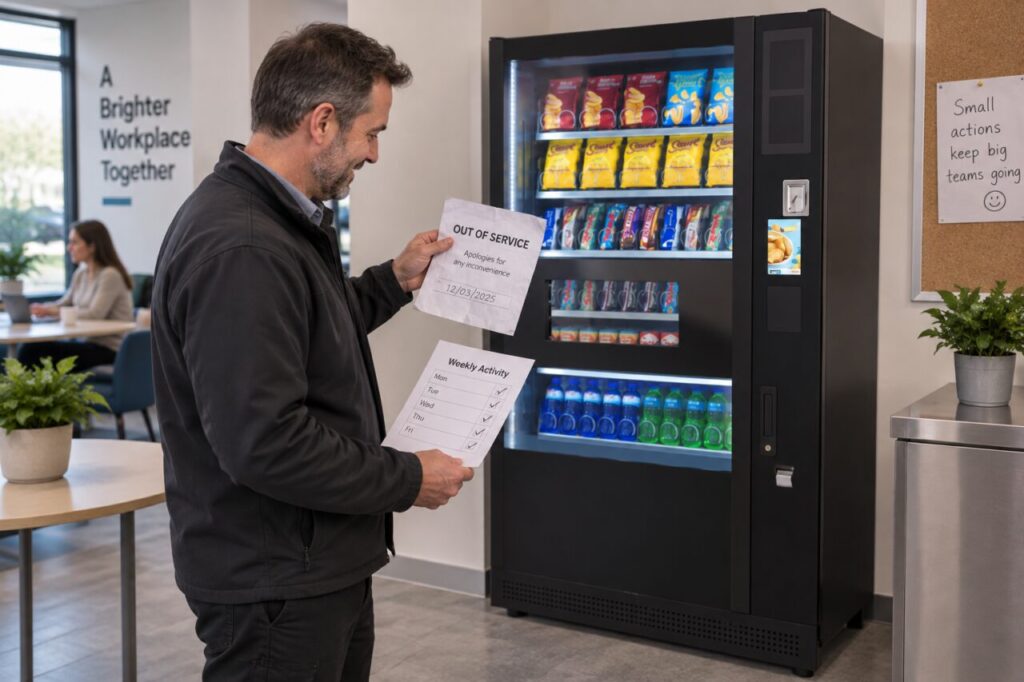
The aim is to interpret records more carefully, not to claim that every cause can be measured precisely. Use the information available from the site and operator, state its limits and avoid inventing figures for periods that were not recorded. A clear uncertainty is better than a confident unsupported explanation.
Compare like periods
Check the dates covered by the sales figures and compare them with a reasonably similar period. Note closures, public events or changes in the site’s normal activity. A full working week and a week with several closed days do not provide the same opportunity for purchases, even if both appear as one reporting row.
Use aggregate attendance or activity information where appropriate. You do not need individual employee movement or purchase histories to recognise that a workplace was unusually quiet. Keep the comparison at the level needed to explain the opportunity for use, and avoid assuming that attendance alone predicts a fixed number of sales.
Add availability information
Record known periods when the machine or a relevant service was unavailable. Use actual support or site records where possible, and distinguish confirmed times from approximate recollections. If only part of the equipment was affected, describe that scope rather than marking the entire service unavailable without evidence.
Also consider product availability. An operating machine with several important selections empty is different from one offering the planned range throughout the period. Keep stock observations separate from equipment faults so the next action can address the right issue. Neither should be hidden inside a single unexplained sales total.
Avoid misleading calculations
Do not divide revenue by an invented number of operating hours or apply a standard demand estimate to fill missing records. If the available data supports only a qualitative explanation, say so. A short note about a known closure can be useful without being converted into a precise estimate of lost sales.
Where you calculate a comparison, record the inputs and the assumptions. Ask the operator to explain any reporting field you do not understand, including whether it reflects transactions, items or another measure. Different measures can change for different reasons and should not be treated as interchangeable descriptions of customer demand.
Choose the next check
If the evidence points to availability, discuss the relevant service or replenishment issue. If the site was simply quieter, compare further representative periods before making a major change. If the cause remains unclear, agree what additional information would be useful and collect it prospectively through the normal operating process.
Our guide to a sample vending report helps frame questions about the information an operator can provide. Keep the reporting request proportionate. A report is useful when it supports a decision, not because it contains the largest possible number of charts and columns.
For a vending business plan, use these reviews to refine assumptions over time. Record what changed, what the evidence suggests and what remains uncertain. This creates a more reliable basis for the next decision than attributing every lower total to poor demand or every improvement to a recent range change without checking the conditions first.
Discuss your site requirements with our team using the records available to you.