
A Manual Vending Sold-Out Log: Record Availability Without Guessing Lost Sales
A simple sold-out log can help an operator understand when customers encounter unavailable products. It is particularly useful when the available reporting does not answer that question directly. Record what was observed at the machine, while keeping it separate from assumptions about how many sales might have occurred if the product had been available.
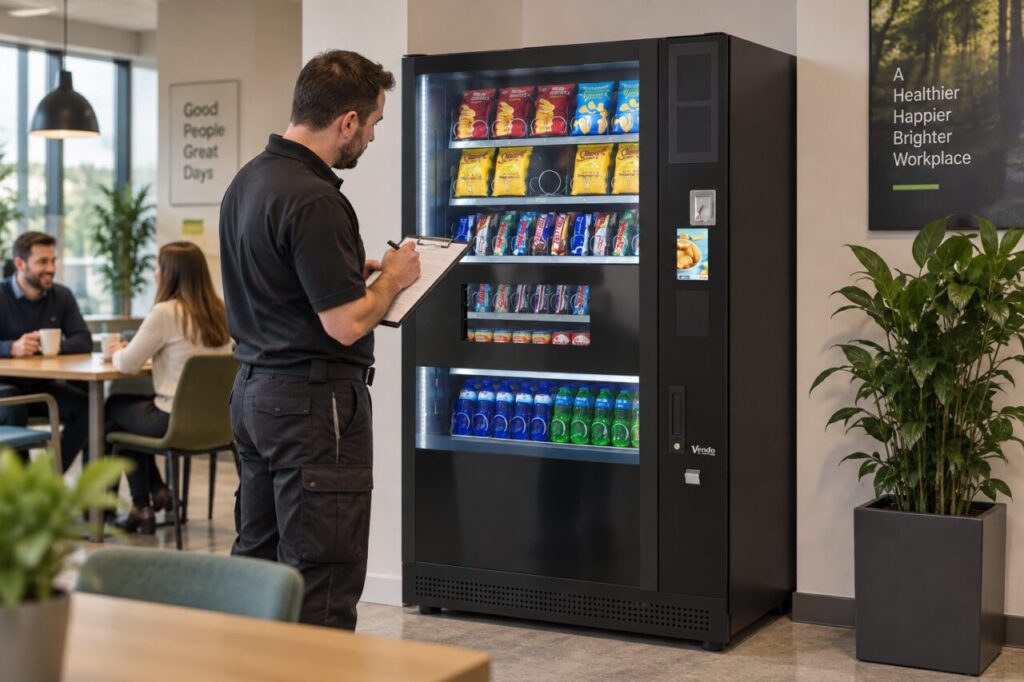
An empty selection is evidence of availability at a particular moment. It does not, by itself, tell you when the last item sold or how many people wanted it afterwards. A useful manual log preserves those limits instead of converting a small number of observations into an apparently precise estimate of lost revenue.
Record a specific observation
Include the machine location, product or selection reference, date and approximate time. Describe what was visible, such as an empty facing or a sold-out message. If the observer is unsure whether the product is unavailable, record that uncertainty and ask the operator to check through the normal service process.
Keep the task simple enough for the site contact to perform consistently without opening equipment or interrupting customers. A brief observation during an existing routine may be more practical than an ambitious schedule that is quickly abandoned. The record should explain how observations were collected so the operator can judge what they represent.
Separate observation times from unavailable periods
If a product is unavailable at two checks, you know its status at those checks. You may not know whether it was replenished or purchased between them. Avoid describing the entire interval as a confirmed stockout unless other reliable information supports that conclusion. Mark the period as uncertain where the evidence is incomplete.
Likewise, the first observation is not necessarily the start of the problem. A record made after lunch does not prove that the selection was available throughout the morning. Keeping those distinctions clear allows the log to complement service and sales records rather than introducing unsupported timings into an otherwise useful operational review.
Use the log alongside other records
Compare repeated observations with refill dates, known service issues and the available sales information. Ask whether a product needs a different allocation, whether the refill timing should be discussed or whether a reported absence reflects another issue. Let the operator assess the equipment and records rather than making a technical diagnosis from appearance alone.
Do not calculate lost sales by multiplying every observed empty hour by an assumed purchase rate and presenting the result as measured revenue. If a planning scenario is useful, label its assumptions explicitly and keep it separate from actual sales. The manual log can identify a question worth investigating without supplying every answer.
Review a change and keep the method consistent
When the operator agrees a change, record what changed and when. Continue observations in a comparable way where practical, so the review is not distorted by a completely different checking pattern. A quieter week or fewer observations should not automatically be interpreted as proof that the availability issue has been solved.
Summarise the results honestly: fewer observed absences, unresolved gaps or insufficient information are all possible outcomes. Keep the underlying observations available for review. A small reliable record is more valuable than a confident headline that hides missing checks, uncertain durations or changes in the way the information was gathered.
For anyone planning a vending business, availability belongs alongside sales in the operating review. The stock-allocation guide addresses preparation for a visit; a sold-out log helps examine what customers encounter between visits without pretending to measure purchases that never happened.
Discuss your intended vending operation and the reporting available for the proposed service.