
Vending Stock Reserved for the Next Refill: Make the Allocation Visible
Stock sitting in a store can already be intended for a particular vending refill. If that allocation is invisible, another person may use it and leave the next visit short. Make reservations clear through the stock process your team uses, while keeping the distinction between physical stock, reserved stock and products already loaded into machines.
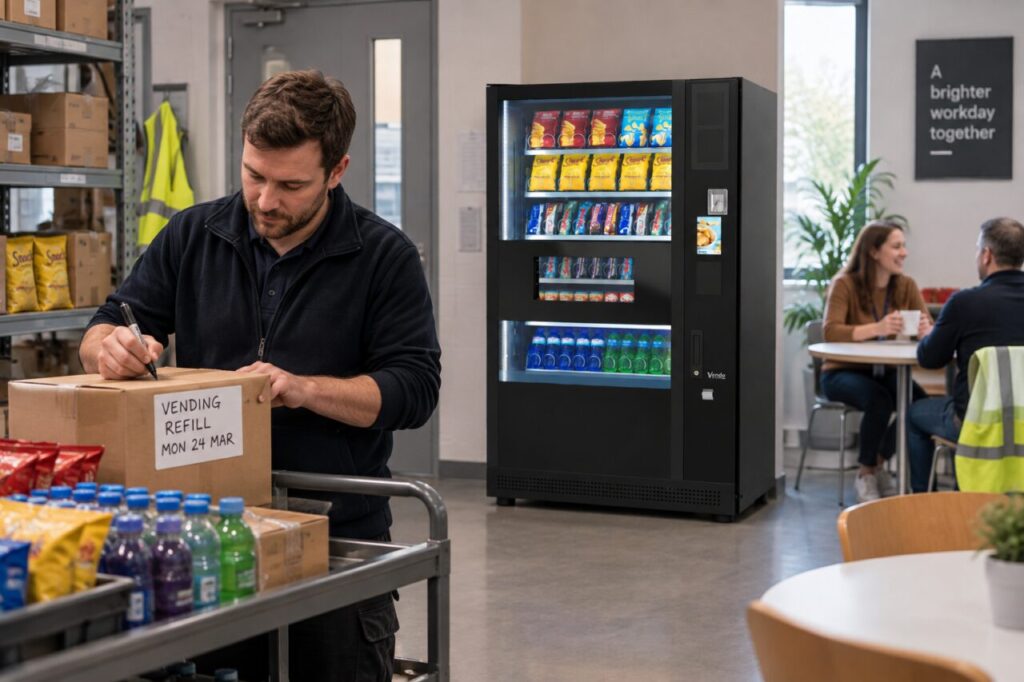
A reservation should support a real plan rather than becoming a permanent claim on a carton nobody collects. Record the intended visit or location and review the allocation when the plan changes. This keeps the stock record useful to the person preparing the refill and to colleagues making other purchasing or picking decisions.
Define what is being reserved
Identify the exact product and quantity using the units your team understands. A case description alone may be insufficient if the pack size or case quantity varies. State whether the reservation concerns complete cases or individual units, and make sure the physical stock can be matched to the record without opening unrelated cartons.
Connect the allocation to the relevant machine, route or planned visit. Use an established location reference rather than a colleague’s informal nickname for the site. If the same product is required by several locations, the record should show how much is assigned to each rather than implying that the entire quantity is freely available.
Keep the physical and recorded positions aligned
Use the approved stock process to mark the reservation. Depending on your operation, that may involve a labelled picking area, a system record or another agreed method. Avoid maintaining a private note that only one person can see while the main stock record continues to show the full quantity as unallocated.
A physical label should not interfere with product information or replace the normal storage requirements. Keep the products in their appropriate conditions and follow the operator’s stock-rotation process. Reservation status is an operational instruction about allocation; it is not permission to ignore condition, date or other checks required before the products are used.
Update changes before they cause a shortage
If a visit is postponed, a quantity changes or a product is substituted, update the reservation and tell the people affected. Record who confirmed the change where your process requires it. Do not leave old labels in place after the stock has been released, because colleagues may avoid using products that are no longer committed.
When someone needs stock already reserved for another visit, use the agreed approval route rather than silently taking it. The responsible person can then decide how to adjust the other plan. Recording the change is more useful than discovering the shortage only when a driver or operator is ready to leave for the intended refill.
Close the reservation when the work is done
After picking and loading, reconcile the actual quantities with the reservation. Products left behind or returned need their own status rather than remaining assigned indefinitely. Keep the record linked to the normal stock movement process so the same units are not counted as both available in storage and already used at a machine.
Review reservations that remain open beyond their expected date. Some may reflect a genuine delay, while others may simply need closing. A short routine review prevents the reservation list becoming a collection of obsolete plans that hides the stock actually available for the next round of service or purchasing decisions.
For vending operations planning, connect stock preparation with the real service schedule. The storage-versus-machine stock guide explains the physical distinction; a reservation adds another useful status before products leave storage, provided the team records and updates it consistently.
Discuss your vending service requirements and the stock responsibilities within the proposed arrangement.