
Vending Stock Counts: Separate Products in Storage from Products in the Machine
A vending stock total can hide an important distinction: products in a storeroom are not the same as products available to customers in the machine. Record those locations separately when reviewing stock. The combined figure may help describe ownership, but it does not by itself show whether a particular selection is available for purchase.
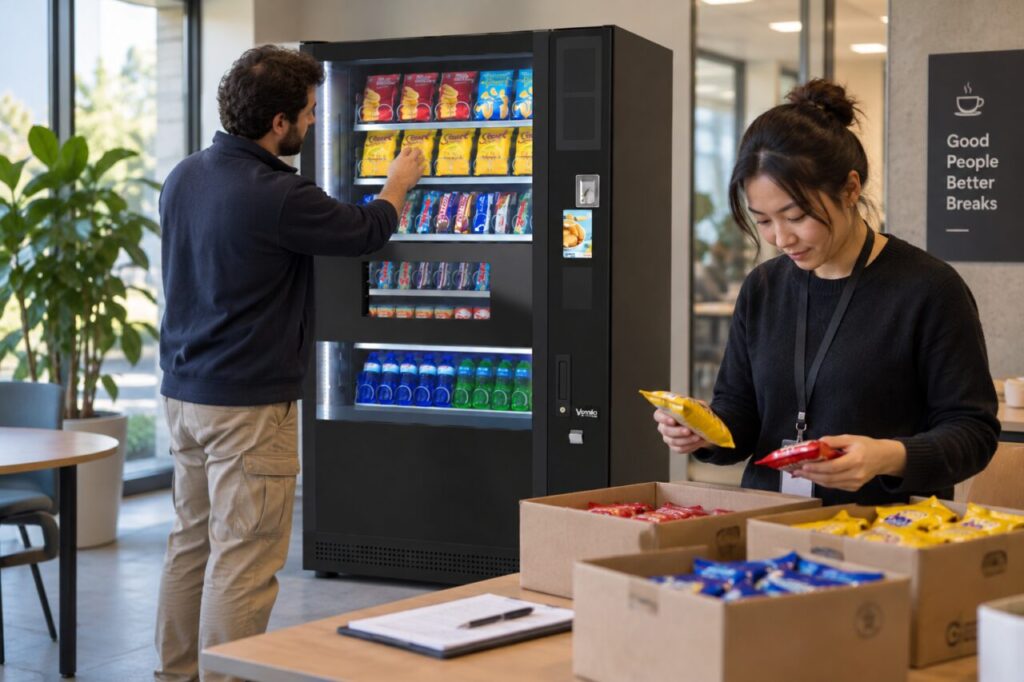
Use the operator’s agreed counting process and only involve people authorised for the relevant tasks. A site host can report an observation through the glass without opening the cabinet. Exact machine counts and transfers should be handled through the responsible operator’s process rather than estimated and presented as confirmed inventory.
Define the locations being counted
Identify the machine and each storage location included in the review. If several machines share a stock area, make that relationship clear. Avoid one label such as site stock when different cupboards, delivery areas or cabinets are included inconsistently from one count to the next without an explanation.
Use a consistent product reference and pack unit. A carton and a single vendable item are not interchangeable count units. Record the unit used so another person can understand the figure without guessing how many individual products it represents. Keep different pack sizes separate where the operator treats them as distinct stock.
Record the timing of movements
Stock can move from storage to the machine while a count is taking place. Agree how the operator records that transfer so the same items are not counted twice or omitted. The procedure should fit the actual service process rather than requiring site staff to invent a separate system that conflicts with existing records.
Note deliveries and other relevant movements around the count. A difference between two observations may reflect timing rather than missing stock. Ask the responsible operator to reconcile the records before drawing a conclusion, particularly when the figures were gathered by different people or at different stages of a replenishment visit.
Keep availability visible
A large storeroom quantity does not prove that customers can buy the product immediately. Review the machine’s actual availability through the appropriate records or observations. If a selection is unavailable, distinguish a replenishment question from a technical issue and use the relevant support route instead of assuming that more purchasing is the answer.
Our guide to low-stock reports explains how a site contact can describe a specific selection. Keep that report connected to the location and time. A precise observation is more useful to the operator than a broad statement that stock is low somewhere in the building.
Review differences without guessing
When figures do not align, record the difference and the information still needed. Do not immediately describe it as waste, theft or an accounting error. The responsible operator can check transfers, count units and timing before deciding what the records show. Keep unresolved questions visible rather than adjusting a number to make a sheet balance.
Agree who follows up and where the corrected record will be stored. Repeated discrepancies may point to an unclear process or inconsistent definitions. Review the method with the people carrying it out, rather than adding another summary total that combines the same uncertain information into a more impressive-looking report.
When reviewing vending operations, use separate location counts to support useful decisions. They help distinguish purchasing needs from replenishment needs and customer availability. Keep the counting process proportionate, consistent and tied to the operator’s records so the information remains understandable when a different person covers the next visit.
Contact our team to discuss stock and service responsibilities for your vending arrangement.