
Micro-Market Checkout Is Busy: Keep Vending Purchases Separate
A workplace can have a vending machine beside a micro-market checkout without both purchases following the same payment process. When the checkout area is busy, customers may carry a vending item towards the till or assume a shop item can be paid for at the machine. Make the distinction clear before trying to solve the queue by redirecting people between systems.
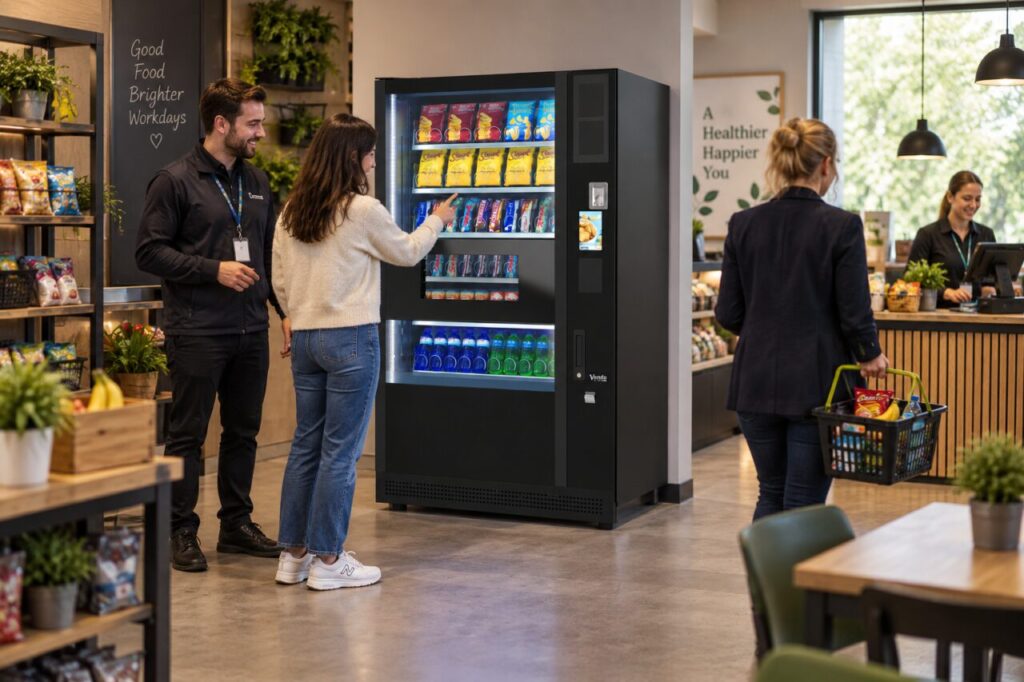
Explain where each purchase begins
Show customers which items are bought through the vending machine and which belong to the micro-market checkout. Use the actual setup at the site rather than a generic instruction copied from another location. A product collected after a completed vending purchase should not be added to another basket merely because it is being carried through the same room. Likewise, an item taken from a shop shelf needs the agreed checkout process.
Check the operator’s instructions where the payment arrangement is integrated or unusual. Do not assume systems share baskets, receipts or staff benefits simply because they are nearby. Our micro-market overview introduces the format, but the specific purchase flow should be explained from the equipment and service actually installed. Clear local information matters more than broad claims about frictionless shopping.
Observe the busy period
Watch the customer route during a representative break without recording unnecessary personal information. Identify where people hesitate, join the wrong queue or block the collection space. The problem may be the position of a sign or the way baskets are stored rather than the speed of either payment system. Record the practical obstruction before recommending a new layout or a different customer instruction.
Keep vending collection space clear when planning the checkout queue. Someone who has completed a vending purchase still needs to collect the item and leave. Do not place a queue barrier or display where it prevents that normal movement. Ask the site and operator to assess any layout change together, especially if it affects access, maintenance or the agreed space around either piece of equipment.
Give help without creating a second charge
If a customer is unsure whether an item has already been paid for, direct them to the appropriate support or host process. Do not tell them to pay again simply to clear the queue. The relevant transaction needs to be checked using the information available through the authorised system. Keep the distinction between an uncertain payment and an unpaid shelf item clear rather than resolving both with the same hurried instruction.
Train the local host in the explanation they can safely give: where to start each purchase, where to seek help and what information to record. This does not require access to private account details or technical settings. A short, consistent response helps colleagues avoid inventing their own workaround when several people are waiting and a customer is understandably concerned about paying twice for one item.
Review the signs and repeat the walk-through
Use simple wording near the point where the paths divide. Check that the sign is visible before a customer commits to the wrong queue, not only after reaching the checkout. Avoid cluttering the machine with unrelated notices or covering existing instructions. If the room serves visitors as well as staff, ask a person unfamiliar with the site to follow the route and describe where they would pay.
After a change, observe another busy period and ask the host whether confusion has reduced. Keep any remaining issue specific: an unclear item boundary, a queue crossing the vending area or a mismatch in the explanation. Do not claim the layout has improved solely because new signs were installed. The useful result is that customers can complete the correct purchase and leave without an unnecessary second payment or avoidable interruption.
Discuss a workplace vending and micro-market layout.
Related guidance: A Micro-Market Shelf Price Differs from Checkout: Pause and Check the Item.