
Planning a micro-market for shoppers carrying tools or personal bags
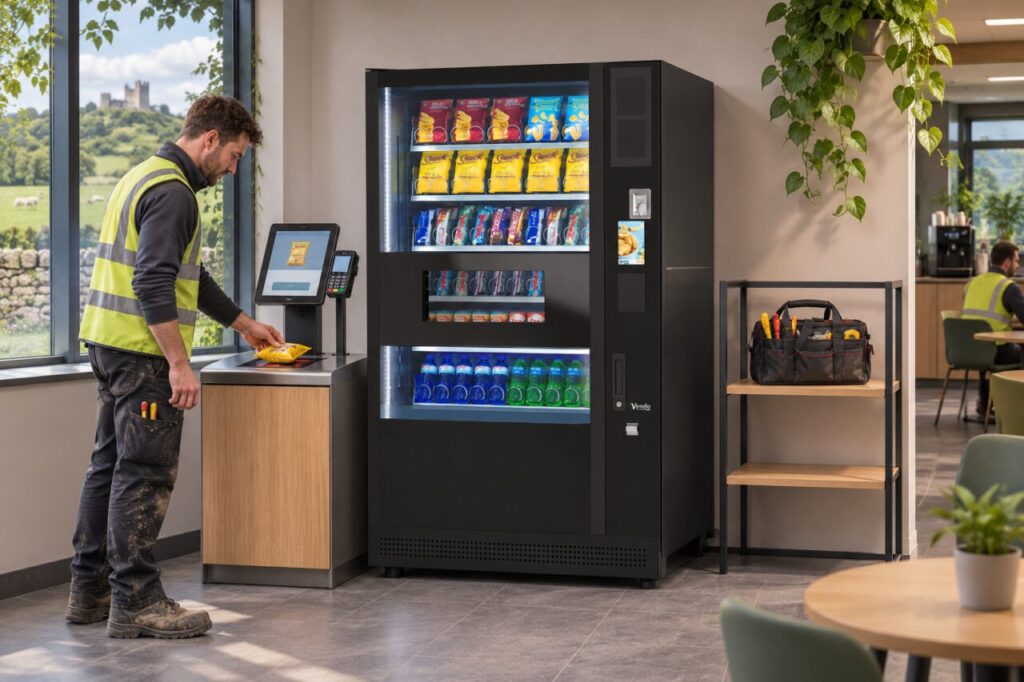
A micro-market can look straightforward when someone tests it empty-handed. A maintenance worker carrying a tool bag, a visitor holding a coat or an employee with a lunch bag needs somewhere to put things while choosing, scanning and paying. Before signing off a layout, walk through a real purchase with an ordinary bag and a second customer waiting. Watch where personal belongings and products end up.
Trace the purchase one hand at a time
Start at the shelves, pick up a drink and a snack, then approach the checkout carrying the bag you would normally have at work. Notice which hand is free to scan the product, operate the screen or use a payment card. If the only available surface is the scanner or a food display, the layout is asking the customer to make an awkward choice.
Mark the space needed for personal belongings, goods waiting to be scanned and items already added. They need not be three large counters, but their use should be evident. Include a customer who approaches from a different height or direction. Ask the site’s responsible team to check access routes, safe working space and whether a proposed shelf could obstruct the next person.
Keep clean food areas and work equipment apart
A tool bag that has been on the workshop floor should have a suitable place away from exposed food or food-contact surfaces. Discuss cleaning responsibilities and permitted items with the venue and food operator. Where the site requires tools or protective clothing to remain outside a break area, plan the route around that policy rather than inviting staff to bypass it.
Avoid a solution that relies on leaving valuable belongings behind the customer or out of sight. A small, clear surface within reach can be easier to use than a distant shelf. Trial it with the kinds of bags actually carried on the site, including the large ones that people might otherwise set down in a walkway.
Test a correction as well as a successful sale
Ask a new user to scan two products, remove one they changed their mind about and complete payment for the other. Observe whether they can tell which item remains in the basket and where to place the unwanted item. If the screen uses an unexpected product name or price, there should be an obvious support route. The guide to a shelf and checkout mismatch explains the information that helps an operator investigate.
Include the next shopper in the exercise. Can they tell when the previous transaction is complete? Can the first person retrieve their bag without stepping back across the new purchase? Those details matter during short breaks when several people are moving through the space at once.
Compare the layout with enclosed vending
An enclosed machine can suit a straightforward single-item purchase, while open shelving gives people different ways to browse and combine items. Compare the actual routes rather than deciding from a photograph. Our comparison of micro-markets and conventional vending is a starting point for that discussion.
Ask the provider to review the layout after a busy shift. A change to the position of the bag shelf, scanner or exit route is easiest to evaluate by repeating the same purchase with the same belongings and watching whether the original difficulty has disappeared.