
A micro-market fridge is left open: what should a customer do?
You approach a workplace micro-market and notice that a chilled display door has been left open. Tell the responsible attendant or site contact promptly. As a customer, you do not know how long it has been open or whether the food has remained within its required conditions. Avoid treating a cold-looking cabinet or a quick touch of a packet as proof that everything is suitable for sale.
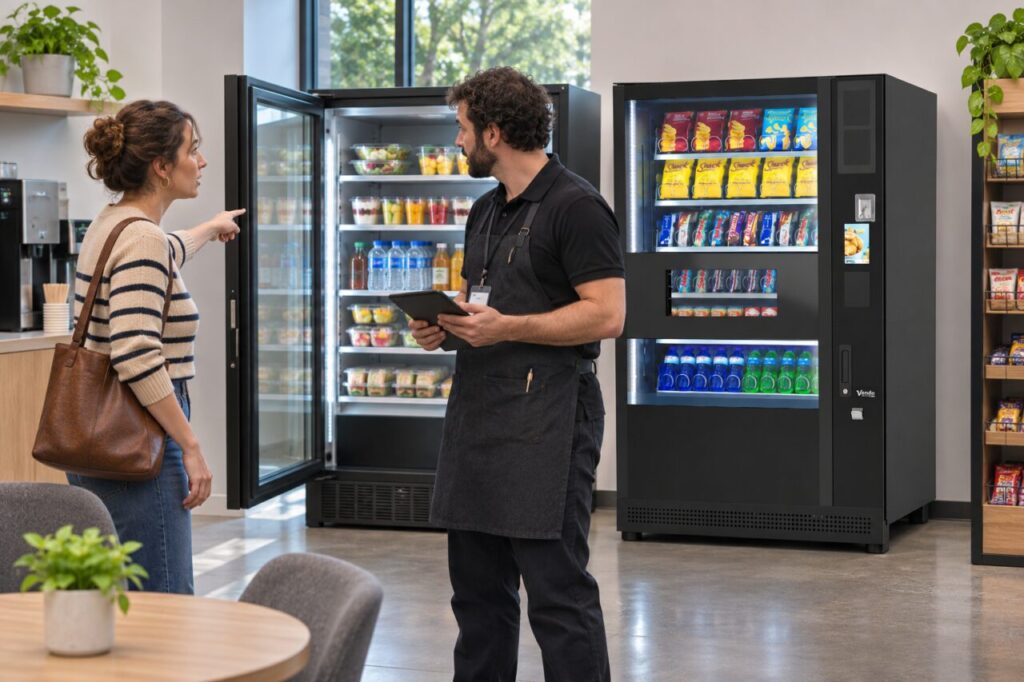
Report what you can observe
Identify the cabinet and location, the time you noticed the problem and whether anything visibly prevents the door closing. Give a factual description without guessing who left it open. If the door can be closed normally and safely, do so; do not force it against an obstruction or attempt to adjust a hinge. Keep the site contact informed of what you changed.
Do not move products to another fridge or return them to a display on your own initiative. The operator may need to identify affected stock and assess its history. Moving packs between cabinets can make that harder. If there is water on the floor or another immediate hazard, alert the site’s responsible person and use the established reporting arrangement.
Let the operator assess the food
The FSAI’s storage guidance explains that a fridge door left open can allow the temperature to rise. For a workplace food business, the responsible operator should apply its food-safety procedures and consider the available time and temperature evidence. Closing the door starts no automatic guarantee about the products already inside.
Ask the attendant which products remain available rather than making your own judgement from appearance or smell. If the affected cabinet is taken out of service, follow the notice and choose another approved option. A neighbouring vending machine may have a separate stock and operating condition, but its availability should be confirmed rather than assumed from the fact that it is lit.
Keep any purchase enquiry specific
If you have already bought an item from the affected display, retain the packaging and purchase details and contact the operator. Explain when you selected it and what you observed. Follow the operator’s advice about the product and use appropriate food-safety guidance if you are concerned. Do not pass uncertain food to a colleague as a way of avoiding waste.
Keep the product question separate from the payment record. A receipt helps identify the purchase, but it does not establish storage conditions. Likewise, a payment refund does not resolve the underlying equipment or food issue. The operator needs enough information to investigate both, without customers sharing personal card details in a group chat or on a public noticeboard.
Build a better response into the venue’s setup
Before opening a workplace micro-market, agree who receives reports during every access period. Display a clear contact route and identify each cabinet. Ask the supplier how faults and any available alerts are handled for the specific equipment. Do not assume an automatic alarm exists or reaches somebody merely because the system is described as smart.
Staff guidance should explain how to report a problem without asking customers to become maintenance technicians. The guide to bags and tools around a micro-market covers another practical layout issue. Keeping personal belongings clear of doors and product areas can support orderly use, while responsibility for checking and releasing food remains with the operator.