
Testing a Micro Market: Follow One Mixed Basket from Shelf to Payment
A micro-market demonstration should show more than a single item scanning successfully. Customers may choose a drink and a snack together, change their mind or need help understanding what is already in the basket. Following one realistic mixed purchase gives a site manager a clearer picture of the proposed experience.
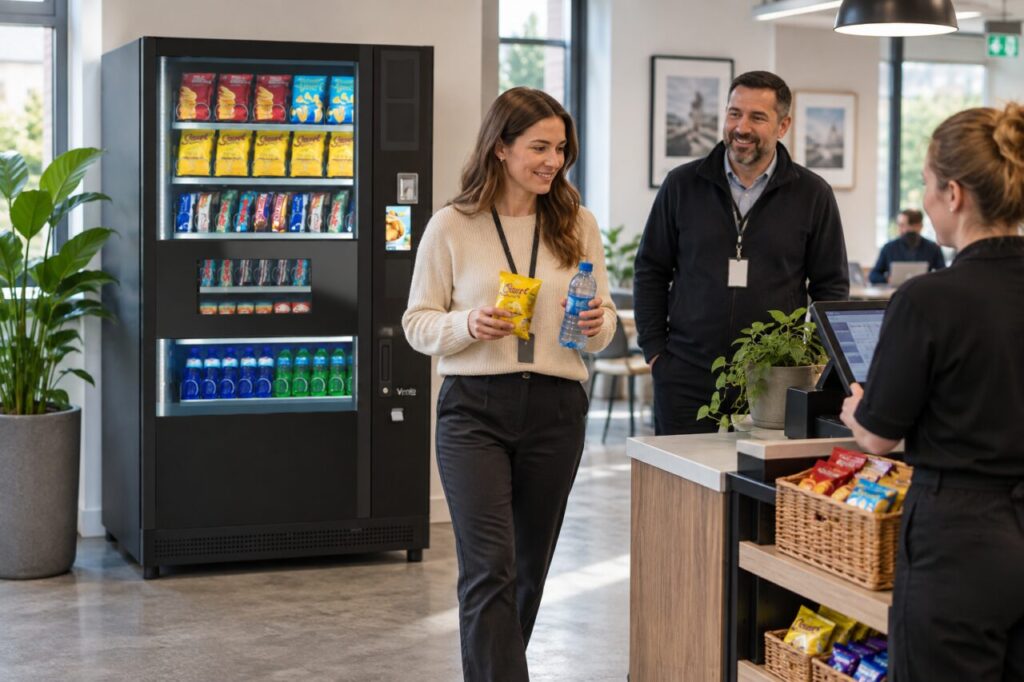
Use products and equipment from the actual proposal wherever possible. A successful test on an unrelated checkout does not establish how your chosen setup will behave at your site.
Choose an ordinary customer purchase
Start with a small combination that reflects the intended range, such as a sealed snack and bottled water. Ask the supplier to identify any item that requires a different customer process. The purpose is to understand the journey, not to find a spectacular demonstration.
Describe the customer situation as well. Someone buying during a short break may be unfamiliar with the checkout and carrying other belongings. Observe whether the placement of products, instructions and payment equipment makes the next step clear without continuous help from the demonstrator.
Check how the basket is built
Ask the demonstrator to show how each selected item is added and how the customer confirms the result. Check that the visible product description and price allow a person to recognise what they are buying. Do not assume that a successful scan means the displayed information is correct.
Include a controlled example of removing an item before payment, using the supplier’s normal process. The site manager should understand how a customer corrects a mistake without inventing a workaround. Record questions about the actual interface rather than assuming that every checkout provides the same features.
Keep vending and open-shelf purchases clear
Where a conventional vending machine stands beside the market, ask how customers distinguish the purchase processes. An item dispensed by one machine may not belong in the open-shelf checkout flow. Clear placement and instructions matter when two systems share a refreshment area.
Our micro-market comparison article provides context for discussing the alternatives. The mixed-basket exercise should examine the proposed arrangement itself, including the point at which a customer pays and how they know the purchase is complete.
Test the help route
Ask what happens if an item is not recognised, the basket appears wrong or the customer decides not to proceed. Use demonstration conditions agreed with the supplier; do not create real disputed transactions merely to see what happens.
Identify the support information a customer can access at the checkout. Ask who receives a query and what details are useful to investigate it. Keep the distinction between an equipment demonstration and a commitment to a particular response time: any service promise should be confirmed in the proposal.
Record acceptance questions before launch
Write down the observed journey, the configuration tested and the questions still open. Ask the supplier to explain whether any planned change to products, software or payment equipment requires another test. A short checklist is more useful than a general statement that the market looked modern.
Ask a person who has not watched the demonstration to explain the next step from the visible instructions. This can expose a confusing label that an experienced demonstrator no longer notices. Treat the observation as feedback on the proposed layout and ask the supplier how it can be addressed before the service opens.
Our checkout journey guide covers the wider layout and customer route. Contact our team with your venue and expected product range when discussing a suitable solution. Approve the arrangement based on a complete, understandable purchase rather than a single successful scan.