
Micro-Market Checkout: Explain How to Start a Separate Purchase
At a workplace micro market, one customer may still be packing while another arrives with a basket. The checkout needs to make clear where the first purchase ends and the next one begins. Plan that explanation around the actual system and room layout. Do not assume that a screen returning to a familiar view proves a transaction is complete, or that every self-service checkout follows the same sequence.
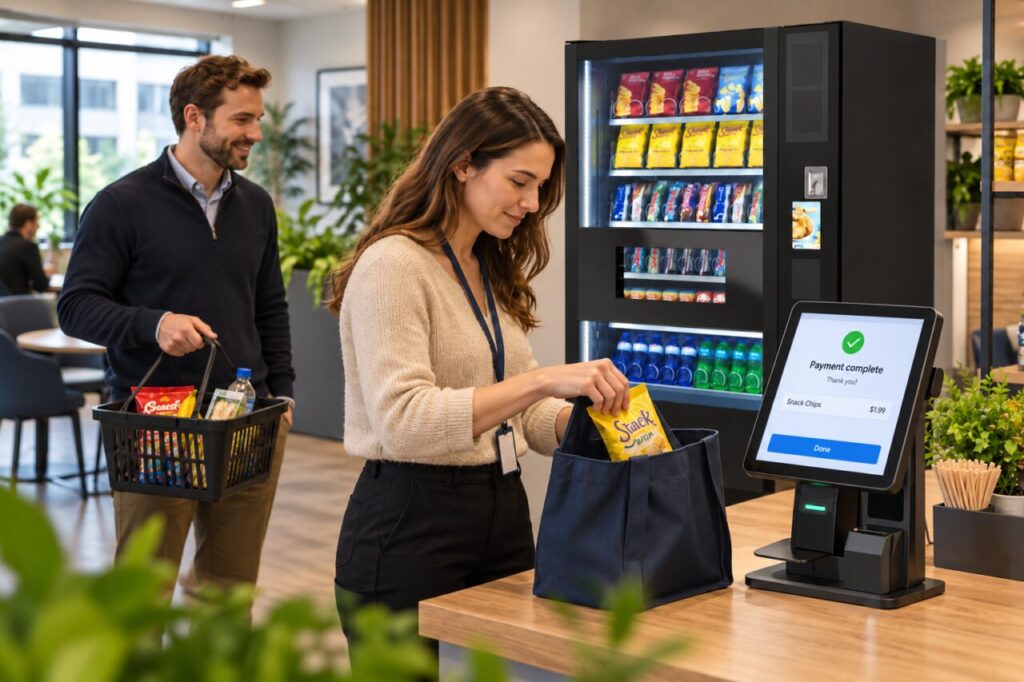
Ask the provider to demonstrate the boundary
Request a demonstration showing two ordinary purchases one after the other. Ask how the first customer receives confirmation and how the next customer starts. Note the messages or actions the provider identifies as relevant. The purpose is to understand the supported journey, not to invent a shortcut based on what another retail checkout does.
Include the situation where the first person remains beside the counter to pack. Customers should know whether they can begin the next purchase while that happens and where their own items should go. If the system or layout has limitations, record them clearly before creating customer instructions. An accurate explanation is more useful than a promise of a faster flow that has not been demonstrated.
Keep the two sets of goods distinct
Review the space available for items awaiting purchase and items already paid for. Use the provider’s recommended layout and the site’s normal space-planning process. A basket belonging to the next customer should not be confused with a remaining item from the previous sale. Make the physical arrangement easy to understand without relying entirely on a long sign.
Observe the process with representative customers carrying a normal number of items. Do they have somewhere to put their basket while reading the screen? Can the first customer pack without blocking the next person’s view? Raise any practical difficulty before launch. Do not improvise additional shelves or equipment placements that interfere with the approved arrangement.
Write instructions using the confirmed sequence
Explain how a customer recognises completion and begins their own purchase, using the wording appropriate to the supplied system. Avoid describing a specific button, receipt or automatic reset unless it exists in that setup. If instructions change following a software or service update, replace the old notice rather than adding contradictory guidance beside it.
Include a clear help route for an uncertain customer. They should know how to ask for assistance if the checkout appears to contain someone else’s items or does not show the expected starting point. Do not advise repeated payments or arbitrary screen actions as a general solution. The provider should specify the appropriate response to the situation.
Check the neighbouring vending journey too
Where a micro market operates alongside a vending machine, explain that each purchase point follows its own confirmed process. A customer collecting a vending snack should not assume it is part of an open micro-market basket, or vice versa. Keep the instructions attached to the relevant equipment and use consistent names for the two services.
Our micro-market and vending overview provides a starting point for considering the arrangement. For a particular site, the useful test is whether a new user can complete one purchase and leave the next person with an unmistakable starting point. Review questions after launch and correct the specific point of confusion rather than adding more general promotional information.
Discuss the proposed customer journey through our enquiry page.
Related guidance: Micro-Market Reusable Bags: Keep Personal Shopping Separate from Unpaid Goods.