
Two People Share a Micro-Market Shop: Agree Which Items Are in the Purchase
Two colleagues can easily combine a small micro-market shop: one picks up the drinks, the other adds snacks, and one person intends to pay. The purchase stays straightforward when both know which items are included and the checkout reflects the complete group of products.
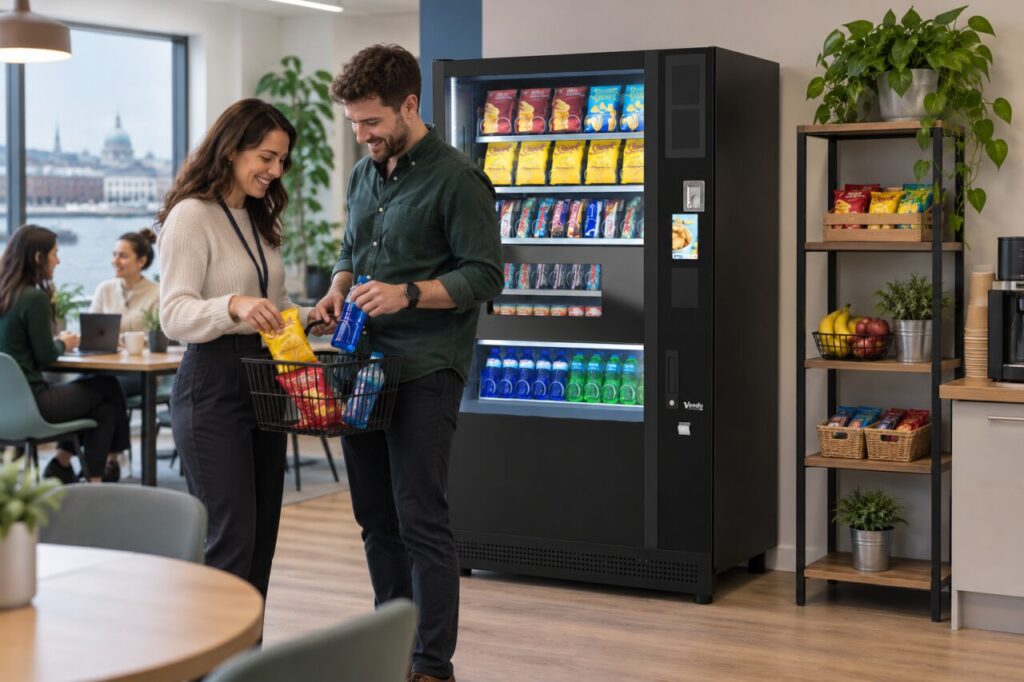
Confusion starts when an item is added after payment, a second person assumes their drink was covered or a product from a nearby vending machine is mixed into the same basket. Follow the instructions for the actual retail setup rather than assuming every self-service system handles shared shopping in the same way.
Agree the purchase before starting checkout
Gather the products intended for one transaction and decide who will complete it. Keep separate purchases physically separate. This is especially useful when the two people want similar drinks or snacks and the packaging makes it difficult to remember which item belongs to which basket.
Check each product and quantity using the supported checkout process. Two identical packs still represent two items. Do not assume that showing or scanning one pack automatically records both. Read the system’s ordinary confirmation and use the site’s help route if the displayed quantity is unclear.
If someone changes their mind, deal with the change before payment using the supported process. Avoid moving products in and out while the other person is confirming the purchase. A brief pause is easier to resolve than a payment record that neither shopper can confidently explain afterwards.
Keep different retail systems distinct
A micro-market shelf and an adjacent vending machine may use separate purchase processes. A product obtained through a vending transaction should not automatically be added to the shelf checkout, and taking something from a shelf does not mean the machine’s payment covers it.
The micro-market overview can help workplaces compare formats, but the installed system’s instructions determine the customer journey. Do not infer a technical feature from the general term micro market or from the appearance of equipment beside the shelves.
At a mixed refreshment area, ask the host to make the boundaries clear. Customers should be able to understand which products use which payment route without studying internal operating details. A short, well-positioned explanation can be more useful than several competing signs describing the whole service.
Review the confirmation together
Before completing the purchase, check that the listed items and quantities match the products being taken. The person paying should not have to guess what their colleague picked up. Agreeing the basket first makes this review quick and avoids unnecessary discussion while other customers wait.
After payment, use the ordinary confirmation offered by the system to establish that the transaction completed. Do not assume a phone notification alone proves every intended item was included. If the confirmation is unclear, ask for help through the site’s stated process before repeating the whole payment.
Retain any receipt or reference needed to resolve a later question. If an item appears missing or duplicated, report the exact product, quantity, location and approximate time. Explain that two people were shopping together so the support team understands the sequence rather than treating the accounts as contradictory.
Keep personal reimbursement separate
Any arrangement between colleagues about sharing the cost is separate from the retailer’s transaction. Decide that privately after the purchase; do not assume the checkout can split a payment unless the installed system explicitly supports it. Avoid entering another person’s account details to improvise a solution.
For workplace planning, test a simple shared-shop scenario during the demonstration. Ask two representative users to follow the instructions and identify any unclear step. The aim is a clear, repeatable purchase process for ordinary customers, with a visible support route when something does not match their expectation.
Related guidance: Two Identical Items at a Micro Market: Check the Checkout Quantity.
Planning or reviewing vending at your site? Contact the team with your location, equipment details and the question you would like to resolve.