
Misted Vending Glass: Record What You Can See Before Requesting Help
Misted glass can make a vending machine difficult to use even when the cabinet is lit and products are visible. Customers may struggle to distinguish a flavour, read a label or confirm a selection. The site team’s first job is to describe the problem accurately and ask the responsible operator what to do. Appearance alone does not establish the condition of the refrigeration system or the safety of the stock.
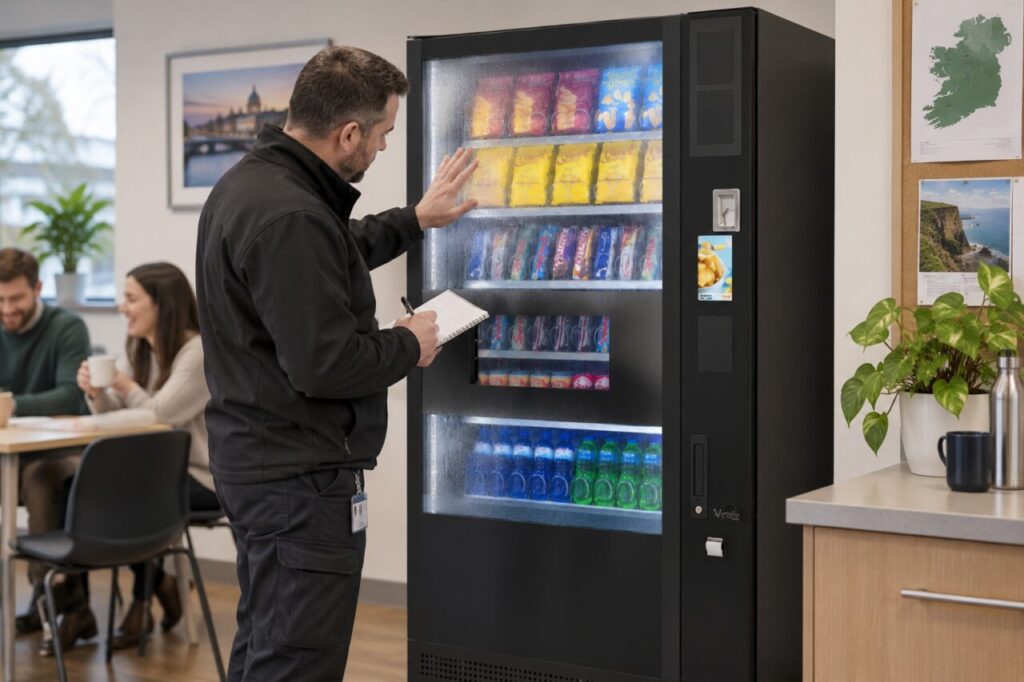
Describe the view rather than naming a cause
Record which part of the glass is affected and whether the misting is constant or intermittent. Note when it was first noticed, whether it clears and whether it appeared after a known event such as a refill or a change in the room conditions. These are observations; avoid turning them into a technical conclusion about a seal, refrigerant or temperature setting.
Take a clear photograph of the affected area and, if helpful, a wider view showing the location. Keep customer information out of the picture. Include the machine identifier and the time, particularly if a later photograph shows a different condition. A brief sequence of observations can be more informative than a single statement that the machine is sweating, especially where several staff members have seen it at different times.
Consider the customer-facing problem
Check whether the selection information remains readable from the normal buying position. If customers cannot distinguish products, ask the operator how to communicate the temporary limitation. Do not guess the contents of an obscured row or substitute a handwritten product description without confirmation. Product identification matters when people are choosing a particular flavour, pack size or dietary option.
Site staff should also note any separate issue around the machine, such as moisture on the floor, and follow the site’s appropriate response. Keep that observation distinct from the misted glass. A wet floor needs attention in its own right, while the source may still be unknown. Describe what you see and keep the responsible facilities and vending contacts informed rather than assigning blame before an inspection.
Leave equipment decisions to the provider
Do not adjust temperature controls, remove panels or apply a treatment to the glass in the hope of solving the problem. Cleaning methods and equipment checks should follow the approved instructions for the installed machine. A household cleaning product or improvised anti-misting treatment may be inappropriate. Ask the operator which actions, if any, belong to the site host’s role.
Likewise, do not tell customers that the products are safe or unsafe simply because the glass looks misted. The responsible food business operator needs to assess any relevant storage concern using the appropriate information and procedures. If you have noticed an additional warning or interruption, report that too. Keep the distinction between a visibility problem and a confirmed storage problem clear in the case record.
Review the location if it keeps happening
After the immediate issue has been assessed, ask whether the pattern suggests a site condition that needs review. Share observations about doors opening, nearby activity or room changes without assuming causation. Any proposed move or alteration should be discussed with the supplier and the people responsible for the building before work is arranged.
When planning vending equipment for a workplace, include the actual environment in the site discussion. Keep the provider’s response and any agreed follow-up with the equipment record. If the misting returns, refer to the earlier case and explain what is the same or different. This gives support a useful history and helps the site team avoid repeatedly trying unapproved fixes that obscure the original problem.
Discuss your site and service needs with the team.
Related guidance: A Vending Machine Sounds Different: What Site Staff Should Record.