
A Vending Machine Sounds Different: What Site Staff Should Record
A vending machine can make different sounds during an ordinary purchase, but a new or changing noise deserves a clear report. Site staff do not need to identify the component involved. Their useful contribution is to explain what changed, when it happens and whether the machine is still delivering purchases normally. That information helps the operator decide what to ask next and how to arrange an appropriate inspection.
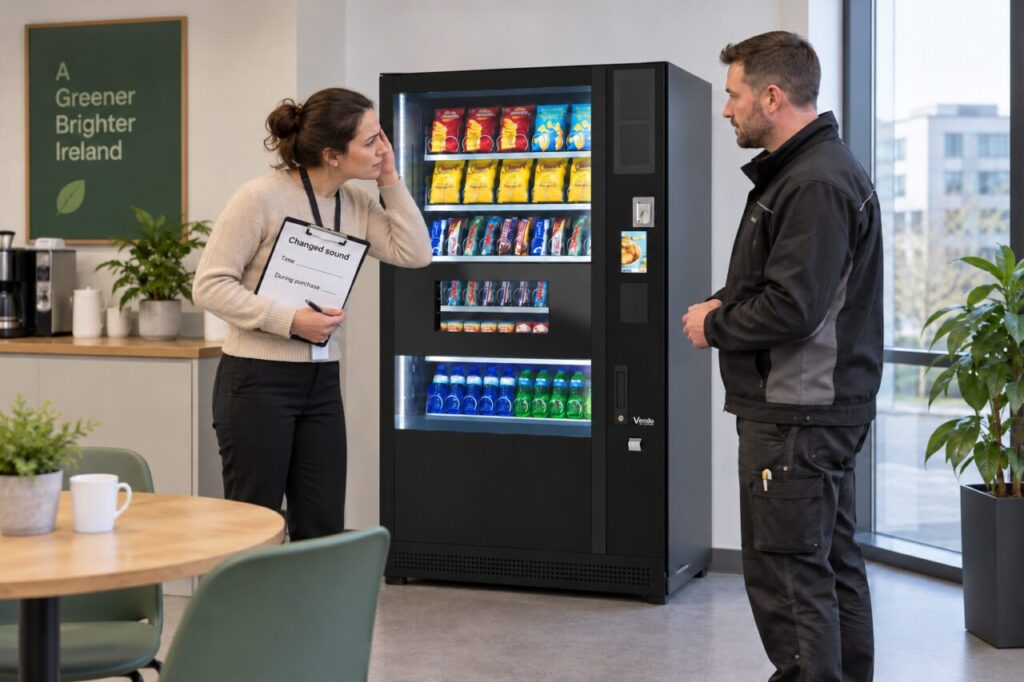
Describe the change in everyday language
Start with what you heard rather than a diagnosis. A repeated rattle, a scraping sound after selection or a louder hum than usual is more useful than declaring that the motor has failed. Say whether the sound is continuous or comes and goes. If the machine has always sounded similar, make that clear too: an unfamiliar noise to a new colleague is not necessarily a new equipment problem.
Note where you were standing and what else was happening nearby. A trolley passing, a neighbouring appliance or work in an adjoining room can complicate the observation. You can report uncertainty without investigating inside the cabinet. Do not lean on, move, open or remove panels from the machine to locate the sound. Leave mechanical and electrical assessment to the provider’s authorised personnel.
Link the sound to an observable event
Record the approximate time and whether a purchase had just been made. If a customer is available, ask which selection they chose and whether they received it. Separate the reported sound from the outcome: a product delivered with an unusual noise and a payment without a delivered item are different observations, even when they happen close together. Include both where relevant.
Avoid making repeated purchases just to reproduce the noise. An ordinary observation may be sufficient for the first report, and additional tests should be agreed with the operator. If the provider requests a short recording, capture only what is needed and avoid recording other people’s conversations. State whether that recording represents the usual sound or just one brief occurrence during the visit.
Give the operator a usable location and history
Identify the building, exact machine location and any visible asset reference used by the provider. Two similar machines can stand in the same break area, so a clear location matters. Add when staff first noticed the change and whether an earlier report already exists. Use the existing reference where possible so new information reaches the same case rather than creating several disconnected descriptions.
Mention recent events only as context. A refill, a building maintenance visit or a change in nearby activity may help establish the timeline, but does not prove the cause. The service team can decide which details matter. Keep the report factual and short enough for the person receiving it to identify the main concern without searching through speculation or unrelated complaints.
Agree what happens until the check
Ask the operator whether the machine should remain available and how any temporary restriction will be communicated. Follow the site’s established procedure if there is an immediate safety concern. Do not continue using equipment to collect more evidence where the provider or responsible site contact has advised otherwise. Record the instruction and the person responsible for updating staff.
After the visit, keep the service outcome with the original report. If the sound returns, explain whether it matches the previous description and quote the earlier reference. For sites considering vending machines and support arrangements, agreeing the reporting route at installation makes later observations easier to handle. Clear records support useful conversations; they do not replace a technician’s inspection.
Contact our team to discuss vending arrangements for your site.
Related guidance: Vending Machine Training: Practise Reporting a Problem Before the Trainer Leaves.