
Vending Machine Training: Practise Reporting a Problem Before the Trainer Leaves
A vending handover should leave the site contact able to report a problem clearly, even if they will never refill or repair the machine. Practising one example while the trainer is present can reveal missing information that a quick explanation overlooks. The exercise should focus on observation, equipment identification and the agreed support route. It should not encourage untrained staff to open equipment or attempt technical fixes.
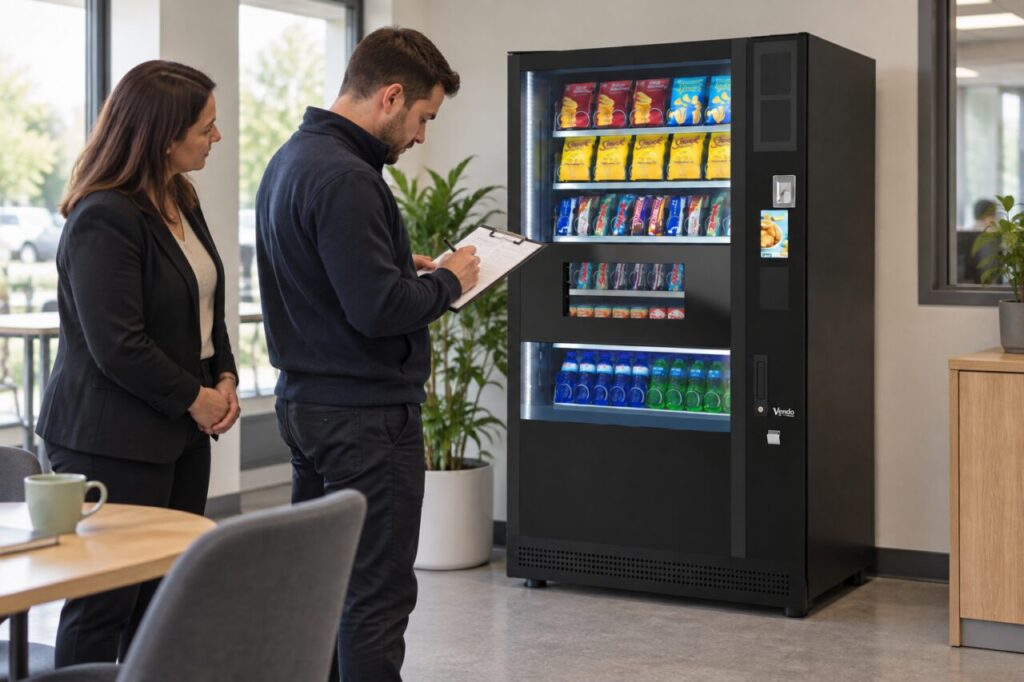
Choose a simple practice situation
Ask the trainer to use a clearly identified hypothetical example, such as a customer saying that a selected item did not arrive. Do not create a real fault or make unnecessary test purchases without agreement. The purpose is to practise the reporting process, not to prove a particular technical failure or generate a refund request for an invented transaction.
Start by asking the site contact where they would find the machine’s identifier and location description. If the site has similar equipment in several rooms, check that the information distinguishes the correct machine. A report saying only that the vending machine is not working may send the support team towards the wrong equipment or leave them needing another call before they can investigate.
Practise facts rather than diagnoses
Have the contact describe what was observed, when it happened and whether the issue appears to affect one selection or the wider machine. Distinguish the customer’s account from anything the contact personally checked. Avoid guessing that a motor, connection or payment component has failed. The support team can decide what further information is useful and who is qualified to investigate.
If photographs are part of the agreed process, ask what they should show and how to avoid capturing unrelated people or private information. Never include full payment-card details or access credentials in a general fault report. The trainer should explain the approved route for any transaction information genuinely needed. Keep the practice example free from real customer details throughout the exercise.
Find the correct route together
Ask the contact to locate the support instructions rather than simply agreeing that they have received them. Check the relevant telephone number, form or agreed business channel and the information it requests. Where routine questions and urgent equipment concerns use different routes, explain the difference. The site should not rely on finding a particular individual’s old email whenever something goes wrong.
Use the vending service discussion to confirm responsibilities before launch. Ask what staff should do if the machine appears unsafe or a concern needs immediate attention. Follow the provider’s and site’s approved instructions; a general customer-reporting exercise cannot replace equipment-specific safety training. Make clear which actions the host is authorised to take and which require the operator or technician.
Finish with a short teach-back
Let the site contact explain the process in their own words: identify the machine, record the observation, use the agreed channel and keep the reference. If any step is unclear, correct the instruction while the trainer is still available. A brief rehearsal is useful because recognising a document is different from being able to use it under pressure.
Store the reporting guide where the authorised cover person can find it. Include the date it was checked and the process for updating it when equipment or contacts change. Keep the exercise proportionate: one well-chosen example can be enough to establish the route and expose gaps. The intended outcome is a clear, factual report that helps the responsible team respond appropriately.
Contact us to discuss site handover and support arrangements.
Related guidance: Vending Machine Documentation: Build a Useful Site Equipment Folder.