
A New Bottle Shape: Check Vending Suitability Before Reordering
A drink can keep the same brand and flavour while its bottle changes. For a vending operator, that is a reason to confirm suitability before repeating the previous order. Do not assume that a familiar product name means the new pack will behave exactly like the version already approved for the machine.
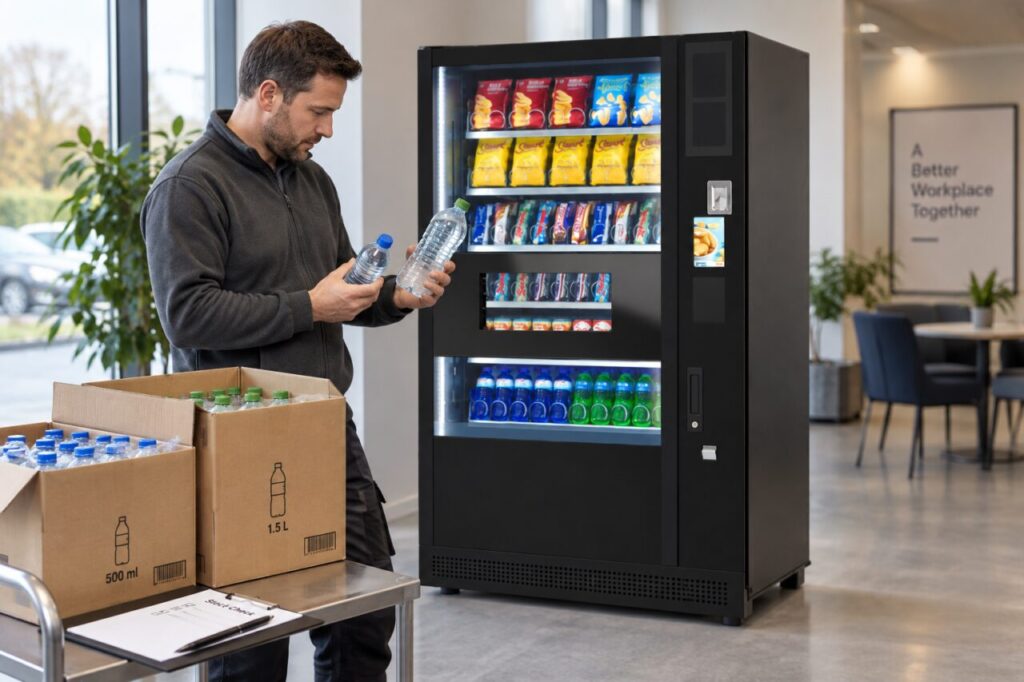
Treat the change as a product identification and supplier assessment question. The right response depends on the machine, its configuration and the exact pack. This guide does not provide adjustment instructions or suggest that an operator should change the dispensing arrangement without appropriate guidance.
Identify what is different
Compare the new product information with the version currently used. Note the stated volume, overall packaging shape and any other visible change. Keep a sample or clear photographs available for the equipment supplier. Describe what you can observe instead of guessing how the pack will behave inside the mechanism.
Check the ordering reference as well as the front label. A supplier may offer several sizes of a similar drink, and an apparent packaging change may actually be a different variant. Confirm the exact product before buying a large quantity, particularly if the order is being placed by someone who does not refill the machine.
Ask the equipment supplier first
Provide the machine identification and current configuration details through the usual support route. Ask whether the new pack needs assessment or a supervised trial, and what information the supplier requires. Do not rely on a general statement that the machine sells bottles as proof that every bottle shape is suitable.
The manufacturer’s G-Snack Evolution information is a useful example of model-specific product information. The actual supplied arrangement still needs confirmation for your proposed range. Keep any answer tied to the identified machine and product rather than converting it into a claim about all vending equipment.
Keep the trial controlled
Follow the supplier’s instructions for any approved test. Record the exact pack used, the configuration involved and the outcome observed. If a problem occurs, stop the trial and seek guidance rather than forcing the product, reaching into the collection mechanism or making an unapproved adjustment to keep the test going.
Distinguish a successful observation from a guarantee. Agree what further checks, if any, the supplier considers appropriate before the product becomes part of the regular range. Keep the test record accessible to the person who orders stock so a purchasing decision does not run ahead of the technical assessment.
Update the purchasing information
Once the arrangement is confirmed, update the product reference used for ordering and the relevant stock information. If the old and new packs are both on hand, keep them distinguishable. Avoid mixing variants under one vague description that makes it impossible to know which packaging was assessed and which was loaded.
The related guide to a written vending demonstration record explains how to separate observed results from questions still open. Use the same discipline here. A short accurate record is more useful than relying on someone’s memory that the new bottle seemed similar enough.
When planning vending products and equipment, allow time for packaging changes as part of normal range management. Confirming suitability before reordering connects the buying decision with the equipment actually in service and helps the whole team work from the same approved product information.
Ask our team what information is needed to assess a proposed product change.