
New Flooring Before Vending Delivery: Confirm When Heavy Equipment Can Arrive
A room can look finished while its new floor is still unsuitable for the movement or standing load of vending equipment. If flooring work and delivery fall close together, ask for a specific readiness decision. A date on the building programme is useful, but it does not establish that the actual finish, adhesive and supporting floor are ready for this particular machine and delivery method.
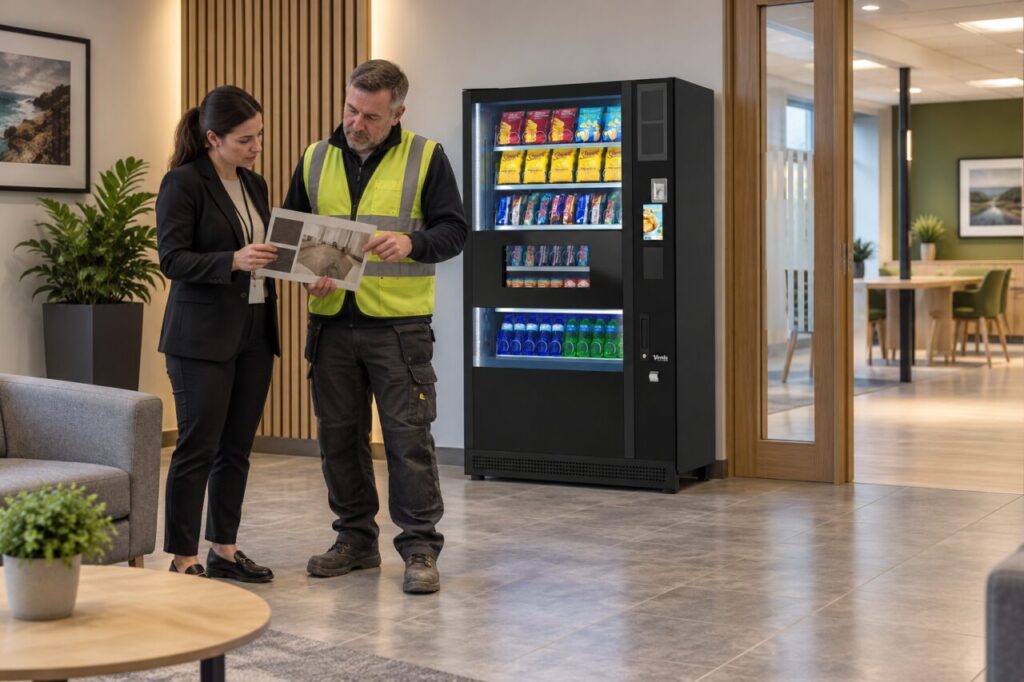
Ask about equipment loads, not ordinary foot traffic
Tell the flooring contractor that the room will receive a vending machine. Supply the equipment specification and ask the delivery team what handling equipment will travel across the surface. The load while equipment is moved may differ from the arrangement once it stands in its final position. Both need consideration by the responsible people.
Do not substitute a rule found for another flooring product. Drying and curing instructions depend on the specified materials and conditions. Ask the contractor to identify the applicable manufacturer’s information and confirm any restrictions in writing. Avoid translating permission to walk through the room into permission to move a heavy cabinet through it.
Connect the building and delivery decisions
Give the supplier one named building contact who can answer questions about readiness. Explain which sections of the route have new finishes, including corridors and thresholds outside the vending room. Ask whether recently repaired areas have different restrictions from the surrounding finish. A sound final position does not resolve a restricted approach route. Mark the affected sections on a simple plan rather than relying on an unfamiliar room name.
The official SandenVendo G-Snack Evolution specification distinguishes the net weight of its standard machine from optional equipment. Use the exact quoted configuration when requesting an assessment. A catalogue example helps identify the information needed; it is not approval for your building, nor a substitute for the delivery contractor’s method.
Agree what happens if readiness slips
Choose a confirmation point before the vehicle is committed. Record who will report a delay and who can agree a revised appointment. Ask about any delivery or holding arrangements that might apply, without assuming that postponement is automatically free. Keep the response with the order so colleagues understand the next action if the programme changes.
Do not solve a delay by asking the driver to use an unapproved board, mat or alternative entrance on arrival. Any proposed protection should be considered with the people responsible for the floor and equipment movement beforehand. Protection that addresses surface marks may not address load suitability or an unfinished adhesive layer.
Inspect and record the agreed route
Before delivery, walk the confirmed route with the building contact. Look for barriers, newly completed patches or work that has changed since the assessment. Photograph the visible condition for an ordinary project record, avoiding people and private documents. Refer unresolved questions back to the responsible contractor rather than declaring the floor suitable yourself.
When discussing vending equipment for your premises, include the flooring programme with the room dimensions and access details. After installation, retain the readiness confirmation and any care restrictions with the site file. This gives future moves a useful starting point and helps distinguish the approved installation arrangement from later changes made elsewhere in the building.
Related guidance: Vending Delivery Routes: Agree Protection for Finished Floors.
Planning or reviewing vending at your site? Contact the team with your location, equipment details and the question you would like to resolve.