
Office Meeting Breaks and Vending: Plan for Everyone Arriving Together
A workplace can have modest daily vending sales and still experience a difficult ten-minute rush when a meeting ends. Everyone reaches the refreshment area together, some people are unfamiliar with the machine, and others are trying to buy several items before returning. Planning for that concentrated arrival pattern can be more useful than looking only at total daily demand.
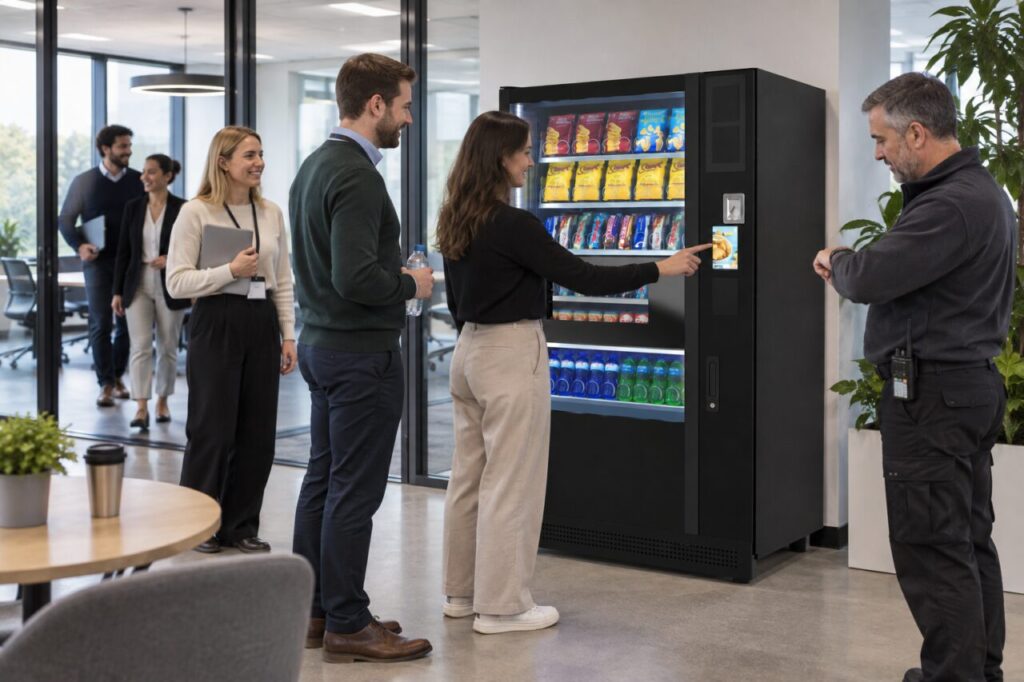
Start with the meeting schedule and the way people use the space. The aim is to make the existing service easier to use and identify any genuine capacity question. Do not assume that every busy-looking break requires new equipment.
Map the arrival pattern
Note how many meeting groups finish at the same time and which refreshment points they use. Include visitors if they share the same area. A room booking calendar can reveal a recurring clash that is not obvious from an average office attendance figure.
Observe a representative break without identifying individual customers. Record when the queue starts, when it clears and whether people leave without buying. Keep the conditions with the observation, including any unusual event, so a one-off gathering is not mistaken for the normal daily pattern.
Find the source of waiting
Watch whether customers are deciding, selecting, paying or collecting when the queue pauses. These are different stages and may need different responses. Someone unfamiliar with the interface may need clear guidance, while another person may simply be buying several products in succession.
Check whether product descriptions and prices are understandable before the customer reaches the controls. Ask the operator about any repeated hesitation or fault. Our guide to one machine versus two purchase points helps separate waiting time from stock capacity when considering a larger change.
Coordinate the service with the schedule
Tell the operator about recurring large meetings and the expected demand window. Ask whether replenishment arrangements should be reviewed around that pattern. Give useful notice rather than assuming a full machine at the start of the day guarantees every selection will remain available after several meetings.
Where your organisation controls the schedule, consider whether slightly different break times would be practical. This is a workplace planning choice, not a universal solution. Check that any change supports the meeting programme and does not simply move the same congestion to a corridor or coffee point.
Keep the customer route usable
Look at where people wait, collect products and move away. A chair, bin or informal gathering point may reduce the useful space around the machine. Ask the facilities team to review the area within the building’s normal access and safety arrangements rather than moving equipment casually.
Visitors should be able to understand where to go without joining the wrong queue. Keep guidance short and consistent with the actual setup. If another refreshment option is available, explain its location clearly rather than assuming everyone knows the building as well as permanent staff do.
Repeat the observation after changes
Choose a comparable meeting break and check whether the specific problem improved. Record the change made and the conditions observed. A quieter meeting is not evidence that a layout change worked, and a fully stocked machine does not by itself prove that people waited less.
Our office vending service page provides a starting point for discussing your workplace. Include the busiest shared break, the meeting pattern and any visitor use in the brief so the proposed arrangement reflects the moments when the service is most heavily used.
For a workplace review, contact us with your requirements.