
One Larger Vending Machine or Two Purchase Points? Review the Busy Break
A machine with more stock does not automatically solve a queue. Stock capacity describes how much can be available between visits; a purchase point describes where someone completes a transaction. If many people arrive during the same short break, it is worth reviewing both questions before choosing a larger cabinet or adding another machine.
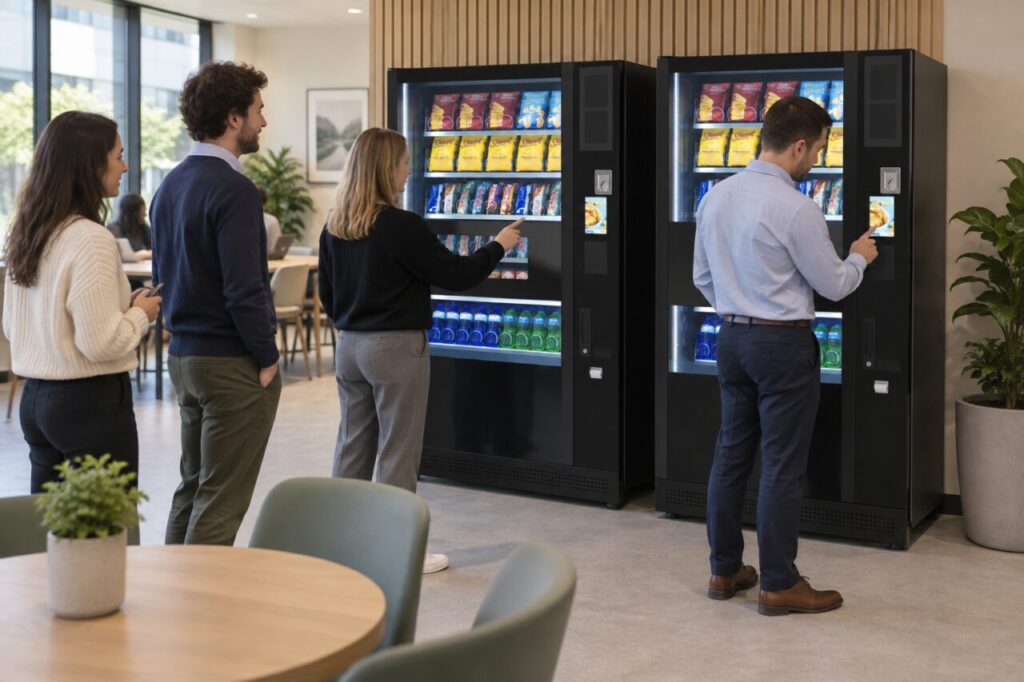
Begin with observation at your own site. A long-looking queue may move quickly, while a short one may involve repeated hesitation or failed attempts. Record what happens during a representative busy period instead of choosing equipment based only on the total number of employees.
Separate the two problems
Note whether customers are waiting because someone else is using the machine or leaving because their preferred products are unavailable. These are different problems. More stock may help the second situation without changing the number of people who can buy at the same time.
Also check whether customers are simply deciding what to buy while standing at the controls. Clear product presentation and an understandable purchase journey may address that delay. Our demonstration and collection guide helps you observe the full transaction rather than measuring only the payment step.
Observe a real break window
Record when people arrive, how long the busy period lasts and whether they are buying one item or several. Use aggregate observations rather than identifying individual staff. Note the setting, such as a shift change or scheduled meeting break, so you can distinguish normal demand from a special event.
If possible, repeat the observation on another comparable day. A single unusual meeting may not justify a permanent equipment change. Conversely, a daily short break may matter even when the rest of the day is quiet. The useful question is how the service performs when customers need it.
Test the proposed arrangement
Ask the supplier to demonstrate the relevant purchase sequence on the proposed configuration. Do not assume that two cabinets necessarily provide two independent purchase points; confirm how the actual arrangement works. Discuss how a customer chooses, pays and collects from each option being considered.
Use the product mix you intend to offer. Someone buying a snack and drink may interact differently from someone collecting a single item. Treat demonstration timings as observations under those conditions, not guaranteed performance figures for every customer or workplace situation.
Consider the space and service work
Two purchase points also mean reviewing positioning, customer movement, power arrangements and access for replenishment. Ask the supplier to assess the complete layout with the site team. Keep nearby routes clear and avoid creating a second queue that conflicts with the first or with other activity in the room.
Compare the operating work as well. Splitting a range across equipment changes how stock is allocated and how customers find products. Duplicating popular items can be useful in some plans, but it should follow an agreed requirement rather than happen accidentally during installation.
Choose the change that addresses the evidence
Summarise the observed problem, the options considered and what improvement you expect to check after launch. If the issue is availability, define the stock outcome. If it is waiting, define the busy-period observation you will repeat. Keep those measures separate so a fuller cabinet is not mistaken for a shorter queue.
Our vending machine options can be reviewed against your site’s actual purchasing pattern. The best brief explains when demand concentrates, what people buy and what space is available, allowing the supplier to discuss a practical arrangement without assuming that bigger always means faster.
To discuss a busy workplace break, send us your site requirements.