
No Eating at Office Desks: Plan Where Vending Purchases Will Be Used
Where an office asks staff to eat away from their desks, a vending machine needs to be considered as part of the break area rather than as a standalone convenience. Buying a snack is only the start of the journey. Staff still need somewhere appropriate to open it, enjoy it and dispose of the packaging before returning to work. Review that whole journey before choosing a position or judging whether the range meets the workplace’s needs.
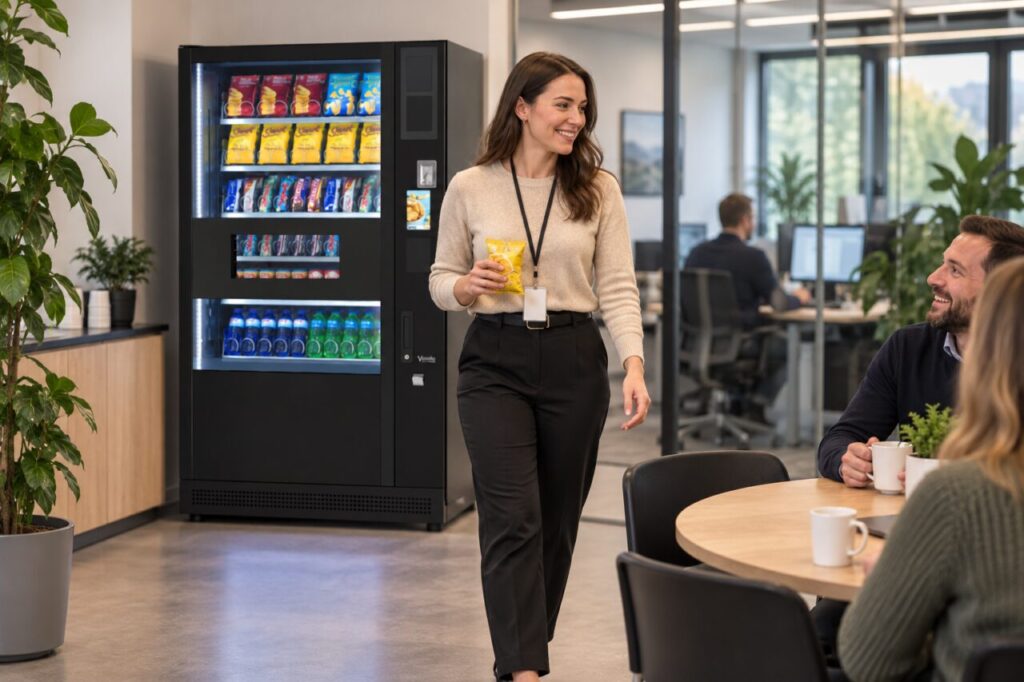
Observe where purchases are used
Start with the office’s actual food policy and available spaces. Ask where staff may eat and whether those areas are accessible during all working periods. A room that appears suitable on a floor plan may also be booked for meetings. If the only permitted space is sometimes unavailable, that is a facilities question to resolve rather than a product-range problem for the vending operator.
Observe a normal break without recording individuals. Note whether people can find a place to put a drink or open a pack, and whether seating demand overlaps with other activities. Do not assume everyone wants a seated meal. Some staff may want a short standing break, while others need a table. Use the observation to describe the space required instead of prescribing one arrangement for every office.
Choose a range for the available occasion
Ask what staff want from vending within that setting. A quick snack between calls is a different occasion from supplementing a packed lunch. Discuss pack sizes, ease of use and a useful mix of choices with the provider. Avoid declaring one food category unsuitable solely because a few products create crumbs or require more time; ask about the specific packs being considered.
Keep food information available through the product’s proper labelling and the provider’s supported process. The workplace policy should not become an improvised health claim about the range. If staff request a particular dietary option, record the requirement accurately for review rather than promising that a flavour name or packaging colour proves suitability. Range decisions should remain grounded in the actual products available.
Make the route and disposal practical
Review the route from the vending collection point to the permitted eating area. Check whether users carrying purchases encounter a busy doorway or need to cross a queue. Keep the machine’s required access space clear while considering tables and bins. The equipment provider and facilities team should review changes that affect the proposed position; staff should not reposition a cabinet to make room for furniture.
Locate ordinary waste and any container-return collection arrangements so that users can understand them. If the workplace collects eligible drinks containers, explain its own process separately from general waste disposal. Do not imply that a snack vending machine accepts returned containers. Clear facilities information can reduce uncertainty without covering the machine itself in competing notices.
Review the space as well as the sales
After launch, ask whether people can comfortably use the area during their actual break. Low sales alone do not show whether the issue is the range, access or an inconvenient eating space. Combine availability records with a few focused questions. For example, ask whether the area was open and whether there was somewhere suitable to use the purchase.
Bring these findings to an office vending review. Agree whether the next change concerns products, furniture or access arrangements, and review its effect separately. A useful vending service fits the workplace’s real routines. Planning beyond the cabinet helps staff use the offer within the office’s rules without turning a simple break into an awkward search for somewhere to eat.
Discuss vending for your office break area.
Related guidance: Office Lunch and Vending Snacks: Decide What Gap the Range Should Fill.