
Office Vending on Different Floors: Check Who Can Reach Each Machine
A vending machine listed as available to an entire office may be placed on a floor that some intended users cannot conveniently reach. When reviewing a multi-floor workplace, consider the actual customer route rather than the building’s total headcount alone. A shared address does not necessarily mean every team has the same access to each refreshment point.
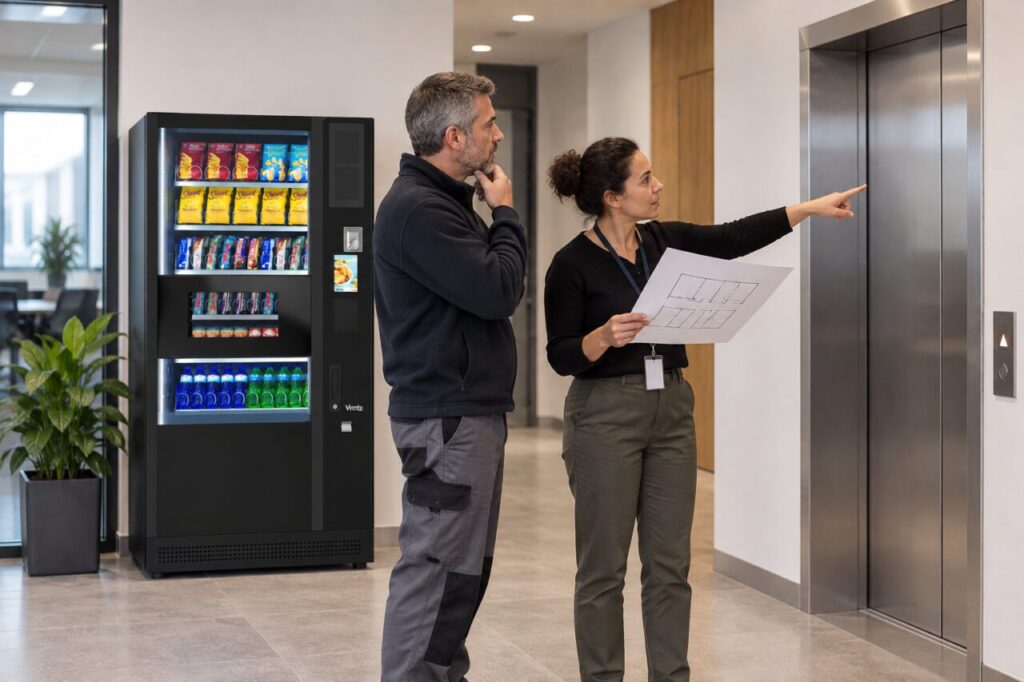
The aim is to understand the service arrangement, not to change security or building access controls casually. Facilities and the relevant access owners should assess any proposed change. The vending plan must work with the site’s authorised arrangements and the needs of its intended users.
Map the intended audience
Identify which teams or user groups the proposed machine is meant to serve. Keep this at a practical group level; there is no need to record individual movements. Note whether visitors, contractors or staff based on other floors are intended customers, and distinguish those needs from the assumptions made during the original placement discussion.
Ask the responsible site team which routes those groups may use. Do not assume that a lift stopping at a floor means every person is permitted to enter the area beyond it. Keep access permissions and the physical route as separate questions that both need a clear answer.
Walk the relevant routes
Review the journey from representative work areas to the vending point using the site’s normal procedures. Consider wayfinding, changes between floors and the final approach to the machine. Where users have particular access needs, involve appropriate site expertise and willing users rather than assuming one route suits everyone.
Do not turn a quick walkthrough into a claim of universal accessibility or regulatory compliance. It is a practical input to the location discussion. Record the conditions observed and ask the responsible professionals to assess any issue beyond the scope of the workplace vending review.
Consider the break experience
Discuss whether the route fits the way the workplace uses its breaks. Avoid imposing an invented maximum walking time or assuming that staff will regularly travel between distant areas for a snack. Use actual feedback and the site’s working pattern to explain where the proposed arrangement may be inconvenient.
If another refreshment point is available, consider how the services complement one another. The answer may involve clearer communication, a different location or further equipment assessment. Do not assume that every inconvenience requires another machine before the provider and workplace have reviewed the evidence together.
Keep the service description accurate
Describe the location clearly in staff information. If a machine is intended only for certain areas or access conditions, do not advertise it as available to everyone without qualification. A useful notice identifies the service and route while respecting the site’s security rules and avoiding disclosure of private access arrangements.
Our guide to observing vending queues covers another part of workplace use. Combine that information with the access review where useful, but keep the measures distinct. A quiet machine may be easy to use for those nearby while remaining inconvenient for people on another floor.
When discussing office vending options, share the building layout and intended audience through the appropriate assessment process. Review the arrangement when teams move or access conditions change. The objective is a service described honestly for the people it can actually reach, rather than a capacity plan based only on the number of people registered at the address.
Discuss your office layout with our team before finalising the vending locations.