
Staggered Staff Breaks: Observe Vending Queues Before Adding Equipment
A queue at a vending machine can prompt an immediate request for another machine. Before making that decision, look at when the queue occurs and what causes it. Staggered staff breaks can create a very different pattern from one large shared break, even when the total number of people on site is similar.
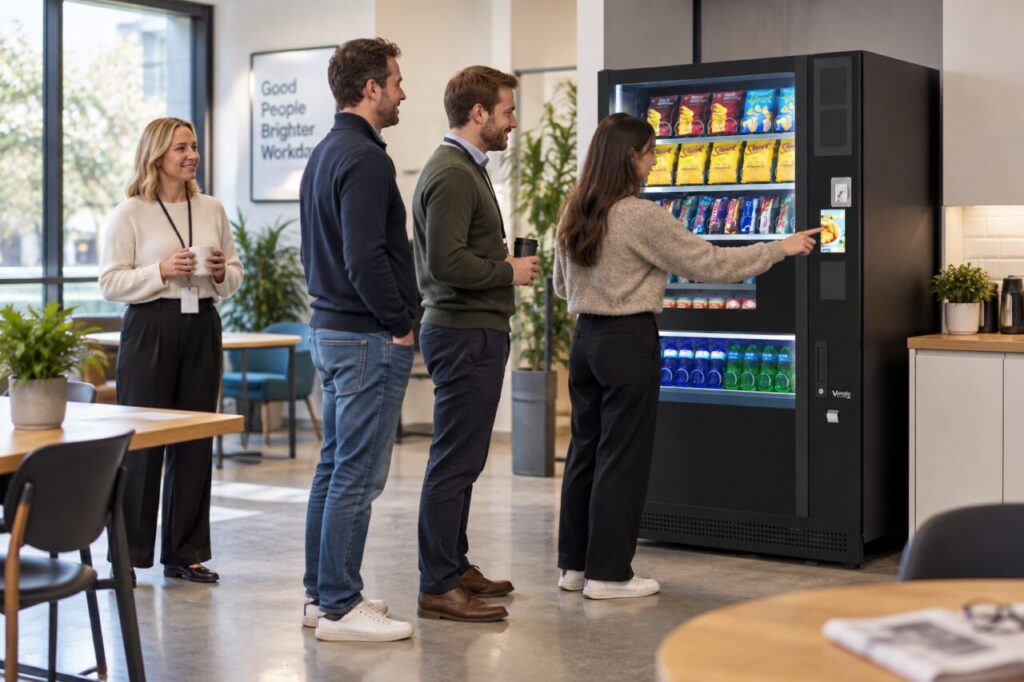
The purpose of observation is to understand the problem, not to monitor individual employees. Use short anonymous counts and practical notes. Do not collect names, payment details or footage of purchases when aggregate information about queue length and timing is sufficient for the planning question.
Choose representative periods
Observe several normal break periods rather than selecting only the busiest incident. Note the date, approximate period and any unusual event such as a meeting ending early or another refreshment point being unavailable. These conditions help explain why one observation may differ from the rest of the week.
Record the broad staffing pattern that matters to the service. If different groups take breaks at different times, note those windows without tracking individual movement. Keep the information at the level needed to discuss capacity and availability with the workplace and supplier, rather than creating an unnecessary attendance record.
Identify where time is spent
Look at the sequence from approaching the machine to leaving the collection area. A delay may involve choosing a product, reading instructions, making payment or waiting for someone to move away. These are different questions and should not all be described as the machine being too slow.
Do not interrupt normal use merely to time customers. Where someone requests help, assist them and note the general issue separately. If the equipment appears to have an operational fault, use the support route rather than continuing an observation exercise while customers encounter the same unresolved problem.
Check availability alongside the queue
Record whether the intended products were available during the observed period. A queue can be short because people leave when their preferred selection is unavailable. Conversely, a well-stocked machine may attract more customers during a break. Queue length alone does not describe the whole level of service.
Compare observations with the refill arrangement and other relevant site information. Avoid drawing a firm conclusion from one small sample. The supplier may need further details about the equipment configuration or the site before recommending another purchase point, a changed range or another practical adjustment.
Discuss proportionate options
Share the observations with the workplace contact and supplier. Ask which part of the journey could be improved and what should be tested first. A clearer instruction may address one issue, while a genuine capacity constraint may require a different arrangement. Do not promise that changing break times or adding equipment will automatically solve every delay.
The guide to visitor feedback on the purchase journey offers another way to identify unclear steps. Keep that qualitative feedback separate from the anonymous queue counts. Together they can explain both when pressure occurs and what customers find difficult during the purchase.
When reviewing office vending options, bring a short factual summary rather than a general impression that the machine is always busy. Recheck after any agreed change using comparable periods. The useful outcome is evidence about whether the specific problem improved, not a claim that one observation establishes the ideal equipment arrangement for every workplace.
Ask our team to discuss the service needs shown by your workplace observations.